Table of Contents
ToggleIf you’ve been browsing tool aisles or watching DIY videos, you’ve probably heard about impact drivers. They’re one of the most practical additions to any homeowner’s toolkit, especially if you’re tackling projects beyond simple furniture assembly. Klein impact drivers, in particular, have earned a solid reputation for delivering compact, affordable performance without sacrificing durability. Whether you’re hanging cabinets, assembling fence sections, or driving deck screws, a Klein impact driver can handle the job faster and with less hand fatigue than a standard drill. This guide walks through what makes these tools tick, which projects suit them best, and how to keep one running smoothly for years to come.
Key Takeaways
- A Klein impact driver delivers concentrated bursts of rotational force using an internal hammering mechanism, making it superior to standard drills for driving large fasteners like deck screws and lag bolts into tough materials without cam-out.
- Klein impact drivers typically offer 1,500–2,500 inch-pounds of torque with variable speed triggers, LED work lights, one-hand bit loading, and three-position torque control settings for versatile DIY projects.
- Impact drivers are ideal for fastening-heavy projects including deck and fence building, cabinet assembly, drywall anchors, door hardware installation, and outdoor furniture—tasks where they cut job time in half and reduce hand fatigue.
- Regular maintenance like cleaning air vents, checking bit fit, storing batteries at 40–50% charge in cool conditions, and using quality driver bits keeps your Klein impact driver running smoothly for years.
- A Klein impact driver costs $80–$250 depending on whether you buy the tool alone or a kit with batteries and charger, making it a cost-effective investment for homeowners regularly tackling fastening-intensive projects.
- Avoid using a Klein impact driver on delicate tasks like tile work, soft plaster, or trim where you need finesse rather than force, as the tool’s concentrated impact power is designed for structural fastening applications.
What Is A Klein Impact Driver And How Does It Differ From Standard Drills
An impact driver is a compact rotary tool that delivers concentrated bursts of rotational force, or “impact”, to fasteners. Unlike a standard drill that applies steady, continuous torque, an impact driver uses an internal hammering mechanism to create pulses of power. Think of it like tapping a screw in with precision taps rather than one smooth push.
The key difference? A standard drill works best for drilling holes and light fastening. An impact driver excels at driving large fasteners (deck screws, lag bolts, concrete anchors) into tough materials with minimal binding or cam-out, that frustrating moment when the bit slips and strips a screw head. Klein impact drivers typically deliver 1,500–2,500 inch-pounds of torque, more than enough for residential work.
Impact drivers are also quieter, generate less heat, and cause less user fatigue because the tool does the heavy lifting. Your wrist and shoulder take less punishment on an eight-hour deck project. For anyone who’s wrestled a standard drill for 50+ lags, that difference is huge. The trade-off is that impact drivers aren’t ideal for delicate jobs, like drilling into tile or plasterboard, where you need finesse rather than force.
Key Features That Make Klein Impact Drivers Stand Out
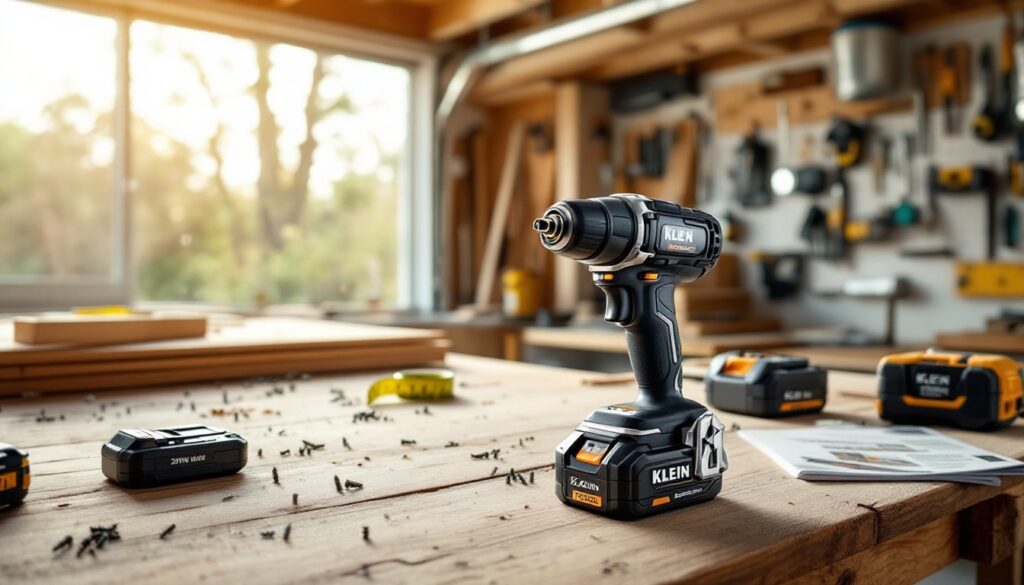
Klein impact drivers pack several features that appeal to homeowners without very costly. Most models include variable speed triggers, letting you adjust power from a slow creep (useful for starting screws) to full throttle. LED work lights on the head illuminate tight spots so you’re not drilling blind. Many also offer one-hand bit loading, a friction ring that grips bits without a chuck, making swaps faster and less fussy on a ladder.
Battery compatibility matters too. Klein typically builds their impact drivers around compact 20-volt lithium-ion batteries, which charge in under an hour and hold a charge longer than older nickel-cadmium types. Two-battery bundles are common, so you can swap while one charges. Motor brushless designs (now standard on quality impact drivers) reduce maintenance, no brushes to wear out, and improve efficiency.
Torque control is another practical detail. A three-position setting lets you dial in power for different tasks: light setting for trim screws, medium for general assembly, and high for structural fastening. This flexibility keeps you from over-driving delicate materials or stripping softer woods.
Compact Design And Portability Benefits
Klein impact drivers are noticeably smaller and lighter than full-size drills, usually around 3.6 pounds with battery. That matters when you’re reaching overhead to install crown molding or working one-handed while the other hand steadies a component. Cramped spaces (inside cabinet frames, tight joist bays) are far easier to navigate with a slender, well-balanced tool. Portability isn’t just convenience: it reduces strain and gets the job done faster because you’re not repositioning a bulky tool every few seconds.
Best DIY Projects For Klein Impact Drivers
Impact drivers shine on fastening-heavy projects. Here are the jobs where they justify their spot on your pegboard:
Deck and Fence Building – Driving 2½-inch composite or pressure-treated screws through lumber into framing is what impact drivers were made for. You’ll drive hundreds of screws: an impact driver cuts the job time in half and leaves your hand less sore.
Cabinet Assembly and Installation – Whether assembling flat-pack kitchen cabinets or screwing face frames to stud walls, an impact driver handles pocket-hole screws, shelf pins, and mounting hardware without binding.
Drywall Anchors and Shelf Brackets – If you’re hanging shelves or mounting a TV, an impact driver drives anchors quickly without the spinning-bit feel that standard drills produce on softer materials.
Door Hardware – Installing new locksets, hinges, or door handles involves many small fasteners in hardwood or composite doors. An impact driver prevents cam-out.
Outdoor Furniture and Projects – Metal-to-wood fastening (bolting a patio table leg, attaching metal brackets to a pergola) is where the extra torque pays off. Projects like these can be found at This Old House renovation guides, which often detail outdoor builds.
Where NOT to use one: avoid impact drivers on delicate trim, soft plaster, tile, or anywhere you need a gentle touch. They’re also overkill for hanging pictures or assembling light furniture.
Maintenance Tips To Keep Your Klein Impact Driver In Peak Condition
Klein impact drivers are built to last, but a few habits extend their life and keep performance steady.
Clean the air vents regularly. Sawdust clogs cooling vents, which causes the motor to overheat. A quick compressed-air blast every few hours of use prevents buildup. Pay attention after cutting or grinding nearby.
Check bit fit. A loose bit slips in the chuck, stripping fastener heads and wasting battery power. Insert bits firmly and test with a quick hand twist, zero play is the goal. If the chuck or friction ring feels loose, tighten the set screw (check your manual for exact location).
Store batteries correctly. Keep them in a cool, dry place, away from direct heat or cold. Lithium-ion cells degrade in extreme conditions. If you’re storing a tool for months, charge the battery to 40–50% (not fully charged or drained) to preserve chemistry.
Use the right bit. Worn-out or bent driver bits transfer power poorly and strip screw heads. Replace bits when the tip shows wear. Quality bits (like those found in Popular Mechanics tool guides) outlast bargain-bin alternatives.
Protect from moisture. A brief rain won’t hurt a modern power tool, but chronic dampness causes rust and corrosion inside. Store in a toolbox or bag, not on a wet porch.
Most Klein impact drivers come with a carrying case and basic warranty. Check your documentation for specific service intervals or parts replacement schedules.
Is A Klein Impact Driver Right For Your Home Projects
Before buying, ask yourself a few honest questions:
Do you drive fasteners regularly? If your projects involve mostly hole drilling or light assembly, a standard drill-driver combo tool works fine. But if you’re hanging drywall, building decks, installing cabinets, or tackling any large fastening job, an impact driver earns its cost back quickly.
Do you have a compatible battery ecosystem? Klein’s 20-volt system is affordable and widely available, but if you already own DeWalt, Makita, or Milwaukee tools, sticking with the same brand keeps battery compatibility simple. Cross-brand adapters exist but add cost and complexity.
What’s your budget? A bare Klein impact driver (tool only) runs $80–$150: a kit with two batteries and a charger runs $150–$250. That’s reasonable for the performance, but it’s a commitment. If you’re a once-a-year homeowner, renting might make sense. Resources like Fix This Build That offer budget-friendly project ideas that help justify tool investment.
Space and storage? Impact drivers are compact, so they’re easy to store in a garage or closet. If space is tight, you might make do with a multi-tool, though it’s less efficient.
For most homeowners tackling renovations, deck building, or cabinet work, a Klein impact driver is a practical, cost-effective addition that pays dividends in speed, comfort, and reduced fatigue.
Conclusion
A Klein impact driver isn’t a luxury, it’s a practical upgrade that transforms fastening tasks from tedious to manageable. Its compact design, affordable price point, and genuine power make it one of the smartest tool investments a DIY homeowner can make. Start with one for a single project, and chances are you’ll find yourself reaching for it again and again. That’s the mark of a tool that earns its place in the workshop.