Table of Contents
ToggleAn impact driver is one of those tools that separates casual tool owners from serious DIYers. If you’ve been using a basic cordless drill for everything, from hanging shelves to assembling furniture, it’s time to consider a compact impact driver. The Flex compact impact driver delivers rotational force and concussive blows that make fastening into dense wood, concrete, and metal quicker and less physically demanding than traditional drills. Unlike a standard drill, an impact driver applies concentrated bursts of rotational energy, which means less wrist strain and better results. For homeowners tackling projects from deck building to cabinet assembly, a compact model offers the perfect balance of power, portability, and precision without the bulk of a full-size version.
Key Takeaways
- A Flex compact impact driver combines rotational force with rapid concussive blows from an internal anvil mechanism, making fastening into dense materials faster and less physically demanding than traditional drills.
- Compact impact drivers weigh 3–4 pounds and measure 5–6 inches, offering superior maneuverability in tight spaces and overhead work while costing $80–$150, making them an affordable entry point for DIYers.
- Most compact models deliver 1,500 ft-lbs of torque, which handles 99% of residential projects including deck building, cabinet assembly, and shelf mounting, though heavier structural work may require a full-size version.
- Choose an 18-volt lithium-ion battery with 2 Ah capacity for casual projects or consider two batteries for extended work sessions, and always pair your compact impact driver with impact-rated bits to prevent damage.
- Use a compact impact driver exclusively for fastening, not drilling or delicate trim work, and maintain your tool by removing dust regularly, storing at moderate charge levels, and avoiding extended use in unfamiliar materials without proper testing.
What Is a Flex Compact Impact Driver?
Key Features and Design
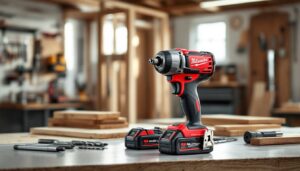
A compact impact driver is a handheld power tool that combines rotational motion with axial hammer blows delivered by an internal anvil mechanism. When you pull the trigger, the motor spins a bit faster than a drill, and when resistance builds, clutch-activated hammers strike the anvil thousands of times per minute. This creates the distinctive percussive “whack” you’ll hear, and feel, when driving fasteners. The result is effortless fastening with less torque transferred to your wrist.
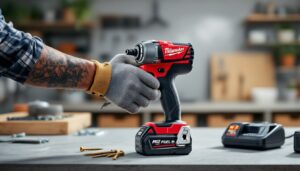
The Flex compact impact driver typically measures around 5–6 inches long (versus 8–10 inches for a full-size version) and weighs 3–4 pounds with battery. That makes it easy to maneuver in tight spaces, above your head, or under cabinets. Most modern compact models use 18-volt lithium-ion batteries as the standard, offering a good power-to-runtime ratio. The chuck usually accepts ¼-inch hex bits, which is the universal standard for impact driver accessories. Some models include a secondary handle for additional control, though compact designs often skip it to save weight.
Like any power tool, safety matters. Always wear ANSI-rated safety glasses and keep your hands clear of rotating bits and pinch points.
Why Choose a Compact Model?
Size and weight are the primary reasons DIYers gravitate toward compact impact drivers. A full-size model tops out around 5–6 pounds, which doesn’t sound like much until you’re holding it overhead for 20 minutes installing crown molding or deck framing. A compact version cuts that down to 3–3.5 pounds, reducing fatigue and improving one-handed control. That matters when you’re fastening into awkward angles or working in confined spaces like inside cabinets or between floor joists.
Compact models also cost less, typically $80–$150 versus $150–$250 for full-size versions (before battery/charger). If you’re building a toolkit and not yet sure whether you’ll use an impact driver regularly, the entry price is friendlier.
There’s a trade-off, though. Compact models deliver slightly less torque, the rotational force measured in foot-pounds. A compact might max out at 1,500 ft-lbs while a full-size reaches 2,500+ ft-lbs. For most home projects, fastening ⅜-inch lag bolts, driving ¼-inch deck screws, or assembling cabinetry, that difference won’t matter. But if you’re regularly driving heavy ½-inch fasteners into hardwood or removing corroded bolts, you may want the extra grunt.
Battery compatibility is another practical advantage. Many compact impact drivers share batteries with other Flex tools in a broader ecosystem, so you can swap a single battery between your drill, circular saw, and impact driver. That’s a real money-saver if you’re already invested in a brand.
Best Use Cases for Home and DIY Projects
Impact drivers excel at jobs where traditional drills struggle or cause hand fatigue. Here’s where a compact model shines:
Deck Building and Outdoor Framing
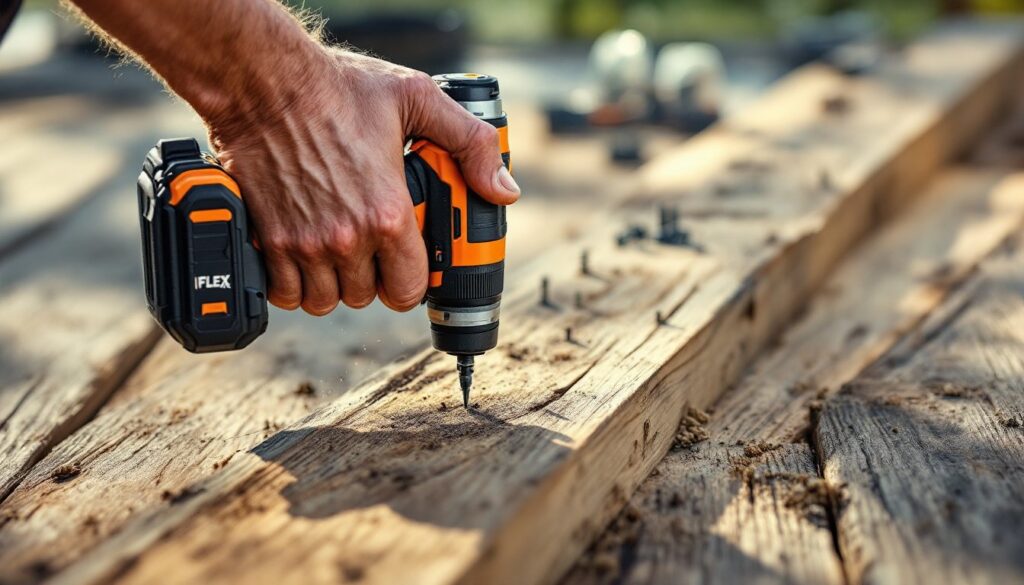
Driving exterior-grade screws, #10 by 2.5-inch corrosion-resistant fasteners, into pressure-treated lumber is a signature impact driver job. The tool delivers the torque needed without stalling, and the quick cyclic motion prevents the screw from seizing in the wood.
Cabinet Assembly and Installation
Whether you’re assembling flat-pack furniture or installing pre-made cabinetry, impact drivers drive pocket holes and confirm fasteners rapidly. The compact size fits tight corners where a drill would be unwieldy.
Shelf Mounting and Wall Anchoring
Securing heavy shelves into studs or installing toggle bolts requires controlled force. An impact driver provides that without the aggressive kickback of a standard drill if a bit catches.
Furniture Assembly and Repairs
Fastening hardware, reinforcing joints, or reattaching a cabinet back uses the impact driver’s sweet spot, repetitive, moderate-torque fastening that a compact size handles perfectly.
Plumbing and Electrical Rough-Ins
Clipping fasteners into rim joists and wall framing for supply lines and conduit is faster with an impact driver than a drill. The tool is compact enough to fit between studs without banging your knuckles.
Where to draw the line: If you’re regularly driving ½-inch bolts into dense hardwood, removing truck bolts, or doing structural steel work, rent or buy a full-size model. For everything else, 99% of typical home projects, a compact version does the job without the fatigue.
How to Select the Right Flex Compact Impact Driver
Battery Life and Power Considerations
When shopping for a compact impact driver, focus on a few core specs. Voltage is usually 18 volts for compact models, industry standard for a reason. Opt for lithium-ion batteries, not nickel-cadmium, because they hold charge longer and recharge faster. Battery amp-hour (Ah) capacity ranges from 1.3 Ah (runtime around 15–20 minutes of continuous use) to 4 Ah (up to an hour). For casual home projects, a 2 Ah battery is a practical middle ground. If you’re doing marathon sessions, framing a deck, installing new windows, consider two batteries so one charges while you work.
Maximum torque output matters less for compact models since you’re avoiding heavy-duty fastening. 1,500 ft-lbs is plenty for most residential work. Speed settings (often variable trigger or preset modes) let you dial down speed for delicate fastening and ramp up for heavy-duty work. Models with two-speed gearboxes (low for torque, high for speed) offer more control.
Ergonomics count. Grip comfort, weight distribution, and balance affect how long you can work without fatigue. Compact models should feel like a natural extension of your arm, not a brick in your hand. Some users prefer a secondary handle: others find it adds bulk without benefit.
Check whether the model includes a basic belt clip or carrying case. Budget models sometimes ship with bare tools: you’ll buy the clip separately. A case protects your investment if you’re storing it in a garage with humidity or temperature swings.
Battery compatibility across your tool ecosystem is a practical consideration. If you already own a Flex drill, choosing an impact driver from the same brand means one battery charging dock and interchangeable packs. That pays for itself quickly.
Don’t cheap out on a charger. A decent 30-minute charger runs $40–$60 but saves you from waiting hours between battery swaps. Some compact kits include a slower charger: upgrading is worthwhile if you’ll work frequently.
Getting the Most Out of Your Compact Impact Driver
Once you’ve chosen and brought home your compact impact driver, a few habits ensure reliability and safety.
Bit Selection Matters
Use impact-rated bits, not regular drill bits. Impact bits have thicker shanks and deeper sockets to handle the concussive blows. Cheap bits bend or snap. Brands like Bosch, DeWalt, and Milwaukee make reliable impact bits for $0.50–$1 each. Buy a mixed 50-piece set for around $15, and you’ll have the right bit for nearly any job.
Start Slow
When driving a fastener in unfamiliar material, begin with the trigger half-pressed to get a feel for the resistance. Then increase pressure once you confirm the bit is seated correctly. This habit prevents bit slippage and camming-out, which strips screw heads.
Maintenance and Storage
After each use, brush sawdust and debris from the chuck and motor vents with a dry cloth. Moisture and dust are the enemy of longevity. Store the tool in a dry place, and remove the battery if you won’t use the tool for more than a month. Lithium-ion batteries self-discharge slowly, but extended storage with the battery installed can damage the pack.
Bit Depth Control
Many impact drivers lack a depth clutch (unlike some drills), so you’ll drive fasteners by feel. For consistent results, especially with pocket holes or repeating fastener patterns, practice a light touch. Driving until the fastener “snaps” (magnetic bit releases from the head) ensures consistent depth without over-driving.
Know When Not to Use It
Avoid using an impact driver for drilling holes, especially in metal or masonry. The hammering action can deflect the bit and produce ragged holes. Use a regular drill for that. Similarly, don’t use an impact driver for driving small nails or brads, you’ll bend them. For fastening delicate trim or veneer, a standard drill with a clutch is safer. Recent home maintenance guides and comprehensive tool tutorials emphasize matching the right tool to the task, and that wisdom applies here.
Battery Care
Lithium-ion batteries last longest when stored at 40–60% charge and kept cool. Don’t leave a fully charged battery in the sun or a hot truck bed. Recharge before the battery is completely dead, and avoid repeatedly draining and recharging the same pack in back-to-back cycles. A well-maintained 18-volt battery lasts 3–5 years of regular DIY use.
If you’re comparing compact impact drivers across brands, independent product reviews can clarify durability, noise levels, and real-world performance in the hands of experienced testers. That context helps you avoid models with common design flaws.
Final Thoughts: Making Your Compact Impact Driver Work for You
A compact impact driver isn’t a replacement for a basic drill, it’s a complement. Use it for fastening, where it excels, and keep your drill handy for holes and delicate work. If you’re a homeowner who tackles projects seasonally, a compact model keeps costs low while delivering professional results. If you’re a serious DIYer working most weekends, investing in a quality compact driver and a second battery pays for itself in reduced fatigue and faster project completion. Choose wisely based on your project pipeline, test the grip before buying, and don’t skimp on batteries and bits. A good tool, treated with care, becomes a trusted partner for years of home improvements.