Table of Contents
ToggleStanding in the power tool aisle, you’re staring at drills and impact drivers wondering what the real difference is, and whether you actually need both. The short answer: it depends on your projects, but understanding when to reach for each tool will make you faster, safer, and less frustrated. Whether you’re hanging shelves, building a deck, or assembling furniture, knowing which tool fits the job keeps your work efficient and prevents stripped screws or damaged materials. Let’s walk through what sets them apart and help you decide what belongs in your toolbox.
Key Takeaways
- Drills provide steady, controlled rotation ideal for precision drilling and light fastening in softer materials, while impact drivers deliver rapid bursts of torque for driving large fasteners into dense materials like treated lumber.
- An impact driver is compact, lighter, and less likely to strip or overdrive screws due to its tapping action, making it excellent for high-volume fastening tasks and professional projects.
- A drill vs. impact driver decision depends on project scope: homeowners tackling occasional projects need only a quality drill, but those doing decks, fencing, or structural work benefit from owning both tools.
- Impact drivers should be avoided on delicate hardware or hollow fasteners since their aggressive impact action can snap bolts or strip threads in materials not designed for that force.
- Cordless drill-and-driver combo kits on the same battery system offer a cost-effective solution for building a toolkit, with 20V models providing standard power and compatibility across leading brands like DeWalt and Milwaukee.
- When choosing between tools, prioritize ergonomics and weight (3–5 pounds for drills, 2–4 pounds for impact drivers) over raw specs, and consider tool rental shops to test before committing to a purchase.
Key Differences Between Drills and Impact Drivers
How They Work and What Sets Them Apart
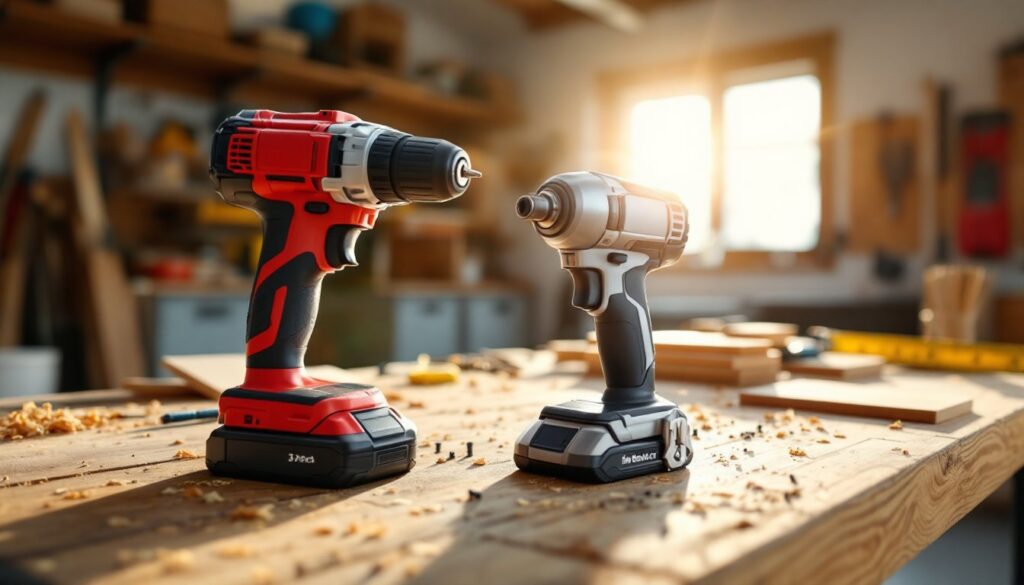
A drill works like a straightforward motor: you pull the trigger, it spins continuously at whatever speed you’ve set, and the bit rotates in a steady, controlled circle. It’s smooth, predictable, and lets you feel feedback through the tool. An impact driver, by contrast, uses a different mechanism, it delivers short, rapid bursts of rotational force (impact). Think of it like the difference between pushing a screw in steadily versus tapping it with a hammer repeatedly, but electronically.
Impact drivers typically run at lower RPMs (revolutions per minute) than drills, but they generate far more torque (twisting force). That burst action is what makes them excellent for driving long fasteners or working with dense materials, the impacts do the heavy lifting rather than relying on your arm strength or the motor to push through resistance. The steady rotation of a drill, meanwhile, gives you precise control when you need it.
Size and weight matter too. Most impact drivers are compact and lighter because they don’t need a large motor to generate force. Drills tend to be a bit bulkier. If you’re working overhead or in tight spaces, an impact driver’s footprint is an advantage. The noise is also different, a drill hums smoothly, while an impact driver produces a distinctive clicking or tapping sound. Not a problem if you’re working during the day, but something to consider if you’re a morning person working on a Sunday.
When to Use a Drill for Your Home Projects
Drills shine when you need control and precision. If you’re drilling holes, whether it’s through drywall, wood, or metal, a drill gives you the steady, predictable rotation that prevents wandering or binding. You can start a hole slowly, feel when the bit catches, and adjust as needed. This matters when drilling through finished surfaces where you don’t want the bit skating across the top.
For driving screws into softer materials like drywall or pine, a drill works beautifully. The continuous rotation lets you ease the screw in without stripping the head or overdriving and snapping it off. You’re in control of the speed and pressure, so you can slow down as the screw seats. Tasks like assembling furniture, installing cabinet hardware, or hanging shelves typically benefit from drill precision.
Drills also excel at mixing tasks, many come with a paddle attachment for stirring paint or joint compound. If you’re doing mixed work (drilling, light fastening, mixing), a single drill handles multiple jobs. For general homeowner tasks involving standard wood screws in common materials, a drill remains the better choice. It’s less likely to overdrive fasteners or snap hardware.
When to Use an Impact Driver Instead
Impact drivers dominate when you’re driving large fasteners into hard or dense materials. Installing deck boards with heavy-gauge fasteners, driving lag bolts, or fastening into pressure-treated lumber? The impact driver’s burst action powers through without you breaking your wrist or straining the motor. Professional framers and deck builders reach for impact drivers because the job demands speed and power.
They’re also ideal when you’re driving many fasteners in succession, say, fastening sheathing, installing roofing, or assembling a structure. The rapid impacts move work forward quickly, and your hand stays fresher because the tool does the heavy lifting, not your arm. If you’re combining fastening with drilling, though, understand that impact drivers don’t drill as cleanly as dedicated drills. They work, but for precision holes, you’ll appreciate having a drill available.
Another advantage: stripping screws becomes much harder with an impact driver. Because the tool’s tapping action releases fractionally between impacts, it’s almost impossible to overdriven a screw into soft material, the impacts stop doing work once the fastener seats. This is why impact drivers are so popular on job sites. But, don’t use them on delicate hardware, hollow fasteners, or situations requiring light touch, the impact action can snap bolts or strip threads in materials not designed for aggressive driving.
Do You Really Need Both Tools?
If you’re tackling light homeowner projects, hanging shelves, assembling IKEA furniture, installing a towel bar, a quality drill covers 95% of what you’ll do. Adding an impact driver becomes valuable once you move into bigger projects: building decks, fencing, sheds, or structural work where you’re driving fasteners into treated lumber or composite materials regularly.
For the occasional homeowner, one quality drill is smarter than two mediocre tools. But if you find yourself doing multiple projects yearly, or if you’ve had trouble driving long fasteners or working with dense wood, an impact driver pays for itself quickly. The decision eventually hinges on project scope and frequency. A professional or serious DIYer likely owns both and grabs each based on the task. A homeowner handling the occasional weekend project is fine with just a drill.
Consider also that many serious DIYers end up with a cordless drill-and-driver combo kit, a compact drill bundled with an impact driver on the same battery system. This approach gives you both tools without doubling investment. You learn quickly which you reach for first, and the battery compatibility means less clutter. If you’re building a first toolkit, this is worth exploring.
Buying Guide: How to Choose the Right Tool for Your Needs
Start by honestly assessing your projects. Are you hanging drywall, installing doors, and doing interior tasks? A 18-volt to 20-volt cordless drill covers you well and costs $80–150 for a solid mid-range option. If you’re framing, decking, or driving lots of 3-inch fasteners into treated lumber, lean toward an impact driver in the same voltage range.
Battery voltage matters, 18V and 20V are the modern standards, with 20V offering slightly more sustained power. Brands like DeWalt, Milwaukee, and Makita maintain compatibility within their lines, so a 20V drill and 20V impact driver share batteries and chargers, reducing expense. Amp-hours (Ah) on the battery indicate runtime: 2Ah runs shorter than 4Ah or 5Ah. If you’re buying separately, matching brands and voltages prevents headaches.
For your first tool, prioritize ergonomics and weight, you’ll use it more if it feels good in your hand. Heavier isn’t always stronger: modern designs pack power into lighter frames. Read reviews focusing on real homeowner use, not just contractor specs. Check whether the model comes with a carrying case and extra batteries: these add value. Weight roughly 3–5 pounds for a drill and 2–4 pounds for an impact driver, so anything significantly heavier might fatigue you on longer projects.
Resources like This Old House comparing impact drivers and drills break down specific models and their strengths. Popular Mechanics reviews frequently cover new tool releases with real-world testing. Don’t overlook Today’s Homeowner tool guides for seasonal or project-specific recommendations. Local tool rental shops also let you try before buying, a good option if you’re uncertain.
Conclusion
The choice between a drill and an impact driver isn’t either-or for most serious DIYers, it’s about understanding what each does best and investing accordingly. A drill handles precise work and light fastening: an impact driver tackles power and speed. For a first tool, a quality drill is the logical choice. Once your projects expand, an impact driver becomes a natural second purchase that transforms how quickly and confidently you work. Know your projects, choose based on what you’ll actually use, and you’ll build a toolkit that serves you for years.