Table of Contents
ToggleIf you’ve spent the last hour wrestling with a corded drill trying to drive deck screws, it’s time to consider an M12 1/4 hex impact driver. This compact powerhouse sits somewhere between a traditional drill and a full-size impact driver, offering the rotational force you need without the bulk or overkill. For homeowners tackling cabinet assembly, deck builds, or framing work, an M12 1/4 hex impact driver delivers speed and torque in a footprint that fits into tight spaces. Whether you’re finishing a single project or building a collection of portable power tools, understanding what this tool can and can’t do saves time, money, and frustration.
Key Takeaways
- An M12 1/4 hex impact driver delivers 100–150 inch-pounds of torque at 2,000–3,000 impacts per minute, making it ideal for driving deck screws, cabinet assembly, and finish carpentry without the bulk of full-size models.
- The 12V compact design weighs 2.5–3.5 pounds, fitting easily into tight spaces like inside cabinets and wall studs where larger impact drivers can’t turn.
- Brushless motor M12 models provide 20–30% longer runtime and better heat management compared to brushed alternatives, justifying the $30–40 premium for frequent users.
- Pre-drilling hardwoods and materials prone to splitting prevents binding and reduces wrist injury risk when using an M12 1/4 hex impact driver safely.
- Choosing a kit with at least one 2.0Ah or 3.0Ah battery extends project runtime significantly, since 1.5Ah batteries drain quickly on larger fastening tasks.
- Always wear safety glasses, hearing protection, and work gloves during operation, as impact drivers produce 90+ dB of noise and can fling bit fragments unpredictably.
What Is an M12 1/4 Hex Impact Driver?
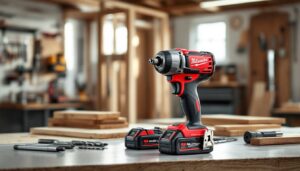
An M12 1/4 hex impact driver is a compact cordless fastening tool designed for driving screws and light fastening work. The M12 refers to the battery voltage (12 volts), a smaller, lighter alternative to 18V or 20V models. The 1/4-inch hex chuck accepts square-drive bits with a 1/4-inch hex shank, the industry standard for most driver bits and socket adapters.
Unlike a standard drill, an impact driver delivers rapid bursts of rotational force rather than continuous torque. This mechanism drives fasteners faster and with less arm fatigue, especially in hardwoods or when fastening into steel. The tool “impacts”, applying sudden, concentrated twists that help screws bite without the user having to muscle them in. You’ll hear a distinctive chattering sound during operation, which is the impact mechanism working.
The compact size makes M12 1/4 models ideal for confined spaces: inside cabinets, between wall studs, or in tight corners where a full-size impact driver won’t fit. Builders and electricians often favor 12V models for finish work, cabinet assembly, and jobs where weight and maneuverability matter as much as raw power.
Key Features and Specifications to Know
Most M12 1/4 hex impact drivers share a core set of specs worth understanding before you buy:
Torque Output: Measured in inch-pounds (in-lbs), typical 12V models range from 100 to 150 in-lbs. This is plenty for driving 2.5-inch deck screws or 1/4-inch hex fasteners into softwood or composite materials, but will struggle with larger fasteners or hardwoods without pre-drilling.
Speed: Most 12V impact drivers operate at 2,000 to 3,000 impacts per minute (IPM), driving fasteners quickly without excessive noise or vibration compared to larger tools.
Battery: The M12 designation refers to a 12V lithium-ion battery. Most compact models use 1.5Ah to 2.0Ah capacity, light enough for one-handed work, though you’ll want a spare battery for longer projects. Charge time typically runs 30 to 60 minutes.
Weight: Expect 2.5 to 3.5 pounds without the battery, light enough that fatigue isn’t an issue on all-day projects. This makes M12 tools popular for overhead fastening or repetitive tasks.
Noise Level: Impact drivers are louder than drills (85–95 dB), so always wear ear protection. A brief pause between fasteners lets you hear if something’s binding.
Recent impact driver comparisons show that 12V models with brushless motors deliver longer runtime and better heat management than brushed alternatives, though they typically cost $20–40 more upfront.
Who Should Use an M12 1/4 Hex Impact Driver?
Best For Homeowners and DIY Enthusiasts
An M12 1/4 hex impact driver shines when you’re driving fasteners repeatedly without overwhelming force demands. This includes:
Cabinet and furniture assembly: Mounting hinges, installing shelf pins, driving screws into plywood or composite materials. The compact size fits easily inside cabinets or under sinks where a larger drill won’t turn.
Deck and patio projects: Driving corrosion-resistant deck screws into pressure-treated lumber or composite boards. You’ll finish 200+ fasteners per battery charge, though pre-drilling hardwood (like tropical lumber) is essential.
Framing and rough construction: Hanging drywall, attaching furring strips, or fastening blocking between studs. The impact function reduces fatigue when you’re driving hundreds of screws over several hours.
Finish carpentry: Installing trim, moldings, or hardware where precision and control matter. The lighter weight lets you work overhead or in tight spaces without shoulder strain.
Electrical work: Professionals often use M12 models for fastening junction boxes, mounting device brackets, or securing conduit straps. The tool’s size fits easily into toolbelts.
Limitations: M12 tools aren’t ideal for structural bolting (where larger impacts or corded impact wrenches are standard), driving fasteners larger than 1/2 inch, or fastening into hardened steel. If you’re frequently working with 3/8-inch bolts or 5/16-inch hex screws, a 18V or 20V model is worth the extra weight. Professional impact driver testing shows that 12V models excel at residential fastening but fall short for commercial-grade applications.
Choosing the Right Model for Your Needs
When shopping for an M12 1/4 hex impact driver, you’ll encounter a range of prices ($80–$250 depending on brand, battery capacity, and whether you buy bare tool or kit). Here’s what separates models worth your money from the rest:
Motor Type: Brushless motors are quieter, run cooler, and deliver more torque per watt than brushed alternatives. For homeowners planning to use the tool frequently (more than a few times per month), the $30–40 premium for brushless is worth it.
Battery Capacity: 1.5Ah batteries are light but drain quickly on large projects. A 2.0Ah or 3.0Ah battery doubles your runtime between charges. Buy the kit that includes at least one higher-capacity battery if you plan longer projects.
Ergonomics: Weight and grip diameter matter if you’re working overhead or one-handed. Pick up the candidate tools before buying: a model that feels unbalanced in your hand will fatigue you faster.
Torque Rating: Don’t chase peak numbers. Most homeowners won’t notice the difference between 125 in-lbs and 150 in-lbs on typical fastening tasks. Higher torque increases kickback risk if the bit binds, so more isn’t always better.
Cordless vs. Corded Options
Cordless (battery-powered) M12 1/4 hex impact drivers dominate the DIY market because they offer mobility and no cord tangles. Runtime per battery charge ranges from 30 minutes to 2 hours depending on fastener size and wood density. You’ll need at least two batteries for any all-day project, plus a charger (often included in kits).
Corded 12V models are rare and heavy (wall-powered compact impact drivers are more common at 120V for workshop use). For DIY homeowners, cordless is the standard, batteries have become lightweight and affordable enough that corded models add no practical advantage.
Most manufacturers offer M12 1/4 models as part of a larger battery ecosystem, so if you already own a Milwaukee, DeWalt, Makita, or Bosch 12V impact driver, you can swap batteries with other tools in that brand’s system. This ecosystem approach saves money on additional batteries and chargers over time. Professional reviews on impact driver performance consistently highlight Milwaukee M12 and DeWalt Atomic lines for reliability, though brand loyalty among homeowners matters less than battery compatibility with tools you already own.
How to Use Your Impact Driver Safely and Effectively
Operating an M12 1/4 hex impact driver safely requires respecting its power and following a few straightforward practices:
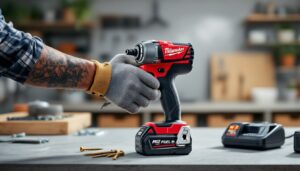
Gear Up: Wear safety glasses (impact drivers can fling bit fragments), hearing protection (consistent 90+ dB noise), and work gloves to protect hands from spinning bits. Skip loose jewelry or sleeves that could snag the chuck.
Load the Bit Correctly: Ensure the 1/4-inch hex bit is fully seated in the chuck, a loose bit can spin out or bind. Spin the chuck by hand to confirm the bit doesn’t wobble.
Start Soft: Use a slower trigger speed for the first half-turn, letting the bit “find” the screw head. This prevents the bit from slipping or stripping the fastener.
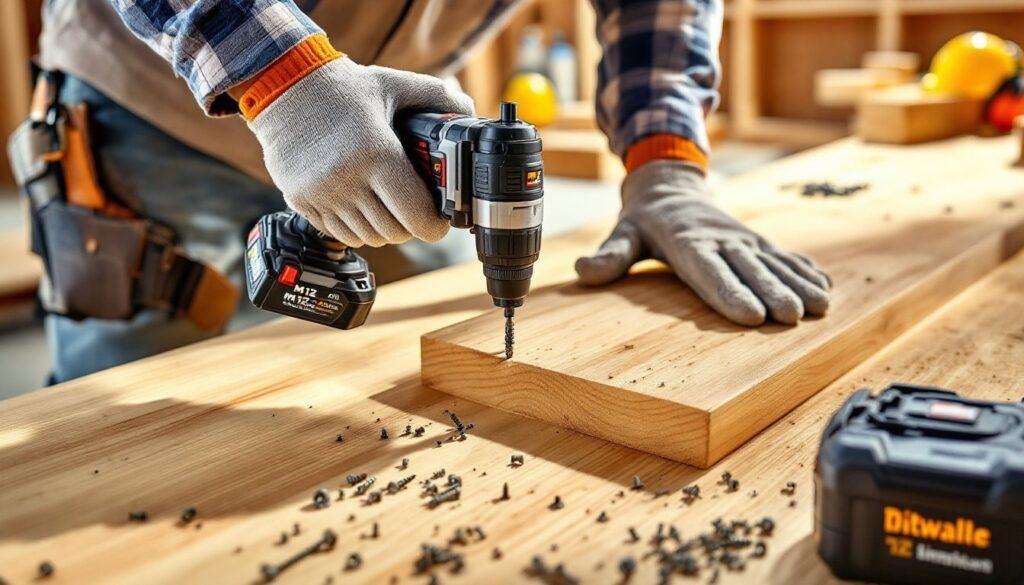
Pre-Drill When Needed: Hardwoods (oak, walnut) and materials prone to splitting (cedar, composite deck boards near edges) benefit from a 1/16-inch pilot hole before driving the fastener. This reduces sideways pressure and prevents the wood from splitting.
Secure Your Workpiece: Clamp boards to a bench or have a helper hold the work. Free-floating materials can spin unpredictably if the bit binds, risking wrist injury.
Monitor Battery Voltage: Most 12V impacts perform best above 10V. As the battery weakens, the tool loses torque and works slower. Swap batteries rather than forcing a low-charge battery, this extends battery life and prevents the tool from stalling mid-fastener.
Avoid Overdriving: Stopping the screw just below flush prevents splitting or stripped heads. Most experienced users estimate the trigger duration rather than watching the bit constantly.
Tool Care: After use, clean dust from the chuck and vents with a dry brush or compressed air. Store batteries in a cool, dry place, excessive heat degrades lithium-ion cells. Never leave batteries on chargers overnight: most modern chargers auto-stop, but it’s a habit worth forming.
The impact driver’s mechanical advantage does most of the work: your job is to guide and control. This tool isn’t meant to be muscled, if you find yourself pushing hard or the tool stalls, something’s wrong. Stop, recheck the bit, material, or fastener size, and adjust your approach.