Table of Contents
ToggleA quality table saw is the centerpiece of any functional workshop, it’s where serious projects start. Whether you’re building a deck, crafting custom shelving, or tackling furniture builds, having the right saw makes the difference between clean cuts and frustrating do-overs. Lowe’s carries a solid range of table saws from budget-friendly starter models to premium machines for dedicated woodworkers. This guide walks through what matters when shopping for a Lowe’s table saw, highlights the best options at different price points, and covers the essential safety practices every operator should master before firing one up.
Key Takeaways
- A Lowe’s table saw is essential for precision woodworking and DIY projects, delivering consistent cuts with less sanding and safer hand positioning than handheld tools.
- Choose based on your project scale: budget benchtop saws ($400–$600) work for framing and basic furniture, while premium cabinet models ($800–$2,000+) suit serious woodworking requiring industrial-grade precision.
- Prioritize fence system quality, table stability, and motor power when comparing table saw models, as these directly impact cut accuracy and safety.
- Always wear safety glasses and hearing protection, use push sticks for narrow rips, feed stock correctly, and never reach over the blade—table saw injuries happen in seconds.
- Inspect your blade regularly, ensure the fence tracks parallel to the blade, maintain proper dust collection, and store your saw in a dry location to maximize performance and longevity.
Why A Quality Table Saw Matters For Your DIY Projects
A table saw is built for ripping (cutting along the grain) and crosscutting lumber with precision and repeatability. Unlike a circular saw or miter saw that you guide by hand, a table saw holds the workpiece steady while the blade does the work, this consistency pays off immediately in projects that demand tight tolerances.
Accuracy translates directly to less sanding, fewer shimming headaches, and assemblies that don’t rack or twist. If you’re framing walls, building cabinetry, or creating trim work, those quarter-inch errors compound fast. A table saw also handles ripping wider stock more safely than a handheld tool: your hands stay further from the blade, and the fence guides the cut without wandering.
Beyond raw capability, the right saw reduces fatigue and setup time. A sturdy fence system and reliable dust collection mean fewer frustrations and faster workflow. For DIYers graduating from basic projects to structural or furniture work, a table saw becomes indispensable.
Top Table Saw Models Available At Lowe’s
Lowe’s inventory shifts seasonally and by location, but the store consistently stocks saws across three main tiers. Here’s what to expect.
Budget-Friendly Options For Beginners
Entry-level saws under $400–$600 typically come with smaller motors (8–10 amps) and benchtop or compact contractor bases. Brands like DeWalt, Ryobi, and Craftsman dominate this tier. A benchtop saw (weighing 50–80 lbs) sits atop a stand you build or buy separately, making it portable and suitable for small garages or shared workshop space.
These starter machines handle framing lumber, plywood ripping, and general crosscutting without complaint. They won’t win speed contests against cabinet-shop equipment, but they’re reliable for weekend projects. The trade-off: less rigid tables, smaller rip fences, and dust collection that requires an aftermarket shroud. If you’re building decks, sheds, or basic furniture, a budget benchtop saw gets the job done. Expect to spend extra time on setup and calibration: cheaper saws don’t hold tolerances as tightly out of the box.
Premium Models For Serious Woodworking
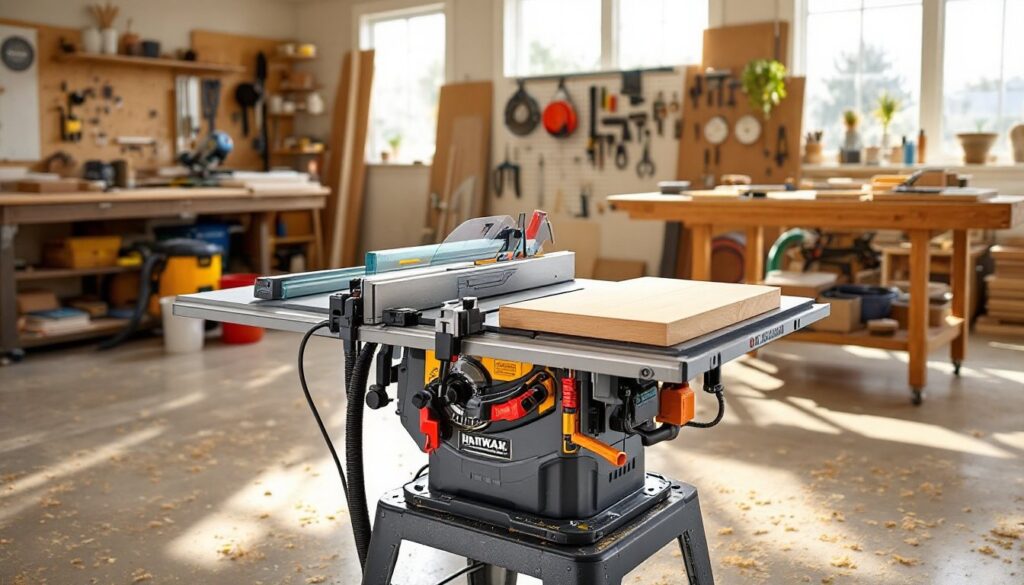
Saws in the $800–$2,000+ range come with contractor-style or cabinet bases, larger motors (15 amps or 3 HP), and aluminum or cast-iron tables. These machines feature industrial-grade fences (often Biesemeyer or Unifence clones), better dust collection, and rip capacity up to 52 inches.
A cabinet saw, while heavier and harder to move, isolates motor vibration and runs quieter. The added weight and precision appeal to serious hobbyists tackling inlays, box joints, and finishing-grade furniture. Many cabinet saws accept a wide range of aftermarket attachments and hold blade height and tilt adjustments through years of hard use. At this level, research specific models, cross-reference options on This Old House’s table saw roundup to compare fence systems and dust collection ratings against what Lowe’s carries locally.
Key Features To Compare Before Buying
Not all table saws perform equally, and a few specs matter more than others.
Motor Power & Type: A 10-amp benchtop saw draws enough power for occasional use, while a 15-amp contractor or cabinet saw handles repetitive production without bogging down. If you’re ripping 8/4 hardwood regularly, motor power becomes critical: undersized motors stall under load, creating kickback risk.
Blade Diameter & Arbor Size: Most saws accept a 10-inch blade. Check that your blade will fit, some budget models use proprietary sizing. Standard arbor hole is 5/8 inch: this matters when buying aftermarket blades. A good crosscut blade (80 teeth, carbide-tipped) and a rip blade (24 teeth) cover 90% of tasks. (Crosscut blades leave a smoother edge: rip blades clear sawdust faster.)
Rip Capacity: This is the maximum distance from blade to fence. A 24-inch rip capacity handles sheet goods and standard lumber: 36+ inches suits longer rips and wider panels. Budget saws typically top out around 24 inches.
Fence System: The fence must track parallel to the blade and lock tight. A Miter gauge (included with most saws) guides crosscuts: aftermarket gauges improve accuracy significantly. Don’t skip this, a sloppy fence ruins cuts and creates binding and kickback hazards.
Dust Collection: Benchtop saws often lack built-in collection: you’ll need a shop vacuum and aftermarket shroud. Contractor and cabinet saws ship with larger dust ports (often 4-inch) that connect to a real dust collector. Poor dust management means a filthy shop and reduced blade visibility.
Table & Base Stability: Cast iron or aluminum tables stay flat longer than stamped steel. A contractor base on wheels beats a fixed benchtop stand if you move your saw between jobs or share workspace. Always check review photos and descriptions on Lowe’s website, better yet, visit the store and feel the table flatness by sighting down the surface.
Safety Tips And Best Practices For Table Saw Operation
A table saw is one of the most dangerous tools in any shop. Respect it, and it’ll serve you for decades. Ignore safety, and the consequences are severe, amputations and lacerations happen in seconds.
Essential PPE & Setup:
Always wear safety glasses (not sunglasses) and hearing protection when the saw runs. Wear a dust mask or respiratory protection if your dust collection is weak. Tie back long hair, remove jewelry, and wear fitted clothing (loose sleeves can catch the blade). Never operate the saw alone, especially when learning: have a buddy nearby in case something goes wrong.
Inspect the blade for cracks, missing teeth, or wobble before each use. Worn blades bind and cause kickback. Ensure the fence is parallel to the blade and locked down, a crooked fence is a kickback waiting to happen. Never remove sawdust by hand while the blade spins: use a brush or stick. Keep your hands at least 6 inches from the blade path.
Feeding Stock & Kickback Prevention:
When ripping, feed wood against the blade rotation (left side of the blade, moving right). Let the saw do the work: don’t force stock. If the blade binds, stop immediately, switch off the motor, wait for the blade to stop completely, and back the stock out slowly. Never reach over the blade while it’s running, even if you think it’s stopped, momentum can deceive you.
For crosscutting, use the miter gauge and a stop block to avoid twisted or unstable cuts. Never cut freehand across the table. A push stick or push block is essential for narrow rips (under 4 inches wide): it keeps hands clear of the blade. Many shop accidents happen on “quick cuts” people don’t think need a push stick, think twice.
Workshop resources like Fix This Build That and Today’s Homeowner offer detailed safety videos and setup guides if you’re new to table saws. Watch them before your first cut.
Maintenance & Storage:
Wipe down the table regularly to prevent rust and rust creep under the fence. Check blade alignment monthly: a wobbling blade causes poor cuts and vibration fatigue. Unplug the saw before adjusting the fence, tilt handle, or height lever. Store the saw in a dry space: moisture encourages corrosion. Cover it with a tarp or dust sheet if it sits idle for months.
Conclusion
Choosing a table saw from Lowe’s doesn’t require spending the most or settling for the least. Match the saw’s capacity and power to the projects you plan, prioritize a solid fence and stable table, and commit to learning proper safety practices before the first cut. Start with budget-friendly models if you’re uncertain: upgrade to a premium saw once you’ve confirmed woodworking is a lasting interest. Treat the blade with respect, follow the safety rules every time, and a good table saw becomes one of the most rewarding investments in your workshop.