
Table of Contents
ToggleThat burned-out light in the back of your Frigidaire refrigerator isn’t just annoying, it’s also a reminder that even the most reliable appliances need occasional maintenance. The good news? Replacing a Frigidaire refrigerator light bulb is one of the easiest DIY fixes you can tackle without special tools or experience. Most homeowners can swap out a bulb in under five minutes. This guide walks you through understanding what type of bulb you need, why it burned out, and how to replace it correctly so you’re not stumbling around in the dark searching for leftovers.
Key Takeaways
- Replacing a Frigidaire refrigerator light bulb is a quick DIY task taking under five minutes—unplug the unit, locate the fixture, and swap in the correct appliance-rated bulb.
- Frigidaire refrigerators typically use A15 incandescent, T8 LED, or G9 halogen bulbs; always buy appliance-rated replacements, as regular household bulbs fail quickly in cold, humid conditions.
- LED A15 bulbs are a worthwhile upgrade, using 80–90% less energy than incandescent equivalents and lasting 15,000–25,000 hours while producing the same brightness.
- Incandescent bulbs burn out naturally after 500–1,000 hours due to cold stress and vibration, while LED bulbs gradually dim over time rather than suddenly burning out.
- Call a professional if the light flickers, the socket appears damaged, the bulb burns out repeatedly, or water damage is visible—DIY replacement only works for standard burnout scenarios.
Understanding Your Frigidaire Refrigerator Light Bulb Type
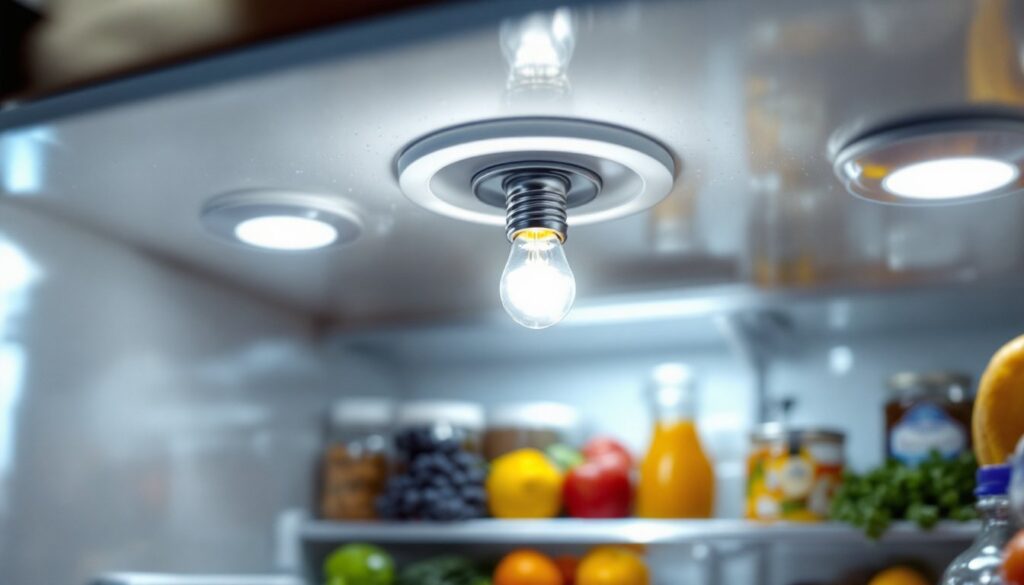
Your Frigidaire uses a specific bulb type designed to handle the cold, humid environment inside your fridge. It’s not a standard household bulb, and using the wrong one can cause damage or poor performance. The bulb sits in a socket near the top of the fridge interior, usually tucked behind a small plastic cover or mounted directly in the light fixture.
Frigidaire refrigerators typically use one of two main bulb types: A15 incandescent bulbs (the traditional pear-shaped ones) or T8 LED bulbs (longer, tube-shaped). Some newer models use G9 halogen or specialized LED A15 equivalents. The wattage matters too, most are 40W or 60W incandescent, though LED replacements have much lower wattage (usually 4–8W) while delivering the same brightness.
Common Bulb Specifications Across Models
A15 incandescent bulbs are the most common in older and mid-range Frigidaire models. These screw into a standard medium (E26) socket and are rated for appliance use, meaning they’re built to withstand temperature swings. You’ll find them rated at 40W or 60W, producing warm, familiar light. They typically last 500–1,000 hours before burnout.
LED A15 bulbs are the modern replacement for incandescent models. They use 80–90% less energy, last 15,000–25,000 hours, and run cooler inside the fixture. If your model originally came with incandescent, LED A15 appliance-rated bulbs are a direct swap, no wiring changes needed. Make sure the package says “appliance use” or “refrigerator-rated,” as regular LED bulbs can fail in cold temperatures.
T8 LED tubes appear in some Frigidaire designs, particularly in larger or commercial-style models. These are about 2 feet long and slide into a clip-on fixture. Replacement is straightforward: twist or slide out the old tube, slide in the new one. T8 LEDs are excellent for durability and energy efficiency in this application.
G9 halogen bulbs show up in select premium Frigidaire models. These are small, pin-based bulbs that fit into a specific socket. They’re less common in residential fridges but are still readily available online and at appliance stores.
Why Your Frigidaire Light Bulb Burned Out
A burned-out bulb isn’t random, it’s the result of normal wear or a specific condition inside your fridge. Understanding why it failed helps you choose the right replacement and avoid repeat failures.
Incandescent bulbs are prone to burnout simply because of their lifespan. A 40W or 60W appliance bulb in regular use lasts anywhere from 500 to 1,000 hours. If you open your fridge multiple times daily, that’s maybe 2–3 years of life. It’s not a defect: it’s the nature of the technology. The filament heats up, cools down, and eventually breaks.
Cold temperature stress accelerates failure in non-appliance bulbs. Regular household bulbs aren’t designed for the 35–40°F environment inside a fridge. The cold makes the filament brittle, and vibration from the compressor cycling on and off causes micro-fractures. This is why you must buy bulbs labeled for appliance or refrigerator use, they have reinforced filaments and shock-resistant construction.
Moisture and humidity also take a toll. The damp air inside a fridge can corrode cheap sockets or cause electrical resistance that overheats the filament. A loose bulb or a socket with oxidation can create arcing, which burns out the bulb prematurely. If you notice the bulb burning out faster than expected (every 6 months or so), the socket may be failing and you might need a professional to inspect the fixture.
LED bulbs, by contrast, fail differently. They don’t “burn out” in the traditional sense: they gradually dim over thousands of hours. A failed LED usually means an internal driver circuit gave up, not the light source itself. This is rare in quality appliance-rated LEDs.
Step-by-Step Replacement Process
Replacing your Frigidaire light bulb takes minutes and requires minimal effort. Before you start, unplug the refrigerator, this is a safety must, even though the voltage to the bulb is low.
1. Unplug the refrigerator. This is non-negotiable. Even though a 40W or 60W bulb carries minimal shock risk, electrical work inside an appliance always requires the power off.
2. Locate the light fixture. Open the fridge door and look near the top, usually on the ceiling or upper sidewall. Most fixtures are housed in a removable plastic trim ring or built directly into the wall. Check your manual if you’re unsure: the diagram shows exactly where it is.
3. Remove the cover or trim ring (if present). Some models have a small translucent plastic cover you push or twist to remove. Others have a trim ring that pops out with gentle downward pressure. Be careful not to crack plastic: these pieces are replacement items but inexpensive.
4. Remove the old bulb. For A15 screw-base bulbs, turn counterclockwise until it loosens, then pull gently. For T8 tubes, twist 90 degrees and pull straight out, or slide sideways depending on the clip style. For G9 halogen, pull straight out or depress and twist, depending on the socket type. Dispose of incandescent bulbs carefully, they’re fragile.
5. Install the new bulb. Screw an A15 bulb clockwise until snug, don’t overtighten. Slide a T8 tube and twist to lock, or push straight in if it’s a clip design. Insert a G9 pin-base bulb straight in until it clicks. Avoid touching LED bulbs with bare skin (oils can damage them): wash your hands first or wear clean gloves.
6. Reattach the cover or trim ring. Push it back into place with a gentle snap or twist. Make sure it’s flush and doesn’t cover any ventilation slots.
7. Plug the refrigerator back in and test. Open the door and confirm the light turns on. If it doesn’t, the bulb may be defective (rare with new ones) or the socket may have an issue requiring professional service.
Choosing the Right Replacement Bulb
Buying the wrong bulb wastes money and can damage your fridge’s electrical system. Here’s how to get it right.
Check your manual first. The easiest path is opening your Frigidaire manual and looking up the bulb spec. It’ll list the exact wattage, base type, and manufacturer part number. If you’ve lost the manual, search “Frigidaire [your model number] manual PDF” online, Frigidaire’s site hosts most of them for free.
Note the model number. It’s usually on a sticker inside the fridge, on the back wall, or at the bottom. Write it down or take a photo. With this number, you can call a Frigidaire parts distributor (1-800-374-4432) and they’ll confirm the exact bulb your fridge needs.
Buy appliance-rated bulbs only. This is the golden rule. Whether incandescent or LED, the package must say “appliance use,” “refrigerator-rated,” or “freezer-rated.” Regular household bulbs will fail quickly in the cold. Brands like Westinghouse, GE, and Frigidaire all make reliable appliance bulbs. Good Housekeeping publishes tested appliance recommendations if you want to cross-check product reviews before buying.
Consider LED upgrades. If your manual allows it, swapping to an LED A15 bulb is worthwhile. A 6–8W LED A15 produces the same light as a 60W incandescent, uses a fraction of the power, and lasts 20,000+ hours (roughly 20 years of normal use). The upfront cost is higher (usually $8–15 vs. $1–2 for incandescent), but you’ll replace it far less often. Make sure the LED bulb is dimmable and appliance-rated, not all are.
Watch for fit issues. Some LED bulbs are slightly larger in diameter than their incandescent equivalents. If the fixture cover doesn’t close fully after installation, the bulb might be too wide. Check the product photos or specs for bulb diameter before buying.
Online vs. in-store. Appliance bulbs are widely available at Amazon, eBay, and appliance parts sites. In-store, you’ll find them at Lowe’s, Home Depot, and Ace Hardware. Online is usually cheaper and faster if you know the exact spec. In-store is good if you want to compare products side-by-side or avoid shipping costs for a $2 item.
When to Call a Professional vs. DIY
Replacing a bulb is almost always a DIY job. But certain situations warrant a service call.
DIY is fine if: The bulb is burned out (no light at all), and you’ve confirmed the correct replacement bulb. You’re confident unplugging the fridge and accessing the fixture. You follow the replacement steps above. This handles 99% of light-bulb issues and takes five minutes.
Call a professional if: The light flickers or dims but doesn’t fully burn out, this often signals a failing socket or loose connection that requires electrical diagnostics. The fixture cover cracks or the socket appears corroded or damaged. The bulb burns out repeatedly (every few months) after you’ve installed a fresh, correct bulb. The fixture has visible water damage or ice buildup around it. You hear buzzing from the light fixture, this indicates an electrical issue, not a bulb problem.
Cost expectations. A service call for a light-socket repair typically runs $150–300 for the diagnosis and repair, depending on your region and the technician’s travel fee. If the socket needs replacement, add $50–100 for the part. This is rare: most fridges’ light circuits are simple and reliable.
Manufacturer warranty. If your Frigidaire is still under warranty (usually 1–5 years depending on the coverage), a light-fixture failure may be covered at no cost. Check your warranty card or call Frigidaire customer service with your model number before paying for a repair.
For most homeowners, a burned-out bulb is a straightforward DIY fix. Family Handyman covers common appliance repair tutorials if you want to build confidence tackling similar projects. Trust your instincts: if something feels electrical or involves water damage, defer to a professional.
Conclusion
A burned-out Frigidaire refrigerator light bulb is a minor inconvenience with a simple solution. Identify your bulb type, buy the correct appliance-rated replacement, and swap it in under five minutes. Stick with incandescent if that’s what your manual specifies, or upgrade to LED for better efficiency and longevity. If the light won’t turn on after replacement or the bulb burns out repeatedly, that’s when you call a pro. Until then, grab a bulb and get that fridge illuminated again.