Table of Contents
ToggleThe M12 hex impact driver has become a go-to tool for homeowners tackling fastening jobs around the house. Whether you’re assembling deck framing, driving structural screws into treated lumber, or installing cabinet hardware, this compact tool delivers surprising power without the bulk of a full-size impact driver. Unlike its larger 18-volt cousins, the M12 fits comfortably in tight spaces, between joists, inside cabinets, or even one-handed on overhead work. It’s fast enough for serious fastening tasks yet light enough that fatigue won’t set in after an hour on the ladder. If you’ve been wondering whether a smaller impact driver makes sense for your toolbox, this guide walks you through what sets M12 drivers apart, when to use them, and how to pick the right one for your projects.
Key Takeaways
- An M12 hex impact driver delivers 150-170 foot-pounds of torque in a compact 7-8 inch form factor, making it ideal for fastening work in tight spaces where full-size drivers won’t fit.
- This tool excels at framing, deck assembly, cabinet installation, and concrete anchoring tasks, but shouldn’t be your choice for heavy-duty industrial fastening or sustained high-torque applications.
- Two-speed transmission is worth upgrading to because it lets you adjust RPM for delicate work and power tasks without adding significant weight or cost to your M12 impact driver.
- Battery capacity selection matters: pair two 2.0Ah batteries for shorter projects or add a third battery (mixing 2.0Ah and 4.0Ah) for longer jobs to keep one charging while two rotate in use.
- Extend your M12 hex impact driver’s lifespan by blowing out the chuck with compressed air after use, storing in cool, dry conditions, and maintaining batteries at 40-60% charge when in storage.
What Is an M12 Hex Impact Driver?
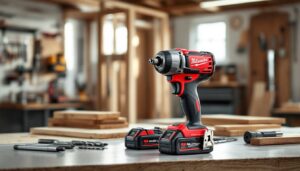
An M12 hex impact driver is a compact, battery-powered fastening tool designed around a 1/4-inch (6.35 mm) hex chuck. The “M12” designation refers to the battery platform size, 12 volts, used by several major tool manufacturers. Unlike a regular drill or driver, an impact driver works by delivering rapid rotational force combined with concentric impacts, essentially striking the bit forward while spinning it. This dual action lets you drive large fasteners (structural screws, lag bolts, coach screws) without the tool twisting out of your hand or binding up in the material.
The hex chuck accepts any standard 1/4-inch hex bits, driver bits, socket adapters, and drill bits designed for hex attachment. It’s quick to change bits without a chuck key, making mid-project swaps fast and convenient. The compact profile (usually 7 to 8 inches long, around 3 to 4 pounds) lets you work in confined spaces where a standard 18-volt driver won’t fit. For DIYers, that difference is real: getting inside a cabinet, between wall studs during backing installation, or up into soffit work becomes manageable.
Key Features That Set M12 Drivers Apart
Compact Design and Lightweight Construction
Size matters when you’re standing on a ladder or reaching into tight spaces. M12 impact drivers typically measure 7 to 8 inches in length and weigh between 3 and 4 pounds (tool only), compared to 18-volt models that often stretch past 9 inches and weigh 5 pounds or more. That lighter weight reduces hand fatigue during marathon fastening sessions, and the narrower head lets you maneuver around obstructions and fit inside cavities where larger tools simply won’t work.
The trade-off is straightforward: less weight and bulk mean a smaller motor and lower fastening capacity. An M12 driver typically delivers 150 to 170 foot-pounds of torque, while 18-volt models often exceed 200 foot-pounds. For most residential fastening, driving 3-inch structural screws, coach screws into beams, or 2.5-inch deck screws into pressure-treated lumber, the M12 has more than enough power. If you’re repeatedly fastening into hardwood or driving inch-thick lag bolts daily, the heavier tool makes sense. For occasional to moderate use, the M12 shines.
Battery Performance and Runtime
M12 batteries come in 1.5Ah (amp-hour), 2.0Ah, 3.0Ah, and 4.0Ah capacities, with runtime varying accordingly. A 1.5Ah battery might drive 200 to 250 fasteners before depleting: a 4.0Ah pack can handle 600 to 800 depending on fastener size and material. Charging times range from 30 minutes (rapid chargers) to 60 minutes (standard), so quick top-ups between tasks are realistic.
Battery technology has improved significantly, lithium-ion packs hold their charge for months without self-discharge, and newer multi-chemistry chargers handle multiple battery types. Most M12 systems come with at least two batteries and a charger, so you can swap a depleted pack for a charged one and keep working. Runtime longevity (how long a battery stays useful after hundreds of charge cycles) is typically 3 to 5 years with proper care. Keep batteries cool, avoid complete discharge regularly, and don’t leave them sitting dead for months, and they’ll outlast that window.
Best Uses for M12 Impact Drivers in Home Projects
M12 impact drivers excel at three categories of work: fastening into framing lumber, driving structural screws and anchors, and assembly-type tasks where speed matters.
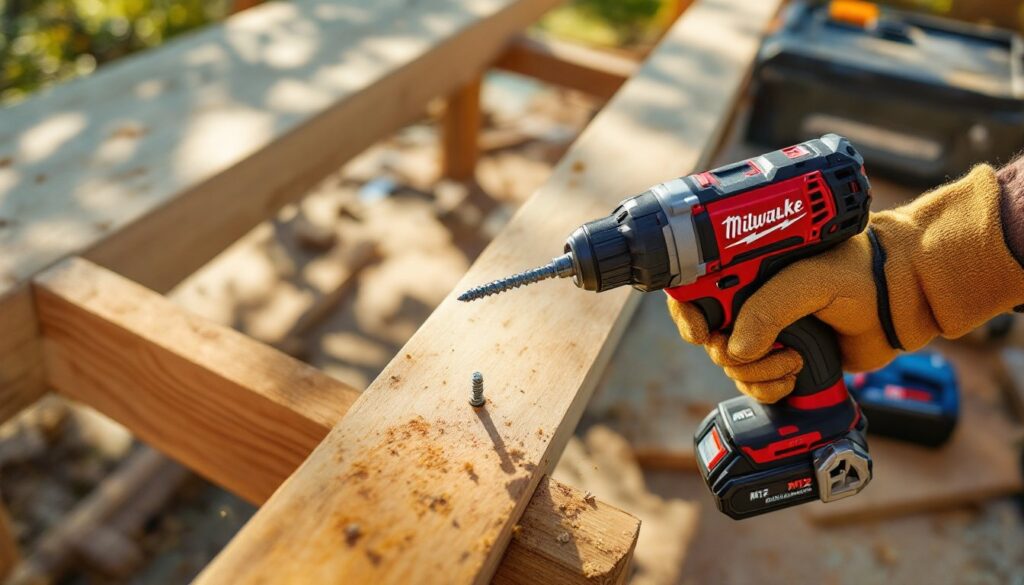
Framing and deck work is where these tools justify themselves. Driving 3-inch structural screws into rim joists, ledger boards, or deck posts goes fast and clean. The compact design lets you work between closely spaced joists without binding, and the rotational force prevents the hand-twisting you’d fight with a standard drill. For pressure-treated lumber and exterior fastening, the M12 is genuinely quicker than a corded drill and more powerful than a standard compact driver.
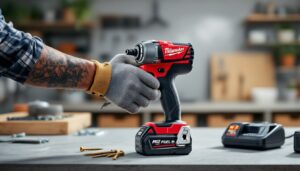
Cabinet and furniture assembly plays to M12 strengths. Whether you’re assembling RTA (ready-to-assemble) cabinetry, hanging heavy shelving into drywall with appropriate anchors, or installing cabinet hardware, the tool’s size and precision matter. The one-handed capability is huge when you need to hold a cabinet square while driving fasteners.
Concrete anchoring and fastening into masonry (with appropriate bit adapters) is another common application. Driving concrete screws to hang shelving or secure bottom plates requires torque and sustained spin, and the M12 handles short runs without overheating. Avoid continuous, heavy-duty concrete work: reserve that for full-size tools designed for the job.
Where M12 drivers fall short: repetitive industrial fastening (framing an entire house), heavy-gauge steel work, or jobs requiring sustained high-torque output. Recent reviews of cordless impact drivers often note that M12 models suit moderate DIY work rather than professional all-day use.
How to Choose the Right M12 Hex Impact Driver for Your Needs
Start by assessing how much fastening you actually do. If you’re assembling one deck a summer and occasionally hanging shelves, entry-level M12 models (usually under $100 for a bare tool) are plenty. If you’re regularly hanging drywall, building furniture, or doing structural fastening, spend extra for a tool with two-speed transmission and ergonomic rubber grips.
Two-speed vs. single-speed makes a real difference. Single-speed drivers (one fixed RPM) are simpler and lighter but work harder on every fastener. Two-speed models let you dial down RPM for delicate work (like hanging cabinet hardware on veneer) and crank up for power tasks. Most two-speed M12 drivers add minimal weight and cost, so they’re worth the upgrade if you’re doing varied projects.
Battery capacity depends on your runtime needs. Start with two 2.0Ah batteries if you’re working solo on projects lasting a few hours. If you’re coordinating with a helper or tackling longer jobs, three batteries (mix 2.0Ah and 4.0Ah) keeps one on charge while two are in rotation. Faster chargers cost more upfront but save time between sessions.
Ergonomics and grip matter after 30 minutes of use. Handle the tool in-store or watch video reviews showing how it feels during continuous fastening. A rubberized grip reduces hand fatigue compared to bare plastic, especially in cold weather. Balance is worth attention too: a well-balanced tool feels lighter than its weight suggests.
Compare models on torque output, battery compatibility with your existing tools (if you already own an M12 circular saw or impact wrench, buying more batteries for the same platform saves money), and what’s included in the kit. Top impact driver comparisons often break down these specs side-by-side, making apples-to-apples shopping easier.
Maintenance Tips to Extend Your Tool’s Lifespan
M12 impact drivers are sealed pretty well compared to older corded tools, but dust and debris still get in over time, especially if you’re driving into concrete or pressure-treated lumber.
After use, blow out the chuck and bit seating with compressed air, paying attention to dust buildup around the seals. Wipe the hex chuck with a damp cloth and dry it, corrosion on the chuck happens fast in damp climates. Store the tool in a cool, dry place, never in unheated garages over winter where condensation collects inside.
Battery care directly impacts longevity. Charge packs in room-temperature conditions: charging a cold battery in a 30-minute rapid charger stresses cells. Let batteries warm to 60°F before charging in winter. Don’t leave packs fully discharged for weeks: a 40 to 60% charge state is ideal for storage. Replace batteries if they stop holding charge after 300 to 400 cycles or warm excessively during use, a hot pack means internal cell failure is starting.
Bit and chuck maintenance keeps fastening accurate. Worn hex chucks slip under load, stripping bits and wasting energy. Replace the chuck if you notice visible wear or slipping (expect 500+ fasteners before wear becomes an issue on decent tools). Keep bits clean and dry: rusty driver bits corrode and slip in the chuck, and they’re cheap to replace.
Occasional disassembly isn’t necessary for most DIYers, but if your tool takes a real beating, authorized service centers can replace seals and bearings for less than a new tool. Trusted tool reviews and maintenance guides cover professional-grade maintenance if you’re keeping a tool for years.
Final Thoughts
An M12 hex impact driver isn’t a one-tool-does-everything machine, and it shouldn’t be. It’s a specialist tool that excels at fastening work in tight spaces and moderate-to-heavy fastening tasks where power and precision matter. For homeowners and DIY enthusiasts who assemble furniture, build decks, hang shelving, and tackle seasonal projects, the compact platform’s speed and maneuverability beat a standard drill almost every time. Pick one that matches your project intensity, protect your batteries, and it’ll stay useful in your toolbox for years. The key is honest assessment: buy the right tool for what you actually build, not the fanciest model on the shelf.