Table of Contents
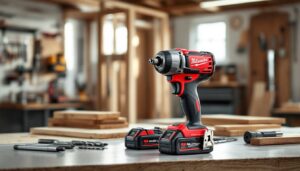
ToggleThe Milwaukee M12 impact driver has become a fixture in home garages and job sites for good reason. If you’re a DIY homeowner tackling deck building, furniture assembly, or general fastening work, you’ve probably heard the buzz around this compact tool. It’s lightweight enough to use one-handed, powerful enough to sink 3-inch screws into hardwood, and priced more reasonably than its larger cousins. But “worth it” depends on your actual project load and whether you already own Milwaukee batteries. We’ll break down what this tool does well, where it fits in your toolkit, and how to pick the right model for your needs.
Key Takeaways
- The Milwaukee M12 impact driver delivers 1,500 inch-pounds of torque in a lightweight 3.5-pound package, making it ideal for fastening-heavy DIY projects like deck building and furniture assembly without user fatigue.
- The M12 impact driver excels at driving screws into hardwood and dense materials, with up to 3,000 RPM and a brushless motor that provides reliability and longevity compared to standard drill-drivers.
- A single 2.0Ah Milwaukee M12 battery handles 150–250 fasteners before recharging, so invest in two batteries for larger projects to maintain continuous workflow.
- The Milwaukee M12 works best for decks, fences, drywall fastening, and lag bolt installation, but avoid using it on delicate materials like particleboard or aluminum trim where precision control is critical.
- Choose between the affordable baseline M12 (2553-20) for occasional projects or the higher-performance FUEL series for serious DIYers; buying a kit saves 30–40% versus purchasing components separately.
- If you’re starting a toolkit from scratch or already own Milwaukee gear, the M12 impact driver is a smart investment due to battery compatibility across the entire M12 lineup and genuine fastening power for homeowners.
What Makes The Milwaukee M12 Stand Out
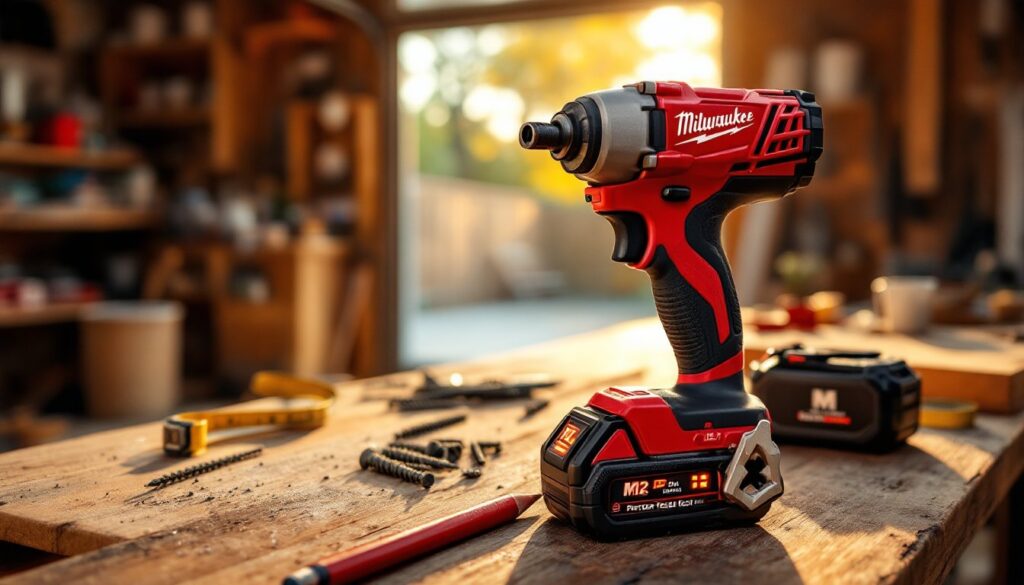
The Milwaukee M12 impact driver punches above its weight class because it delivers genuine fastening power in a package you can comfortably hold for hours. Most DIYers underestimate how much that matters, fatigue kills accuracy and slows work. The M12 weighs around 3.5 pounds (without battery), so driving 200 deck screws doesn’t leave your shoulder screaming.
Torque is where impact drivers shine, and the M12 offers up to 1,500 inch-pounds of rotational force. That sounds like jargon, but it means the tool won’t stall or bog down when you hit dense material or drive larger fasteners. Compare that to a drill-driver (typically 400–600 in-lbs), and you’ll understand why contractors reach for impact drivers on fastening-heavy jobs.
Durability matters too. The M12 uses a brushless motor, which means fewer moving parts to wear out and longer overall lifespan. The compact size also makes it a natural fit for tight spaces, inside cabinet frames, between rafters, or inside walls. According to reviews on Popular Mechanics, the M12 consistently ranks for reliability and ease of use across a range of DIY applications.
Key Features And Specifications
Power And Performance
The M12 delivers 1,500 in-lbs of torque with up to 3,000 rotations per minute (RPM), making short work of fastening tasks without the kickback or control issues you’d face with a traditional drill. The brushless motor spins up quickly and responds instantly when you squeeze the trigger, no grinding or lag. Bit holders are typically 1/4-inch hex, which accepts standard driver bits and socket adapters readily available at any hardware store.
Impact drivers produce significant noise and vibration, so always wear hearing protection and safety glasses. The audible pop-pop-pop of the hammer mechanism can reach 100+ decibels, and flying bit fragments are rare but possible.
Battery And Runtime
The M12 runs on Milwaukee’s M12 lithium-ion batteries, which come in 1.5Ah, 2.0Ah, 3.0Ah, and 6.0Ah capacities. For fastening alone, a single 2.0Ah battery typically handles 150–250 fasteners before needing a charge, depending on material density. If you’re doing large-scale projects, framing a shed wall or building a deck, invest in at least two batteries so one charges while you work.
Charge time varies: a 2.0Ah battery takes roughly 30–45 minutes on a standard charger, less on Milwaukee’s faster chargers. The trade-off is battery cost. Milwaukee M12 batteries aren’t cheap (expect $40–80 per battery), but they’re compatible across the entire M12 lineup, so buying one impact driver doesn’t strand you with proprietary batteries.
Best Uses For DIY Homeowners And Hobbyists
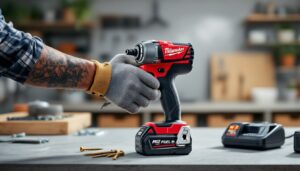
The M12 impact driver earns its place in DIY hands for specific, fastening-centric work. Deck and fence building tops the list, you’re driving hundreds of screws into pressure-treated lumber or hardwood, and the M12 does this relentlessly without fatigue. The same goes for assembling furniture from lumber or plywood, where traditional drill-drivers struggle to maintain consistent torque.
Drywall fastening is another sweet spot. The M12 won’t overdrive and dimple drywall when set correctly, and the compact head fits easily between studs. For lag bolt installation (securing hardware to framing), the impact mechanism breaks corrosion loose better than a traditional drill ever could.
Where homeowners often stumble: using an impact driver on delicate fasteners or materials. Don’t use this tool to assemble particleboard furniture, you’ll split it. Similarly, fastening into aluminum or composite trim demands finesse: the impact action can crack or damage lightweight materials. For precision work like hanging kitchen cabinets on tile, a standard drill-driver gives you better control. Resources like This Old House offer extensive guides on matching tool selection to specific projects, helping you avoid costly mistakes.
How To Choose Between Milwaukee M12 Models
Milwaukee offers several M12 impact driver variants, and picking the right one comes down to your typical project scope and whether you value corded convenience or true cordless freedom.
The M12 1/4″ Hex Compact Impact Driver (2553-20) is the baseline model and the most affordable entry point. It’s ideal if you’re assembling occasional decks, light furniture, or fastening trim. Battery and charger cost extra unless you buy a kit, so factor that into your budget.
The M12 FUEL series delivers higher torque (up to 1,500 in-lbs vs. 1,200 on the standard model) and slightly faster RPM. The trade-off? FUEL models cost roughly $100–150 more. If you’re a serious DIYer tackling large projects yearly, the FUEL investment pays off in runtime and durability.
Kit vs. bare tool: Buying a kit (tool + batteries + charger) costs more upfront but saves 30–40% versus buying each component separately. Consider whether you already own Milwaukee M12 batteries: if yes, a bare tool makes sense. If you’re starting fresh, a kit is the smarter play. Retailers like Family Handyman frequently compare bundled options, making it easier to spot discounts during sale seasons.
Accessory considerations: Stock up on 1/4-inch hex driver bits in common sizes (Phillips #2, square drive, Robertson). Impact-rated bits are slightly tougher and last longer than standard bits: they’re worth the small premium.
Conclusion
The Milwaukee M12 impact driver is a solid investment if your DIY roadmap includes fastening-heavy projects, decks, fences, furniture, and light framing work. It’s genuinely compact, durable, and powerful enough to handle what most homeowners throw at it. Battery cost and the learning curve on controlling torque are fair trade-offs for the speed and reduced fatigue. If you already own Milwaukee gear, adding an M12 impact driver is a no-brainer. If you’re building a toolkit from scratch, start here and build outward.