Table of Contents
ToggleIndoor air quality has become a genuine concern for homeowners trying to manage allergies, pet dander, dust, and seasonal pollutants. The Shark Air Purifier Max positions itself as a premium solution for whole-home air cleaning, combining advanced filtration technology with practical design. If you’re considering investing in a serious air purifier, not just a bedside gadget, this review breaks down whether the Shark Air Purifier Max delivers real performance or if you’re just paying for the name. We’ll walk through its standout features, real-world effectiveness, and whether the price tag justifies the air quality improvements you’ll actually notice in your home.
Key Takeaways
- The Shark Air Purifier Max features H13-grade HEPA filtration that captures 99.97% of particles down to 0.3 microns, making it effective for allergies, pet dander, and seasonal pollutants.
- This air purifier operates quietly at 68 decibels on maximum speed and as low as 28 decibels on sleep mode, allowing comfortable use without disrupting sleep or work.
- WiFi connectivity and smart sensors enable automatic fan speed adjustments based on air quality detection and remote control through a mobile app, eliminating manual operation.
- At $300–$400, the Shark Air Purifier Max suits homeowners with allergies, pets, or poor seasonal air quality, but skip it if you need basic dust control in small spaces or have an efficient central HVAC system.
- The unit covers up to 500 square feet with solid CADR ratings (340 for dust, 325 for smoke, 270 for pollen) and requires filter replacement every 6–12 months at a cost of $50–$70.
- Maintenance is minimal—the washable pre-filter keeps replacement costs down, and app notifications track filter life to prevent performance drops and guesswork.
What Makes The Shark Air Purifier Max Stand Out
Key Features and Specifications
The Shark Air Purifier Max tackles air cleaning with a multi-stage filtration system designed to capture particles ranging from large dust to microscopic contaminants. The unit features a HEPA filter, a true H13-grade HEPA, which captures 99.97% of particles down to 0.3 microns, paired with activated carbon and pre-filters that work together to reduce odors, smoke, and VOCs (volatile organic compounds) in your home.
This purifier covers spaces up to 500 square feet, making it suitable for large living rooms, master bedrooms, or open-concept layouts. The CADR (Clean Air Delivery Rate) ratings are solid: 340 CFM for dust, 325 for tobacco smoke, and 270 for pollen. Translation: it moves air efficiently without sounding like a jet engine running at high speeds.
One practical detail that sets it apart is the quiet operation. At its highest setting, it runs around 68 decibels, about as loud as a normal conversation. On lower speeds, it whispers along at roughly 28 decibels, which won’t disrupt sleep or work from home. The unit also includes smart sensors that automatically adjust fan speed based on detected air quality, so you’re not forced to manually babysit settings.
The WiFi connectivity is a real feature, not just marketing fluff. You can monitor air quality metrics, adjust speeds, and set schedules through a mobile app. For people who travel or prefer hands-off operation, this beats walking over to the machine every time.
Performance and Filtration Technology
Real-World Coverage and Effectiveness
The filtration tech does more than move air around, it actually removes contaminants. The pre-filter captures larger particles (dust, hair, pet fur), extending the life of the main HEPA filter and improving overall system efficiency. The activated carbon layer targets odors, cooking smoke, and household chemical off-gassing. According to tested product reviews and appliance recommendations, HEPA purifiers combined with carbon filtration show measurable improvement in air quality for allergy sufferers and people sensitive to odors.
When you turn it on in a typical bedroom or living room, you’ll notice reduced dust settlement on furniture within days. Pet owners especially report fewer allergens and less “dog smell” lingering after a few hours of operation. The auto-mode sensor adjusts fan speed when it detects rising particle counts, helpful if someone’s cooking with oil or a guest tracks outdoor pollen indoors.
One caveat: the unit’s effectiveness depends on room configuration and door placement. An open floor plan works better than sealed rooms with the door closed, since the purifier can’t pull air through walls. If you need coverage in multiple rooms, you might consider placement near hallway entry points or buying a second unit for bedrooms.
Filter replacement happens roughly every 6 to 12 months, depending on usage and local air quality. Replacement filters cost around $50–$70, which isn’t cheap but is standard for HEPA systems. The app sends reminders when replacements are due, so you’re not guessing.
Design, Noise Levels, and Maintenance
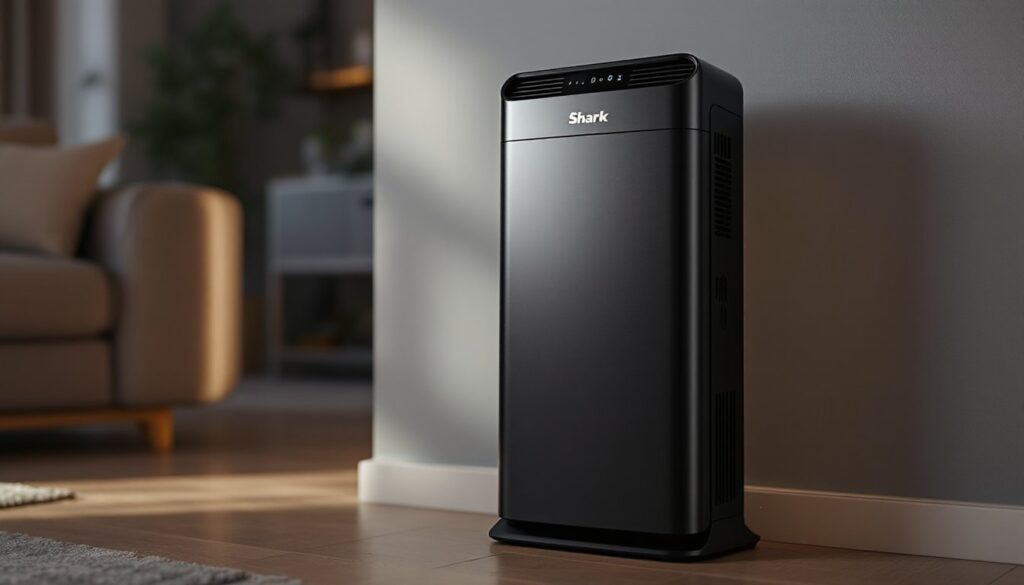
The Shark Air Purifier Max has a modern, tower-style design, matte black or white finishes that blend into most interiors without looking like medical equipment. It’s about 30 inches tall with a compact footprint, so it fits in corners, against bedroom walls, or beside a sofa without dominating the room. The build quality feels solid: the exterior shell doesn’t rattle, and the filter compartment clicks satisfyingly into place.
Noise levels are genuinely reasonable for a high-performance unit. Running on sleep mode (low speed), it sits around 28 decibels, quieter than a refrigerator humming. Medium speed runs around 50 decibels, and maximum speed reaches 68 decibels, noticeable but not earsplitting. Most people leave it on low-to-medium during the day and drop to sleep mode at night, balancing cleanup with comfort.
Maintenance is straightforward. The pre-filter is washable and reusable, which saves money and keeps waste down, just rinse it under water every month or so and let it air dry. The HEPA and carbon filters aren’t replaceable: you swap them as complete units. The app tracks filter life, displaying a percentage remaining, so you order replacements before the unit performs poorly. No guessing or procrastinating required.
Cleanup involves wiping down the exterior casing occasionally to prevent dust buildup around intake vents. A damp microfiber cloth and a few minutes of work keep it looking fresh. Regular home organization and cleaning habits support appliance longevity, and this unit rewards basic upkeep with consistent performance.
Is It Worth The Investment For Your Home
Pricing sits in the $300–$400 range depending on sales and region, placing it firmly in the premium category. You’re not getting a budget compact unit: you’re buying a serious appliance. That investment makes sense if you fit these criteria:
Buy it if: You have allergies, asthma, or family members sensitive to airborne particles. You live in an area with poor seasonal air quality or near sources of pollution (traffic, pollen, smoke). You have pets and notice odors lingering even though regular cleaning. You spend most of your time in one large room and want automated, quiet operation. Your home’s HVAC system lacks efficient air filtration, or you rent and can’t upgrade ductwork.
Skip it if: You live alone in a studio apartment and mainly need basic dust control. You’re willing to accept manual-only controls and don’t value WiFi connectivity. You’re budget-limited and can manage with a smaller, cheaper purifier for occasional use. Your home already has a high-performance central air system with upgradable filters.
The latest technology in home appliances shows that dedicated air purifiers outperform relying solely on HVAC filters, especially for capturing fine particles and odors. If air quality affects your daily comfort or health, this purifier earns its price through daily use and measurable improvement. If it’s a “nice to have,” you might satisfy your needs with a smaller, cheaper option.
One practical note: consider placement before buying. A purifier can’t clean air in rooms it can’t reach. If you need whole-home coverage, budget for multiple units rather than assuming one device solves everything.
Conclusion
The Shark Air Purifier Max is a legitimate choice for homeowners serious about indoor air quality. It delivers strong filtration, reasonable noise, and smart controls that remove guesswork from daily operation. The investment pays dividends for allergy sufferers, pet owners, and anyone dealing with seasonal air quality issues. It won’t fix structural problems like moisture or mold, and it works best in open floor plans with thoughtful placement. If your home’s air quality bothers you or your family, this purifier addresses that problem effectively.