
Table of Contents
ToggleA Trex deck railing transforms your outdoor space from a simple platform into an intentional gathering area, one that looks sharp year after year without the constant upkeep of wood. Unlike traditional wooden railings that demand annual staining and seasonal repairs, Trex railings combine durability with minimal fuss. Whether you’re building a new deck or upgrading an aging railing, understanding what sets Trex apart helps you make a confident choice. This guide walks through the practical benefits, installation basics, and budget considerations so you can add a railing that actually works as hard as you do.
Key Takeaways
- Trex deck railing eliminates the need for annual staining and seasonal repairs that wooden railings demand, requiring only occasional rinsing to maintain its appearance.
- Composite railings are engineered to meet building code standards with a 200-pound horizontal load capacity without reinforcement, making them structurally sound and durable for decades.
- A Trex deck railing costs $20 to $60 per linear foot installed, but saves significantly over time since wood maintenance can cost $3,200 to $10,000 over 20 years.
- Proper installation requires attention to thermal expansion gaps and correct baluster spacing of no more than 4 inches apart to meet safety codes and prevent future warping.
- Unlike wood, Trex railings resist rot, termites, UV fading, and freeze-thaw damage, making them ideal for harsh climates and coastal properties with salt spray exposure.
What Makes Trex Railings Stand Out From Traditional Options
Trex railings are made from composite material, a blend of reclaimed wood fibers and plastic that mimics wood grain while avoiding wood’s notorious weaknesses. Traditional wooden railings require frequent maintenance: annual staining or painting, replacement of rotted balusters, and seasonal repairs from freeze-thaw cycles. Trex doesn’t splinter, doesn’t rot, and won’t absorb moisture that leads to mold and mildew.
The material holds color better than paint-grade wood and resists fading in direct sun far more effectively than stained decking. Trex railings also meet building codes without additional reinforcement in most cases, they’re engineered to handle the standard 200-pound horizontal load required by the International Residential Code (IRC). That means they’ll support someone leaning hard against the railing without flex or failure. A wood railing would need thicker posts and more bracing to meet the same standard, adding cost and visual bulk.
Benefits of Choosing Trex Deck Railings for Your Outdoor Space
Durability and Weather Resistance
Composite railings stand up to harsh conditions that would wreck wood in a few years. UV exposure, freeze-thaw cycles, salt spray near coastal properties, Trex shrugs off all of it. The material won’t warp, crack, or cup as temperatures swing. This is especially important in climates with freeze-thaw, where moisture trapped in wood grain expands and splinters the surface.
Traditional wooden railings often fail fastest at the balusters (vertical spindles), where water pools and sits. Composite balusters don’t absorb moisture, so they outlast wood by decades. Trex also resists insect damage, no termites, no carpenter ants, which saves money and headaches down the line.
Low Maintenance and Aesthetic Appeal
The real win is what you don’t have to do. No sanding, no staining, no repainting every three years. A quick rinse with a garden hose and occasional mild soap keep the railing looking fresh. Some homeowners report that light mildew occasionally appears in shaded spots: a gentle bleach solution clears it without damaging the material.
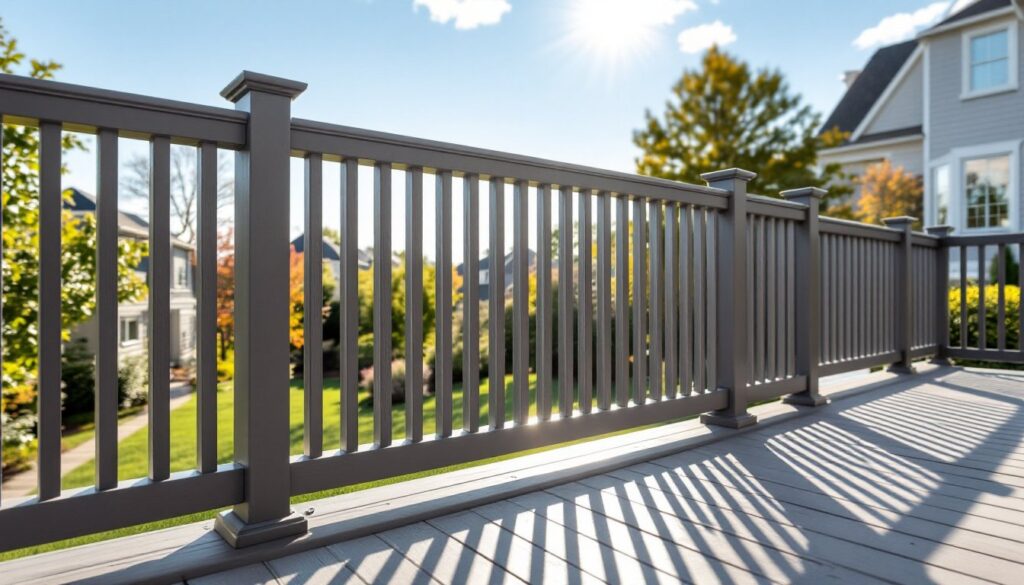
Aesthetically, Trex railings come in multiple colors and finishes, from classic browns and grays to whites and blacks, so they blend with any deck style. The grain patterns look convincingly wood-like without the maintenance burden. Many homeowners appreciate that the railing doesn’t overshadow the view from the deck: it becomes a clean frame rather than a focal point demanding upkeep.
Installation and Design Considerations
Trex railings install similarly to wood railings, so if you’ve framed a deck before, the process feels familiar. Balusters slot into top and bottom rails: the assembly bolts or screws to the deck frame and posts. Posts are typically 4×4 pressure-treated or composite, spaced a maximum of 6 feet apart to meet code. Balusters (vertical members) must be spaced no more than 4 inches apart so a 4-inch sphere can’t pass through, this prevents small children from getting stuck.
One key difference: composite material expands slightly with temperature, so you’ll leave a 1/8-inch gap between the top rail and the cap or trim board. This expansion gap prevents buckling in summer heat. Some installers miss this detail and create a railing that looks wavy by mid-July.
Planning Your Railing Layout
Measure your deck perimeter carefully, nominal measurements matter. If your deck is 12 by 16 feet, the actual railing runs along three sides, accounting for posts at corners. Sketch a quick layout showing post locations, balusters per section, and any cutouts for stairs or transitions. Standard balusters are 2 inches wide and must be no more than 4 inches apart, so a 6-foot section typically holds 14 to 16 balusters plus two end posts.
Decide whether you want a closed railing (solid panels between rails) or a traditional open style with balusters. Closed panels provide more privacy and wind blocking but weigh more and cost more per linear foot. Consider where you want balusters: facing the yard, the neighbors, the view? Small details like railing height, typically 36 to 42 inches from the deck surface, are set by code, but the visual proportion matters too. A 42-inch rail on a low deck can feel imposing: a 36-inch rail on a high second-story deck might feel too minimal.
According to Trex decking cost guides, composite railing costs range from $20 to $60 per linear foot installed, depending on the style and complexity of your design.
Cost Breakdown and Budget Planning
A typical 100-linear-foot railing (three sides of a 12×16 deck) runs $2,000 to $6,000 depending on the finish grade and whether you install it yourself or hire labor. Material costs dominate: balusters, rails, posts, brackets, fasteners, and caps all add up. A basic Trex railing in a standard color (charcoal, tan, white) costs less than a premium finish with wood-grain texture or multi-tone effects.
Labor typically runs $50 to $150 per hour for a contractor, and a 100-linear-foot railing takes 16 to 24 hours with one or two people. DIY installation saves labor but demands accuracy, misspacing a baluster or miscutting a post wastes expensive composite material. This isn’t forgiving like wood: you can’t sand out mistakes.
Fasteners matter too. Use stainless steel or composite-rated screws and bolts, galvanized fasteners will eventually rust and stain the railing. Posts and ledger attachments must be lag bolts or bolts with washers rated for 200 pounds per linear foot to meet code.
Compare the upfront cost against the lifetime cost of maintaining wood. One repaint or stain cycle for wood railings costs $800 to $1,500 in materials and labor, and you’re doing that every 3 to 5 years. Over 20 years, that’s $3,200 to $10,000 in maintenance alone, enough to pay for a new composite railing and still have money left. If you’re planning to stay in the home more than 10 years, the math favors composite.