
Table of Contents
ToggleIf you’re shopping for a new dishwasher, Viking has become a serious contender for homeowners who want both performance and durability. Viking dishwashers combine European engineering with design-forward aesthetics, making them a popular choice for kitchen renovations and upgrades. But before you commit to one, it’s worth understanding what sets them apart from mid-range alternatives, how their features compare to your actual needs, and whether the investment makes sense for your kitchen. This guide walks through the essentials so you can make an well-informed choice.
Key Takeaways
- Viking dishwashers stand out for their all-stainless steel interior construction and reinforced components, making them significantly more durable than budget models if you plan to keep your appliance for 10+ years.
- Advanced cleaning technology including ProWash cycles, soil sensors, and consistent water temperature control reduces water and energy consumption while delivering superior results on heavily soiled dishes.
- A standard Viking dishwasher holds 14-16 place settings with noise levels between 44-48 dB and uses approximately 3.1 gallons per cycle, exceeding ENERGY STAR standards and saving $20-$40 annually on utilities.
- Installation requires three connections—water inlet, drain outlet, and 120V electricity—and is straightforward for replacements, though new construction retrofits may require a licensed plumber depending on local codes.
- Regular maintenance including monthly filter cleaning, quarterly spray arm inspection with vinegar soaks, and annual interior cleaning with commercial dishwasher cleaner ensures long-term performance and prevents costly repairs like gasket or pump failures.
What Makes Viking Dishwashers Stand Out
Premium Build Quality and Design
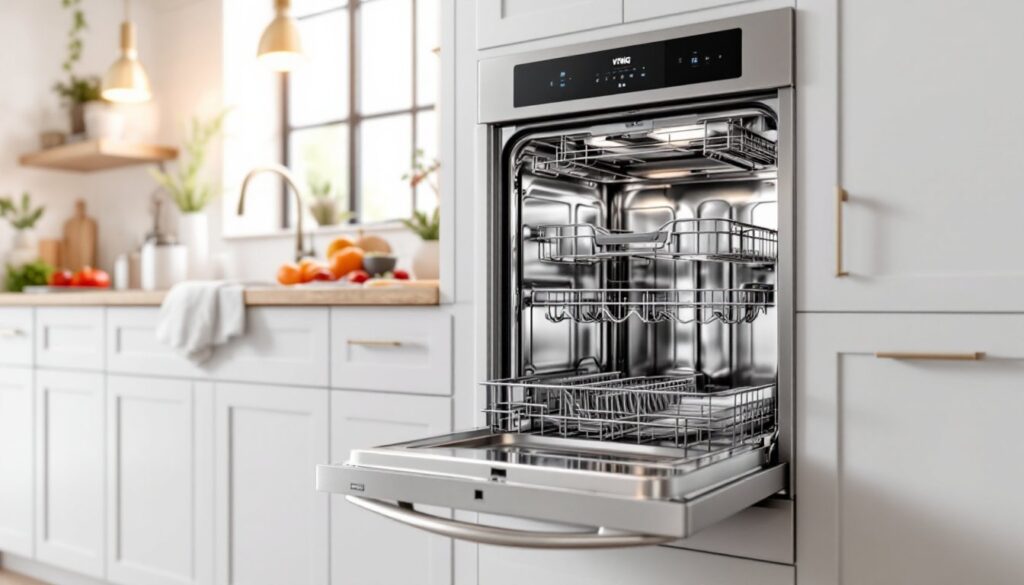
Vaking dishwashers are built for durability, with stainless steel tubs and frames that resist corrosion and damage from thermal cycling. Unlike some mass-market models, Viking units don’t use plastic liners, the entire interior cavity is stainless steel. This matters because plastic can degrade over time, harbor odors, and eventually fail.
The design language is clean and intentional. Controls are either traditional mechanical dials or integrated touch panels with LED feedback, not glossy digital screens that date quickly. The exterior finish comes in stainless steel, matte black, or custom panel options (meaning you can integrate it with cabinetry). Most units are 24 inches wide, fitting standard cabinet openings, good to know if you’re planning a retrofit in an existing kitchen.
The construction tolerances are tighter than budget models. Door seals are reinforced, spray arms lock firmly in place, and hinges are rated for thousands of open-close cycles. If you’re replacing a dishwasher every five to seven years, this might feel like overkill. But if you plan to stay in your home for ten-plus years, the durability factor justifies the higher upfront cost.
Advanced Cleaning Technology
Vaking’s cleaning systems rely on multiple spray jets positioned at different angles to target dish orientation and soil type. The ProWash cycle (available on many models) adjusts water pressure and spray timing based on how heavily soiled the load is. This isn’t a gimmick, it reduces water and energy use when you’re running lightly soiled dishes while still delivering clean results on caked-on food.
The filtration system uses a combination of coarse and fine screens that trap food particles before they recirculate. You’ll rinse large debris (like chicken skin or pasta) before loading, but the filter handles the rest. This is standard practice across high-end brands, and it works because it keeps particles from redepositing on glassware.
Water temperature stability is another detail worth noting. Viking heaters maintain consistent water temperature throughout the cycle, which matters for greasy cookware. Cold water alone won’t cut through baked-on fat: you need sustained heat. Most models include a soil sensor that detects how dirty the water becomes and adjusts cycle time accordingly. Over a year of dishwashing, this saves both water and energy without sacrificing results.
Key Features to Consider Before Buying
Capacity, Noise Levels, and Energy Efficiency
Standard Viking dishwashers hold 14 to 16 place settings, which translates to roughly 28 to 32 items (plates, bowls, utensils, glasses). If you’re cooking for a large family or entertain frequently, the upper end matters. Deeper racks and adjustable tines let you fit larger cookware, a 12-inch skillet or a mixing bowl, without sacrificing other space.
Noise level is measured in decibels (dB). Most Viking models run at 44 to 48 dB, which is quieter than normal conversation but audible if you’re running it overnight in an open-plan kitchen. For context, a standard dishwasher is often 50-55 dB, so the difference is noticeable but not revolutionary. If you want near-silent operation, look for models rated at 38-42 dB, though those typically carry a premium.
Energy efficiency is rated by the EPA as Energy Factor (EF). Newer Viking models exceed ENERGY STAR standards, using around 3.1 gallons per cycle versus the federal standard of 5 gallons. Over a year (assuming 5-6 cycles per week), that adds up. The annual cost difference might be $20 to $40 depending on local water and utility rates, but it compounds over the appliance’s lifespan.
Cycles vary by model. Most include quick wash (30-35 minutes), standard, heavy-duty, and glass/delicate modes. Some have specialized cycles for pots and pans or a rinse-only option for pre-rinsing dishes before running a full load later. A cycle timer (usually 2-4 hours) delays the start, useful if your utility company offers off-peak rates. Look for a drying option, heated drying uses more energy, but air-dry settings reduce it. One resource that can help with selecting appliances and comparing features is Good Housekeeping’s appliance reviews, which tests and rates dishwashers across multiple categories.
Installation and Integration Into Your Kitchen
Installing a dishwasher requires three connections: water inlet, drain outlet, and electricity. If you’re replacing an existing unit, most of the rough-in work is already done, new hoses and drain lines aren’t needed unless the old ones are corroded or kinked. New construction or a retrofit in a kitchen without existing plumbing is more involved and may require a licensed plumber, depending on local codes.
The water inlet uses a 3/4-inch connection with a shutoff valve. Viking recommends installing a check valve to prevent backflow. The drain hose (typically 5/8 inch diameter) must slope downward to prevent standing water in the tub. If your sink is higher than the dishwasher, a drain pump handles the lift, but improper slope is a common cause of slow drainage and odor buildup.
Electricity is 120V, 15-amp standard in North America. The unit draws around 1500W during the heating cycle. If you’re replacing an old model in an existing circuit, you’re likely fine. For new installation, confirm your breaker capacity and have a licensed electrician handle it if you’re unsure, this is not a good place to improvise.
Integration into cabinetry is straightforward if you’re buying a standard 24-inch model. The unit slides into the cabinet opening with about 1/2 inch of side clearance. Custom panels (called overlay panels) attach to the door and match your cabinet fronts, making the dishwasher nearly invisible when closed. Panel kits run $200-$600 depending on the material and finish. If you’re upgrading other appliances, matching the finish (stainless steel, matte black, or panel-ready) creates visual cohesion. Kitchen design guidance on small kitchen solutions includes tips for positioning appliances and making them feel integrated rather than tacked-on.
Maintenance Tips for Long-Term Performance
A dishwasher that’s maintained well outlasts one that isn’t. Start by rinsing large food debris before loading, this protects the filter and keeps water circulation unobstructed. You don’t need to wash dishes by hand first: just scrape off chunks of food.
Run the filter cleaning cycle monthly or quarterly depending on use. Most Viking models have a removable filter cartridge that you rinse under warm water and reinstall. If hard water is an issue in your area (mineral-heavy water), sediment accumulates faster. An inline water softener upstream of the dishwasher extends filter life and improves cleaning performance.
Check the spray arm nozzles every six months. Hard water deposits can clog the small jets, reducing water pressure where it counts. Soak the arm in white vinegar for 15-20 minutes, then use a toothpick or small brush to clear any blockages. This takes ten minutes and pays off in better cleaning.
Drain hose inspection is less obvious but critical. Open the lower access panel and visually check for kinks, cracks, or pooled water. A drain pump failure isn’t user-serviceable, but catching a kinked hose early prevents a backed-up sink. Every couple of years, run an empty cycle with a commercial dishwasher cleaner (citric acid or enzymatic formulas) to dissolve mineral buildup and refresh the interior. This is different from rinse aid: it actually cleans the machine, not just the dishes.
The door gasket, the rubber seal around the perimeter, can deteriorate from thermal stress and detergent. If you notice water leaking from the bottom during cycles, the gasket is likely the culprit. Replacement gaskets are available and installation is straightforward (usually just clips or grooves), but you’ll need the exact model number. Professional repair services exist, but for a straightforward seal replacement, it’s a task a confident DIYer can handle. If you’re unsure about repairs or ongoing maintenance, Angi’s home service provider reviews can connect you with local appliance repair specialists if needed.