
Table of Contents
ToggleHard water is a silent problem in millions of homes, it damages plumbing, shortens the lifespan of appliances, and leaves soap scum on shower doors and fixtures. If your skin feels dry after showering, your dishes look spotted, or your laundry feels stiff, you’re dealing with mineral-heavy water that needs softening. Installing a water softener isn’t glamorous, but it’s one of the most practical upgrades a homeowner can make. This guide walks you through what hard water actually is, the main softening systems available, the real benefits you’ll notice, and what installation and long-term ownership look like in 2026.
Key Takeaways
- Hard water damages appliances and plumbing by leaving mineral deposits, making a water softener for a house a practical upgrade that extends appliance lifespan by 5–10 years.
- Ion exchange softeners are the most affordable and proven method ($400–$2,500 installed) and remove hardness minerals completely, while salt-free alternatives are less effective but avoid adding sodium to drinking water.
- A water softener can reduce energy consumption by 15–30% and save households $100–$500 annually on soap, detergent, and cleaning supplies while maintaining better water pressure and preventing scale buildup.
- Proper installation requires placing the softener near the main water line before the water heater, ensuring adequate drainage, and checking local plumbing codes—professional installation is recommended if you’re not confident with soldering or cutting pipes.
- Annual maintenance costs are modest ($100–$400 for ion exchange systems), and long-term savings from appliance longevity and energy efficiency easily justify the upfront investment within 10–15 years.
What Is Hard Water and Why You Need a Softener
Hard water contains high levels of dissolved minerals, primarily calcium and magnesium. When water travels through limestone, chalk, or other mineral-rich soil, it picks up these minerals and carries them into your home.
You’ll notice hard water through its effects: white, crusty buildup on faucet aerators and showerheads (limescale): stiff towels and dull laundry: spots on dishes and glassware: and dry skin or hair after bathing. More importantly, hard water reduces the efficiency of your water heater, builds up inside pipes, and shortens the life of washing machines, dishwashers, and water-using appliances.
Water hardness is measured in parts per million (ppm) or grains per gallon (gpg). Soft water reads below 60 ppm: moderately hard water is 61–120 ppm: hard water is 121–180 ppm: and very hard water exceeds 180 ppm. You can test your water for free or cheaply through your local water utility, a hardware store test kit, or a professional water analysis. Once you know your hardness level, you can choose the right softening system.
Types of Water Softening Systems
Ion Exchange Softeners
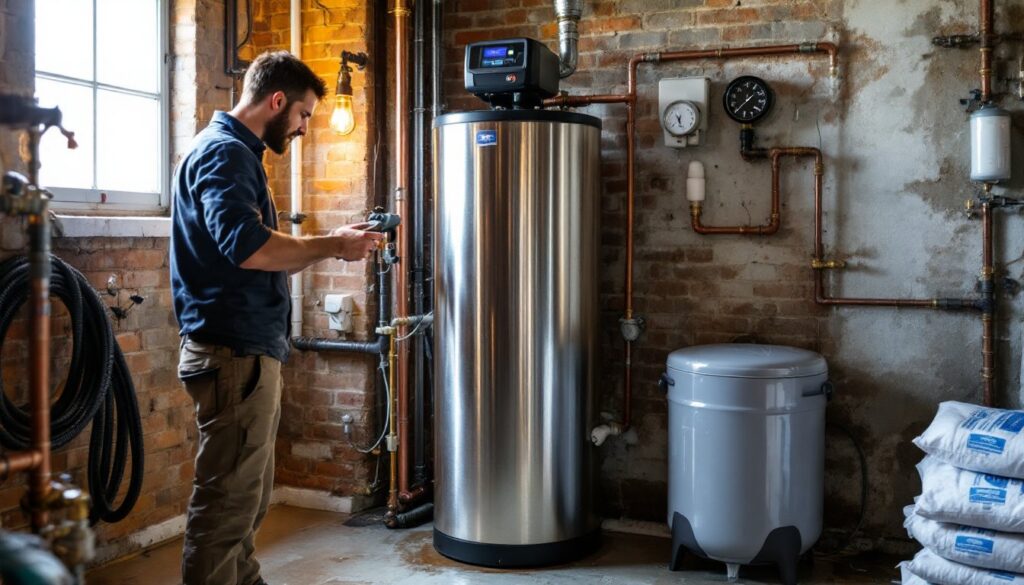
Ion exchange is the most common and proven water softening method. The system uses a tank filled with resin beads (usually polystyrene) that are coated with sodium ions. As hard water flows through, calcium and magnesium ions stick to the resin, and sodium ions are released into the water in their place, a simple chemical swap.
When the resin becomes saturated with hardness minerals, the system enters a regeneration cycle, typically at night when water use is low. A concentrated salt brine solution (made from table salt or potassium chloride) flushes through the tank, recharging the resin beads so they can soften water again. Most ion exchange systems regenerate based on water usage, not a fixed schedule, so they’re efficient and waste less water than older models.
Ion exchange softeners are affordable (typically $400–$2,500 installed), reliable, and highly effective. The downside: they add a small amount of sodium to your drinking water, usually safe for most people, but a concern for those on strict sodium-restricted diets. Potassium chloride regenerant is a sodium-free alternative, though it costs more.
Salt-Free Softening Alternatives
Salt-free systems don’t actually remove hardness minerals: instead, they condition or prevent minerals from forming scale. Template-assisted crystallization (TAC) systems use a special media that causes hardness minerals to crystallize into microscopic particles that stay suspended in water rather than sticking to pipes and appliances.
Magnetic or electronic water conditioners claim to alter mineral structure with magnetic or electrical fields, but their effectiveness is debated and inconsistent. Reverse osmosis systems filter water through a semipermeable membrane and are excellent for spot-treating drinking water, but they’re too slow and waste too much water for whole-home use.
Salt-free systems avoid the sodium issue and don’t require regeneration cycles, making them appealing for environmentally conscious homeowners. But, they’re less effective than ion exchange at preventing scale in very hard water, and independent testing shows mixed results. They’re also more expensive upfront ($600–$3,000) and are better suited to moderately hard water.
Key Benefits of Installing a Water Softener
Softened water delivers noticeable, practical improvements:
Appliance longevity: Hard water buildup reduces efficiency and forces water heaters, dishwashers, and washing machines to work harder and fail sooner. Softened water extends their lifespan by years and reduces repair costs.
Cleaning and grooming: Soap and shampoo lather better in soft water. You’ll use less detergent and shampoo, saving money over time. Dishes, glassware, and shower fixtures stay cleaner without mineral deposits. Hard water stains require scrubbing and specialty cleaners: soft water eliminates this chore. Professional guidance on removing hard water stains emphasizes prevention through softening as the most cost-effective approach.
Energy efficiency: A water heater filled with limescale works less efficiently and heats water more slowly. Removing scale reduces energy consumption by 15–30%, lowering utility bills.
Skin and hair health: Hard water leaves mineral deposits on skin and hair, causing dryness and irritation. Many people report softer skin and shinier hair after installing a softener.
Plumbing protection: Scale buildup narrows pipes and reduces water pressure over time. Soft water prevents this damage and maintains consistent flow.
Installation and Setup Considerations
Installation location is critical. Most homeowners install their softener near the main water line as it enters the house, before the water heater and other appliances. This protects the entire home, though some people install a second, smaller unit to feed hot water lines specifically.
Basic installation steps:
- Shut off the main water supply and drain the line.
- Cut into the water line (usually with a hacksaw or reciprocating saw if it’s copper or PVC) or use a bypass valve kit if one wasn’t installed during construction.
- Install the inlet and outlet connections using compression fittings or sweat fittings (soldered for copper), following the system’s manual and local plumbing code.
- Connect the drain line from the softener to a floor drain, sump pump, or laundry sink. Most systems require a slow, continuous drain during regeneration.
- Install the brine tank nearby, usually in a basement or utility room.
- Fill the brine tank with salt (for ion exchange), program the system’s timer, and run a test cycle.
Permits and professionals: Check your local plumbing code, many jurisdictions require a licensed plumber to install a water softener, especially if it involves cutting into the main line or modifying drainage. A permit may be required. If you’re not confident soldering copper or cutting into your main supply line, hire a professional. Water damage from a leak is far costlier than installation labor.
Space and drain access: Make sure you have space for both the softener tank and the brine tank. The system must drain during regeneration, so proximity to a floor drain or suitable drainage point is essential. If you’re working in tight quarters, consider a compact dual-tank system or hire a plumber familiar with challenging installations.
Tools needed (if you’re confident in DIY plumbing): hacksaw or reciprocating saw, adjustable wrench, plumber’s tape, solder (for copper) or compression fittings, tubing cutter, and a volt-ohm meter to test the system after installation. Wear safety glasses and work gloves when cutting pipes.
Cost, Maintenance, and Long-Term Savings
Initial investment: A quality ion exchange softener costs $400–$2,500 installed, depending on system size and local labor rates. Salt-free systems run $600–$3,000. Budget for professional installation if needed: labor typically adds $300–$800. Tools, materials, and permits vary by location.
Annual maintenance: Ion exchange systems require salt or potassium chloride replenishment, costing $100–$400 per year depending on water hardness and household size. A typical 40-lb. bag of water softener salt costs $5–$15 and lasts 1–3 months. Salt-free systems have minimal consumable costs but may require media replacement every 5–7 years ($200–$600).
Long-term savings: The average household saves $100–$500 annually in reduced soap, detergent, shampoo, and cleaning supplies. Your water heater and appliances last longer, a water heater costs $1,000–$3,000 to replace: a softener can add 5–10 years to its life. You’ll also see lower energy bills from improved heating efficiency. Over 10–15 years, these savings easily justify the upfront cost.
Water and utility costs: Ion exchange softeners use 300–500 gallons of water during regeneration, typically once per week. This raises water and sewer costs by $5–$15 monthly for most households. Newer systems are more efficient and use less water. Electricity costs are minimal, usually $10–$20 annually.
When budgeting, use cost estimators like those on HomeAdvisor or Angi to get regional pricing. Costs vary significantly by location, local labor rates, and water hardness. Get quotes from at least two local plumbers before deciding.