Table of Contents
ToggleIf you spend time assembling decks, hanging cabinet hardware, or driving lag bolts into thick timber, you’ve probably wondered whether a Milwaukee impact driver deserves a spot in your tool lineup. The M18 Fuel line has earned serious respect among DIYers and pros alike, not because of hype, but because it delivers consistent torque, runtime, and reliability on real projects. This review cuts through the marketing speak and looks at what the M18 Fuel actually does well, where it fits in your workshop, and whether the investment makes sense for your particular work.
Key Takeaways
- The M18 Milwaukee Fuel impact driver delivers 400–500 foot-pounds of torque with brushless motor technology, making it ideal for structural fastening tasks like hanging heavy cabinets and driving lag bolts into hardwood.
- Impact frequency of up to 3,500 impacts per minute reduces cam-out and hand fatigue, allowing you to sink dozens of fasteners consistently without over-tightening or stripping screw heads.
- Runtime varies from 1–2 hours on a 2.0 Ah battery to 3–5 hours on a 5.0 Ah battery, with the M18 system’s Redlithium chemistry providing better cold-weather performance than older lithium platforms.
- The M18 Fuel integrates across Milwaukee’s entire cordless tool ecosystem (saws, drills, and more), reducing long-term costs once you invest in the battery platform.
- This impact driver excels at deck assembly, framing, cabinet hardware installation, and heavy fastener removal, but is not suited for finish work on soft wood trim where over-driving risk is high.
- A three-year tool warranty and five-year battery warranty reflect Milwaukee’s confidence in durability, backed by consistent top rankings from reviewers like This Old House and Bob Vila.
What Makes the M18 Fuel Stand Out
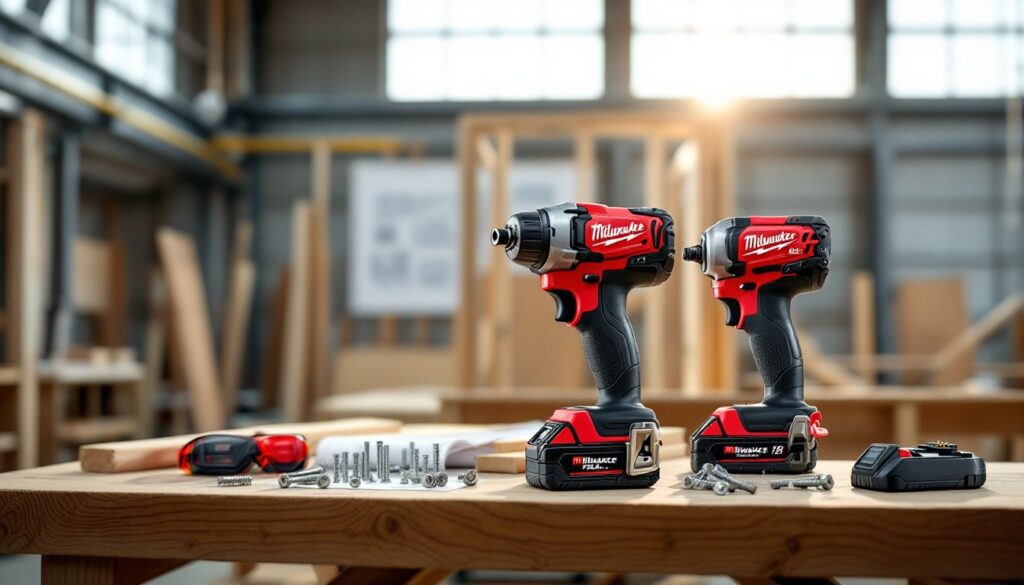
The M18 Fuel impact driver uses brushless motor technology and a fuel cell battery system, Milwaukee’s proprietary tech that claims better power delivery and efficiency than brushed competitors. In practice, this means fewer moving parts to wear out, less heat buildup during extended use, and batteries that hold their charge longer on the shelf. Unlike older brush-based models, the Fuel motor ramps up speed and torque instantly without the lag you’d feel with cheaper alternatives.
What sets it apart is also what it doesn’t do: it doesn’t pretend to be lighter than it is, and it doesn’t overstate runtime on marketing sheets. The M18 Fuel trades some weight for stability and control, important when you’re driving 3-inch lag bolts or sinking fasteners into hardwood. Most homeowners find the balance point comfortable enough for a full day’s work, though if you’re building overhead or in tight spaces, you’ll notice the heft compared to a compact impact driver.
The no-load speed tops out around 2,500 to 3,000 RPM depending on the specific model, and the max torque reaches 400 to 500 foot-pounds. For context, that’s enough to handle structural fastening without flinching. Milwaukee’s warranty coverage is solid too, typically three years on the tool and five on the battery system, which shows confidence in durability.
Key Features and Performance Specs
Power, Speed, and Impact Force
The M18 Fuel delivers power through three key metrics: no-load speed, max torque, and impact frequency. Speed (measured in RPM) determines how fast the chuck spins, which affects how quickly you can drive fasteners into softer materials like pine or composite decking. Torque (measured in foot-pounds) is the rotational force that actually turns the fastener, critical when driving resistance increases in denser wood or when breakaway torque on stuck bolts demands more push.
Impact frequency, measured in impacts per minute (BPM), is what differentiates an impact driver from a standard drill. The M18 Fuel’s mechanism delivers thousands of impacts per second, essentially hammering the fastener while spinning it. This reduces cam-out (where a Phillips or square-drive bit slips and tears up the fastener head) and lets the tool do the muscle work instead of your wrist.
Milwaukee rates the M18 Fuel around 1,500 impacts per minute on the lower setting and up to 3,500 on full power. That frequency matters most when you’re sinking dozens of screws into subflooring, framing, or cabinet assembly, repetitive work where hand fatigue is real.
When comparing to other tools in its class, the M12 impact driver covers lighter tasks, but the M18 is the go-to for heavy fastening. External reviews from This Old House consistently rank Milwaukee drivers among the top performers for torque delivery and consistency under load.
Real-World Applications for Home Projects
Fastening and Drilling Tasks
The M18 Fuel shines on jobs where fastening speed and consistency matter. Building a composite deck? You’re driving hundreds of stainless fasteners. The impact driver eliminates hand fatigue and delivers each screw with the same final torque, no over-tightening into soft composite, no under-tightening into structural members.
Hanging heavy cabinets into wall studs requires sinking bolts deep and true. The M18 Fuel’s torque prevents the bit from slipping mid-drive and lets you seat fasteners flush without stripping heads. Cabinet hinge hardware, door hardware, and structural lag bolts all fall within the comfort zone.
For drilling, the M18 works better in harder materials. Drilling into pressure-treated lumber, concrete anchors, or metal studs runs cooler on an impact driver than a standard chuck drill because the hammer action splits the energy. You’re less likely to stall the motor or overheat the bit.
That said, the M18 isn’t the answer for every fastening task. Driving small finish nails or pneumatic trim screws into softwood trim? You’ll risk splitting and over-driving with full torque. Hammer impact driver bits exist for a reason, but knowing when not to use an impact driver separates experienced DIYers from novices.
Most homeowners find the M18 Fuel becomes their reach-for tool once they own it. The real-world applications span deck assembly, framing, fastening hardware, and heavy fastener removal, exactly the jobs that eat up time and energy on a weekend.
Battery Life and Runtime
Battery performance makes or breaks a cordless tool investment. Milwaukee’s M18 Fuel system uses their Redlithium battery chemistry, which handles temperature swings better than older lithium platforms. In cold weather (an issue in northern climates), you’ll lose some capacity, but not catastrophically, important for early spring framing and late fall cleanup.
Runtime depends heavily on the battery amp-hour rating. A 2.0 Ah battery gets you 1 to 2 hours on mixed fastening work. A 5.0 Ah battery stretches that to 3 to 5 hours. For a typical weekend project (hanging cabinets, deck repairs, equipment assembly), a 2.0 Ah is enough if you keep the charger plugged in nearby. For full-day work, step up to 5.0 Ah or run two batteries in rotation.
The M18 system integrates across Milwaukee’s entire cordless lineup, circular saws, reciprocating saws, miter saws, and more. Once you own the battery ecosystem, the per-tool cost drops because you’re not buying duplicate batteries. That strategic thinking is why the Milwaukee impact driver command loyalty: the ecosystem saves money over time.
Charging time runs 30 to 60 minutes depending on charger type. The standard charger is slow but gentle on batteries. Fast chargers cost extra but get you back to work quicker. Most serious DIYers invest in a dual-slot charger so one battery charges while the other works.
Real-world hint: keep your batteries indoors before use, especially in winter. Cold batteries deliver reduced power. Store them partially charged (40–60%) over the off-season. Battery management stretches runtime and longevity significantly.
Conclusion
The M18 Milwaukee Fuel impact driver fills a specific and valuable role in a home improvement toolkit, powerful fastening for projects that demand consistency, speed, and torque without wearing out the operator. It’s not the cheapest tool on the shelf, and it won’t make a finish carpenter’s job easier. But if you’re hanging structural hardware, building decks, assembling furniture, or tackling real fastening work, the M18 Fuel delivers the reliability and performance that justify the investment. According to reviews at Bob Vila, it remains a top choice for homeowners balancing power with practical everyday use. Choose the right battery size for your projects, commit to the Milwaukee ecosystem, and you’ll have a tool that pays dividends for years of weekend work.