Table of Contents
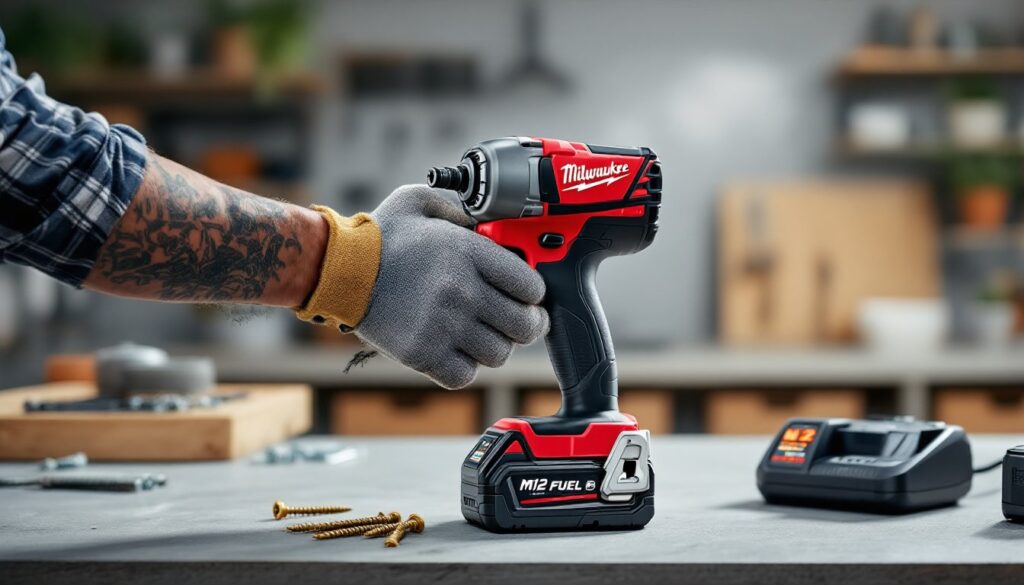
ToggleThe Milwaukee M12 Fuel impact driver represents a significant leap for DIYers tired of struggling with cordless drills on stubborn fasteners. This compact, battery-powered tool delivers the rotational force and rotational blow of a full-sized impact driver in a package small enough to fit in one hand. If you’ve ever felt the frustration of stripped screw heads or a dead wrist after driving deck screws, the M12 Fuel is designed with your next project in mind. Whether you’re assembling furniture, hanging shelving, or tackling structural fastening tasks, understanding how this impact driver fits your workshop can save you time, money, and sore shoulders.
Key Takeaways
- The Milwaukee M12 Fuel impact driver delivers 1,500 in-lbs of torque in a compact, one-handed package that outperforms standard cordless drills and excels at fastening tasks like shelf hanging, furniture assembly, and deck building.
- Brushless motor technology in the M12 Fuel reduces friction and heat while maintaining consistent power throughout the battery discharge cycle, extending tool life and runtime compared to brushed alternatives.
- A 2.0Ah battery provides roughly 60–80 fasteners before needing a swap; upgrading to larger capacity batteries (3.0Ah or 6.0Ah) reduces downtime on bigger projects and improves overall efficiency.
- At $99–$149 for a complete kit, the M12 Fuel justifies its investment if you tackle regular DIY projects, paying for itself within two or three projects through time savings and reduced fastener damage.
- Impact drivers operate differently than drills by combining high-speed rotation with powerful hammer blows; letting the tool do the work and listening for the impact sound shift prevents fastener stripping and overdriving.
- Milwaukee’s 5-year limited tool warranty and 3-year battery coverage provide peace of mind and parts availability that distinguish the M12 Fuel from budget alternatives.
What Makes the M12 Fuel Stand Out in the Compact Impact Driver Market
Performance Specs That Deliver Professional Results
The Milwaukee M12 Fuel impact driver packs 1,500 in-lbs of torque into a tool that weighs just over 3 pounds. That torque rating matters, it’s the rotational force that actually drives a fastener, and 1,500 in-lbs puts this compact powerhouse in professional territory. The 0–3,000 rpm speed range and 0–3,600 impacts per minute deliver rapid fastening without the user fighting kickback or tool climb. Most homeowners encounter corded drills advertised at far lower torque: the M12 Fuel outperforms them significantly.
The Fuel brushless motor is the secret. Brushless technology reduces friction and heat, extending tool life and battery runtime compared to brushed alternatives. Milwaukee designed this engine to deliver consistent power throughout the battery discharge cycle, meaning your last screw gets driven with nearly the same force as your first.
Compact size doesn’t mean fragile. The 1/4-inch hex chuck holds bits securely and accepts standard driver bits without adapters. Build quality feels robust: the rubberized grip resists oil and sweat, and the integrated LED work light illuminates fastening points in shadowy corners or cabinets. External reviews from respected tool roundups confirm the M12 Fuel’s reputation for reliability and consistent fastening performance.
Best Use Cases for Homeowners and DIY Enthusiasts
The M12 Fuel shines on fastening tasks where portability and precision matter equally. Hanging cabinet hardware, assembling IKEA furniture, driving structural fasteners into studs for wall shelving, these are bread-and-butter jobs where the compact M12 Fuel outperforms a standard drill. Its one-hand operation and lightweight design make it ideal for overhead work like installing crown molding brackets or securing joists in tight crawl spaces.
Deck building and outdoor projects are textbook applications. The M12 Fuel drives composite and pressure-treated fasteners cleanly without overdriving (a common problem with larger impacts), and the compact design lets you work along the edge of a board without hitting your knuckles on deck railings. Concrete screw fastening for anchoring ledger boards also falls within the M12’s wheelhouse, the impact action powers through the initial resistance.
Where the M12 Fuel shows its limits: large-scale fastening (installing 100+ fasteners in a single day), removing seized fasteners on machinery, or driving large lag bolts in heavy timber. For those scenarios, the larger Milwaukee M18 FUEL impact driver or renting a full-size corded model makes more sense. Be honest with your project scope, undersizing a tool wastes time and frustration.
Battery Life and Runtime Expectations
The M12 Fuel runs on Milwaukee‘s M12 batteries, available in 1.5Ah, 2.0Ah, 3.0Ah, and 6.0Ah capacities. A 2.0Ah battery delivers roughly 60–80 fasteners (3-inch deck screws into composite decking) before requiring a swap, depending on driving force and material resistance. Real-world runtime varies dramatically with task: driving #8 wood screws into softwood requires far less battery than drilling through hardwood or driving concrete screws into masonry.
Milwaukee’s REDLITHIUM batteries hold their charge longer and maintain voltage throughout discharge, which directly translates to consistent fastening power. Upgrading to a 3.0Ah or 6.0Ah battery costs more upfront but reduces swap time on larger projects. For a weekend DIYer tackling typical household projects, a single 2.0Ah battery and a charger is sufficient: for serious homeowners, purchasing two batteries and rotating them through the charger is smart planning.
Charge time matters too. Milwaukee’s standard charger cycles a 2.0Ah battery in roughly 30 minutes: fast chargers cut this to 20 minutes. Budget 45 minutes to an hour of downtime if you’re using one battery on a multi-hour project. Cold weather slows chemical reactions in batteries, reducing runtime by 20–30% below freezing, factor this in if you work outdoors in late fall or early spring.
Comparing Value: Is the M12 Fuel Worth the Investment
A Milwaukee M12 Fuel impact driver kit (tool + battery + charger) typically costs $99–$149 depending on sales and retailer. That’s a legitimate investment for a homeowner, but context matters. A basic corded impact driver runs $40–$60, yet adds a cord, reduces portability, and requires outlet access. Cordless alternatives from budget brands often lack brushless motors and fail after 12–18 months of regular use.
The M12 Fuel’s value proposition hinges on project frequency and precision. If you’re hanging a single shelf once a year, renting a tool for $10–$15 beats ownership. If you’re assembling IKEA furniture, hanging multiple shelves, building raised garden beds, or assembling deck components, the M12 Fuel pays for itself within two or three projects through time saved and fewer stripped fasteners.
Comparison: The M12 hex impact driver and the M12 Fuel operate identically for most homeowner tasks. The Fuel’s brushless motor offers modest runtime advantages and premium durability, worth the extra $20–$30 if you plan to own the tool for five years or more. Warranty coverage is solid: Milwaukee backs the M12 Fuel with a 5-year limited warranty, and batteries carry 3-year coverage. That peace of mind and parts availability distinguish Milwaukee from fly-by-night competitors.
Getting Started: Tips for First-Time Impact Driver Users
Impact drivers confuse newcomers because they operate differently than drills. A traditional drill spins steadily: an impact driver combines high-speed rotation with brief, powerful hammer blows to the chuck (the impact action). This sudden force, not sheer rotational speed, drives fasteners through resistance. Don’t assume higher speed means faster fastening: 1,500 in-lbs of torque at 3,000 rpm outperforms 3,500 rpm at lower torque every time.
Start with proper fastener selection. Impact drivers demand fasteners rated for impact use, specifically, hardened fasteners designed to resist the sudden force. Standard wood screws work fine: hardened structural fasteners (deck screws, cabinet screws) are ideal. Soft fasteners or oversized fasteners can snap under impact stress.
Safety first: Wear safety glasses whenever using an impact driver: fasteners can slip or break free. Gloves are optional but recommended for extended use, the repetitive motion can cause fatigue. Hearing protection isn’t always necessary for the M12 Fuel (quieter than larger impacts), but it doesn’t hurt in noise-sensitive situations.
Technique matters. Let the tool do the work, don’t force fasteners or apply excessive downward pressure. Apply steady, light downward force while holding the tool square to the fastening point. Listen for the impact sound to shift as the fastener seats: that audible change signals the fastener is fully driven. Overdrive, pushing the fastener deeper than necessary, strips screw heads and damages substrate.
Prep work can’t be skipped. Pilot holes prevent splitting in hardwood and make fastening faster. Pre-drilling into composite decking eliminates the ‘pop’ many folks experience with the first fastener. References from detailed tool reviews emphasize that technique training separates successful impact driver owners from frustrated ones.
Conclusion
The Milwaukee M12 Fuel impact driver delivers professional-grade fastening power in a package built for hands-on homeowners. Its brushless motor, compact design, and 1,500 in-lbs of torque make it ideal for shelf hanging, furniture assembly, deck building, and structural fastening, the bread-and-butter projects most DIYers encounter. The tool’s reliability, backed by Milwaukee’s reputation and warranty, justifies the investment if you’re committed to year-round tinkering. Whether the M12 Fuel is right for you depends on project frequency and your comfort with hand tool maintenance: for regular DIYers, it’s a no-brainer addition to the garage.