Table of Contents
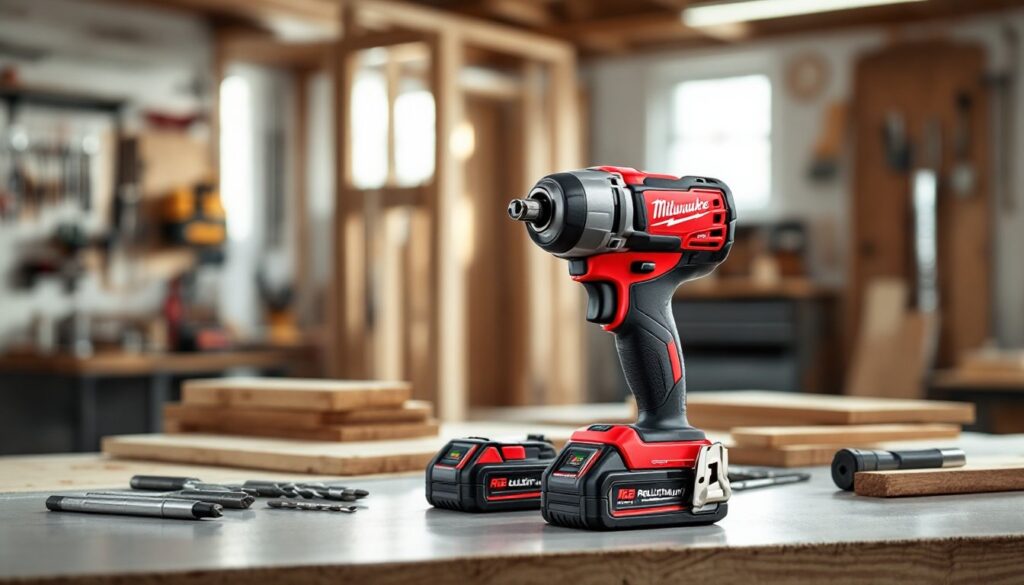
ToggleWhen you’re fastening deck boards, assembling furniture, or driving lag bolts into studs, a standard cordless drill can feel like using a butter knife for carpentry. The Milwaukee M18 Fuel impact driver bridges that gap with serious torque and sustained power for projects that demand more than basic cordless tools. Unlike older brushed motors, the M18 Fuel uses brushless technology paired with Milwaukee’s RedLithium batteries to deliver consistent performance without the weight penalty. Whether you’re a weekend warrior or someone finally ready to invest in professional-grade equipment, understanding what separates the M18 Fuel from entry-level alternatives, and from competing platforms, will help you make a choice that actually fits your workload.
Key Takeaways
- The Milwaukee M18 Fuel impact driver delivers 1,500 in-lbs of torque and brushless motor technology, making it capable of driving 50+ fasteners without motor slowdown or bit stripping, far outperforming budget alternatives.
- RedLithium battery integration maintains consistent voltage under load, so the Milwaukee impact driver performs reliably throughout the battery’s charge cycle—unlike standard impact drivers that bog down in the final quarter.
- The M18 Fuel platform accepts multiple battery sizes (1.5Ah to 8.0Ah), enabling 75–100 fasteners per small pack and 250–400+ with extended-capacity batteries, with excellent cold-weather performance down to 0°F.
- With a compact 7-inch body and single-speed operation, the M18 Fuel balances power and maneuverability for real-world DIY projects like decking, furniture assembly, and cabinet work without the industrial overkill of larger tools.
- Pairing the M18 Fuel with quality impact-rated bits is essential for clean results; brushless motor design eliminates maintenance costs from carbon brush replacement, extending tool life significantly.
What Makes the M18 Fuel Stand Out
The M18 Fuel isn’t just a more expensive impact driver: it’s built around brushless motor technology and a platform that scales across Milwaukee’s entire 18V system. The brushless motor eliminates carbon brushes that wear out, reducing maintenance and extending tool life. You get more runtime per charge and less heat buildup during sustained use, critical when you’re running ten fasteners into dimensional lumber instead of two.
What truly sets it apart from cheaper impact drivers is the RedLithium battery integration. These batteries maintain voltage under load better than standard lithium cells, meaning the motor delivers consistent torque even as the battery depletes. On a standard impact driver, you might notice slower driving speed in the last quarter of a battery’s charge. With the M18 Fuel, that drop is minimal. The Milwaukee impact driver platform also benefits from years of field feedback: the ergonomics, handle angles, and chuck design reflect what contractors actually complained about and requested, not what a product manager thought looked good in a photo.
Compare this to a budget impact driver, and the difference becomes tangible. A $100 impact driver might drive a 3-inch deck screw into soft pine. A Milwaukee M18 Fuel will drive fifty without hesitation and without the motor bogging down or the bit stripping the screw head.
Key Features and Specifications
Motor Technology and Power Output
The M18 Fuel uses a brushless motor that delivers 1,500 in-lbs of rotational torque and up to 3,450 RPM in single-speed mode. That torque figure is where this tool earns its reputation, it’s enough to drive ½-inch lag bolts through doubled-up framing lumber without stalling the motor. The brushless design also means there’s no commutator wear or carbon brush replacement, translating to years of reliable operation if you maintain basic tool hygiene.
The motor is paired with an impact mechanism that delivers short, powerful bursts rather than continuous rotation. This is why you can drive a fastener that would twist a regular drill’s chuck or snap a smaller tool’s handle. The impact mechanism absorbs shock, protecting your wrist and the fastener itself. When you feel that rhythmic striking through the tool, that’s the anvil inside the chuck striking the socket drive, each strike amplifies rotational force exponentially. A Milwaukee impact driver outperforms a standard drill in this category because the motor is tuned specifically for impact load, not continuous rotation.
With single-speed operation, you’re not fumbling with a speed dial mid-project. You get maximum power and efficiency in one setting, which is what most fastening work demands.
Battery Compatibility and Runtime
The M18 Fuel accepts Milwaukee’s entire RedLithium battery lineup: the 1.5Ah compact packs, 3.0Ah standard cells, 5.0Ah extended-runtime batteries, and the newer 8.0Ah high-capacity pack. This flexibility is genuinely useful, you can match battery size to project scope. A quick cabinet hardware install might use a 1.5Ah pack: a full-day framing project demands the 5.0Ah or 8.0Ah.
Runtime varies, but expect roughly 50–70 fasteners per amp-hour, depending on fastener size, material hardness, and whether you’re driving into softwood or hardwood. That translates to 75–100 fasteners with a 1.5Ah battery, and 250–400+ with a 5.0Ah pack. The RedLithium cells also resist fade under heavy load: in cold weather (below 32°F), they maintain better performance than older chemistries. Milwaukee rates these batteries for use down to 0°F, though you’ll see reduced runtime. The charger delivers a full charge in under an hour for most packs, and the batteries won’t overcharge if you forget them in the charger, a small comfort after a long Saturday in the shop.
Real-World Performance for DIY Projects
On a typical deck or fence build, the M18 Fuel shines. You’re driving 2½-inch screws through pressure-treated boards into dimensional lumber joists, work that grinds smaller tools to a halt. The M18 Fuel handles this with barely a stall. The compact body (just over 7 inches long) also means you’re not banging the chuck against the adjacent joist when you’re working in tight spots. If you’re assembling IKEA bookcases or wall-mounting cabinets, you’ll appreciate the snappy acceleration and the fact that the motor doesn’t labor when driving ¼-inch pocket hole screws into hardwood.
For drywall fastening, the M18 Fuel is overkill, a M12 impact driver would cover that work just fine. But if you’re mixing projects (some cabinet work, some structural fastening), the M18’s flexibility justifies the extra cost and size. The tool’s weight (around 3.6 pounds with battery) is manageable for overhead work like cabinet installation, though after twenty minutes of driving fasteners above shoulder height, you’ll feel it. That’s a limitation of the task, not the tool.
One practical point: bit quality matters hugely. Pairing the M18 Fuel with cheap, soft bits means stripped screws and frustration. Quality impact-rated bits from Milwaukee or similar brands hold their tip geometry under the repeated striking load. A quality impact driver bits set isn’t a luxury, it’s a fundamental part of getting clean results. The Milwaukee Shockwave 100Pc set is purpose-built for impact tools and removes one variable from your setup.
If you’re new to impact drivers, understanding how they differ from standard drills is important. The difference between a drill and impact driver shapes which tasks you’ll tackle confidently. Similarly, impact driver sizes matter, the M18 sits in the sweet spot for most DIY work, balancing power against maneuverability.
When you’re starting out, resources like This Old House and Bob Vila offer project guides and tool recommendations that pair well with the M18 Fuel platform. These sources emphasize tool selection matched to actual work, not just buying the most powerful option available. The M18 Fuel represents that balanced approach, it’s powerful without being industrial-overkill, and it’s built into a system that grows with your skill and project scope. For woodworking and assembly projects, Fix This Build That offers detailed tutorials where an impact driver becomes genuinely useful instead of optional.
Bottlenecks in real projects often come from setup, not fastening speed. Measuring twice, laying out fastener locations, clamping material, those steps take longer than actually driving the fasteners. The M18 Fuel removes the frustration of the fastening itself, so you can focus on the parts of the project that actually demand your attention.
Conclusion
The Milwaukee M18 Fuel impact driver is a legitimate investment for anyone building decks, assembling furniture, or doing anything beyond hanging a picture. The brushless motor, torque output, and battery platform deliver reliability that matches your effort. It’s not the cheapest option, but it’s not exotic pricing either, it sits firmly in the professional-adjacent category where homeowners get serious performance without contractor-level expense. If you’re ready to move past borrowed tools and basic cordless drills, the M18 Fuel justifies the investment.