Table of Contents
ToggleIf you’ve spent an afternoon wrestling with a corded drill or borrowed tool, you know the frustration of underpowered equipment. The Milwaukee M12 impact driver has quietly become a staple in home garages for a reason: it delivers rotational force and speed that a standard drill simply can’t match. Whether you’re fastening deck screws into pressure-treated lumber, assembling furniture, or hanging heavy cabinets, this compact tool handles the job with minimal fatigue. Unlike a basic cordless drill, an impact driver uses concussive blows to drive fasteners, making it ideal for tough materials where a regular drill would bog down. This guide walks you through what makes the M12 stand out, how it performs on real DIY projects, and whether it’s worth the investment for your workshop.
Key Takeaways
- The Milwaukee M12 impact driver delivers 1,500 in-lbs of rotational torque in a lightweight 3.6-pound package, making it ideal for homeowners tackling deck construction, furniture assembly, and cabinet installation without excessive fatigue.
- Milwaukee’s M12 platform offers strong ecosystem compatibility—batteries work across impact drivers, drills, saws, and other tools—creating long-term value when expanding your compact tool collection.
- With a standard 2.0 Ah battery providing 40–60 minutes of runtime and REDLITHIUM technology maintaining power in cold weather, the M12 impact driver suits seasonal DIY projects and outdoor repairs better than full-size corded alternatives.
- At $99–$149 bare tool or $199–$249 with battery and charger, the M12 delivers reliable mid-range value with excellent parts availability and 40–50% resale retention, outpacing budget-brand competitors.
- The impact driver excels on fastening tasks like driving pressure-treated screws and assembling furniture but falls short for pilot-hole drilling and heavy structural work where precise speed control matters more than rotational force.
What Makes the Milwaukee M12 Stand Out
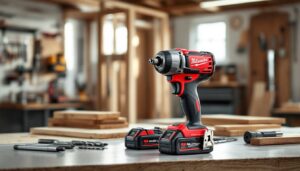
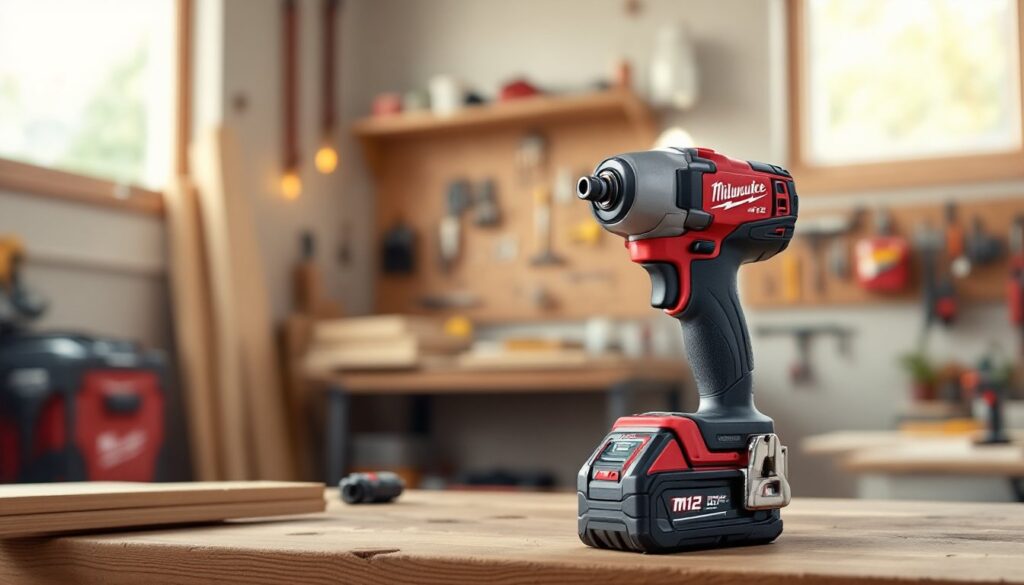
Milwaukee‘s M12 platform has dominated the compact tool space since its launch, and the impact driver is a cornerstone of that lineup. The tool delivers up to 1,500 in-lbs of rotational torque, which is significantly higher than entry-level drills but positioned for homeowners rather than full-time professionals needing 2,000+ in-lbs. What sets it apart is Milwaukee’s REDLITHIUM battery technology, which maintains consistent power even in cold weather, a real advantage if you’re doing winter repairs or working in an unheated garage.
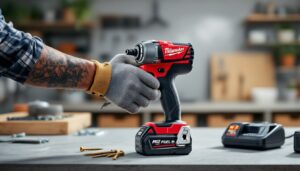
The ergonomics matter more than specs alone. At roughly 3.6 pounds (battery included), the M12 sits between a featherweight toy and a brick. Your wrist won’t ache after an hour of work, and you can operate it single-handed if you’re driving fasteners above your head. The 1/4-inch hex drive accepts standard impact-rated bits, so you’re not locked into proprietary accessories, a practical advantage when you already own a collection of bits from previous tools.
Portability is another selling point. Homeowners often need a tool that lives in a junk drawer or hangs on a pegboard without demanding premium shelf space. The M12 fits that role. You get genuine power in a form factor that doesn’t require a dedicated charging station or heavy-duty extension cord.
Key Features and Specifications
Compact Design and Weight
The M12 measures roughly 4 inches long and weighs under 4 pounds stripped of the battery. This isn’t academic, it’s the difference between confidently working overhead and abandoning the job. When you’re driving fasteners into soffit or assembling wall-mounted shelving, fatigue turns into safety liability. A lighter tool also means faster repositioning on larger projects, cutting overall project time.
The grip design is textured rubber that won’t slip if your hands are sweaty or dusty, which matters more than it sounds when you’re working at awkward angles. The trigger is progressive, squeeze harder and the speed increases, giving you control when needed. For delicate work like assembling furniture, you can feather the trigger. For deck screws into pressure-treated lumber, you’re pressing hard and letting the tool do the work.
Battery Performance and Runtime
The standard M12 2.0 Ah battery gives you roughly 40–60 minutes of mixed-duty runtime, depending on fastener size and material density. A compact impact driver driving standard fasteners into softwood will run closer to an hour. The same battery struggling through lag bolts into hardwood might deplete in 20 minutes. Milwaukee rates this conservatively, so real-world runtime often exceeds specifications.
Battery swap time is critical for homeowners without a second tool. A fresh battery takes seconds, there’s no waiting for a quick charge. If you’re doing a full afternoon of deck framing or cabinet assembly, having two batteries and a charger on rotation keeps you productive. The REDLITHIUM batteries hold 70% of their charge after a year of storage, so spring projects don’t require a panic-buy of replacements. Cold-weather performance drops roughly 20–30% below room-temperature output, a real consideration if you’re working in November or December.
Real-World Performance for DIY Projects
The Milwaukee M12 impact driver excels on the jobs most homeowners actually tackle. Deck construction, fastening pressure-treated lumber with 3-inch screws, is where impact drivers justify their existence. A standard drill would overheat and stall: the M12 powers through eight hours of driving with routine battery swaps. The 1,500 in-lbs of torque prevents the frustrating slip-out moments where a screw nearly seated suddenly spins free.
Cabinet assembly and installation benefits from the compact form factor. When you’re reaching into tight spaces or positioning a drill at odd angles, a massive corded beast isn’t your friend. The M12 fits where full-size tools can’t, and one-handed operation means your other hand can stabilize the work or guide positioning. Furniture assembly, IKEA shelving, ready-to-assemble closet systems, bed frames, is straightforward, though you’ll want to use hex drill bits designed for impact drivers to avoid stripping screw heads.
Where the M12 stumbles is heavy structural work. Drilling pilot holes for lag bolts into pressure-treated posts? You’re better off with a full-size drill that has more chuck control and precise speed modulation. Similarly, overhead fastening into metal studs requires the rotational control a dedicated drill offers, the impact driver’s concussive blows can twist your wrist if something catches. For most homeowners doing seasonal repairs, furniture assembly, and light decking, this isn’t an issue. Just be honest with yourself about the scope of your projects before investing.
Value and Long-Term Investment
A Milwaukee M12 impact driver retails around $99–$149 as a bare tool, roughly $199–$249 with a single battery and charger. This sits in the mid-range, not budget-brand pricing, but not professional-grade either. For homeowners, the value proposition is strong because you’re buying reliability and durability that lasts beyond a single season of projects.
Milwaukee’s warranty is industry-standard: 5 years on the tool, 3 years on the battery. More importantly, parts availability is excellent. Batteries, chargers, and accessories stock at every big-box retailer and online. You’re never stuck hunting rare components or waiting weeks for restock. Compare that to ultra-budget brands where finding replacement batteries becomes a treasure hunt six months in.
Battery compatibility extends the value. An M12 2.0 Ah battery works across the entire M12 platform, impact drivers, drills, saws, lights, vacuums, and more. If you’ve already bought into the Milwaukee ecosystem for other tools, a new impact driver means you’re sharing a battery supply. This cross-compatibility doesn’t exist with many competitors, and it’s a practical way to justify incremental tool purchases over time. You can explore other compact impact drivers if budget is tight, but Milwaukee’s ecosystem creates long-term value that budget brands don’t offer.
Resale value matters if you’re selling a home or clearing out a garage. Used Milwaukee tools hold 40–50% of original value: budget-brand impact drivers drop to 15–20%. For a tool you might use for five years or more, that residual value partially offsets the initial investment.
Conclusion
The Milwaukee M12 impact driver isn’t flashy, there’s no gimmick, no oversized marketing, just a tool that reliably handles the fastening work most homeowners encounter. It trades maximum power for portability and practicality, making it ideal for seasonal projects and ongoing maintenance. If you’re building decks, assembling furniture, or hanging heavy items, it delivers genuine value. That said, be realistic about your project scope: if you’re drilling pilot holes and need precise control, a standard drill is still your better choice. The M12 earns its place in your workshop through dependability and ecosystem compatibility, not raw performance numbers.