
Table of Contents
ToggleStanding in the power tool aisle at your local home improvement store, you’re faced with a familiar decision: should you grab a drill or an impact driver? Maybe both? It’s easy to assume they’re interchangeable, but the truth is more nuanced. A drill and an impact driver serve different purposes, and understanding when to reach for each one can transform how you tackle projects around the house. Whether you’re hanging shelves, building raised garden beds, or assembling furniture, knowing which tool is right for the job saves time, effort, and frustration. This guide breaks down the real differences between these two workhorses and helps you decide which ones belong in your toolbox.
Key Takeaways
- Drills use smooth continuous rotation ideal for precision tasks like drilling pilot holes and assembly, while impact drivers use rapid pulses to deliver 1,500–3,500 inch-pounds of torque for heavy fastening work.
- An impact driver excels at sinking large screws and driving fasteners into hardwood or pressure-treated lumber with significantly less physical strain and wrist strain compared to a drill.
- Drills feature variable-speed triggers (0–1,500 RPM) that give you control for delicate surfaces like tile and drywall, and can also handle mixing tasks with a paddle attachment.
- The key difference between a drill and an impact driver lies in their mechanisms: drills provide sustained rotational force while impact drivers work through hammering pulses that prevent binding and tool twist.
- Casual DIYers can start with a quality drill that covers most household needs, but regular builders should invest in both tools since they complement each other for optimal efficiency and safety.
- When choosing between tools, select one with the same voltage (18V or 20V) as your existing system to share batteries, and prioritize brushless models that deliver better performance and longer lifespan.
What’s The Difference Between A Drill And An Impact Driver?
How Each Tool Works
A drill works by rotating a chuck holding bits in a continuous, smooth circular motion. When you pull the trigger, the motor spins steadily, and the bit turns at whatever speed you’ve set. Think of it like a car engine running smoothly at a constant RPM. The drill’s power comes purely from rotational force, making it ideal for precision work where you need steady control.
An impact driver operates on a completely different principle. It uses a spring-loaded mechanism inside that stores energy and releases it in rapid pulses, creating a rotational impact force. This is why it’s sometimes called a “percussion driver.” When you pull the trigger, you’ll hear and feel a chattering or hammering sensation, that’s the impact mechanism firing hundreds of times per minute. The impact driver works by sending rotational force with quick bursts, which is fundamentally different from a drill’s smooth rotation.
Key Performance Differences
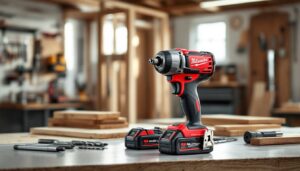
Torque, the rotational force, is where these tools diverge most obviously. A typical cordless drill produces 400 to 800 inch-pounds of torque, which is plenty for most household tasks. An impact driver often delivers 1,500 to 3,500 inch-pounds of torque. That’s not just a bigger number: it’s transformative for driving large fasteners. A Milwaukee Fuel impact driver, for example, achieves this through impact pulses rather than sustained rotation.
Speed matters too. Drills typically run at 0 to 1,500 RPM, with slower speeds when the trigger is partly pressed, giving you control. Impact drivers run at similar speeds, but the impact pulses multiply the effective driving force. This means an impact driver can sink a 3-inch deck screw into pressure-treated lumber in seconds, work that would strain a standard drill.
Bit compatibility differs as well. Drills use standard round-shank bits in ⅜-inch or ½-inch chucks. Impact drivers typically accept ¼-inch hex-shank bits, which means you’ll need specific bits designed for impacts. The hex connection is more secure under the intense forces an impact driver generates, and understanding how to choose the right hex drill bits for impact drivers ensures your work stays efficient and accurate.
When To Use A Drill For Your Home Projects
A drill is your precision tool. Reach for it whenever you need finesse, control, or accurate bit positioning. Drilling holes for shelf anchors, installing cabinet hardware, assembling furniture, or creating pilot holes before inserting fasteners all benefit from a drill’s steady rotation.
The variable-speed trigger on most drills lets you start slow. This is critical when drilling into tile, drywall, or trim where you want to avoid tearout or slipping. A fast-spinning bit on these materials risks cracking or splitting. Similarly, when you’re drilling into metal studs or drilling deep holes, the drill’s controllable speed prevents bit breakage and lets you feel when you’re through the material.
Drills also handle mixing tasks beautifully. Attach a mixing paddle, lock the chuck, and you can stir paint, joint compound, or mortar at a steady pace without the violent chattering of an impact driver. For any task requiring precision positioning or feedback through your hands, a drill is your answer. A standard drill at 400–600 torque handles driving screws up to about ⅛-inch diameter comfortably, which covers most interior installation work.
When An Impact Driver Makes The Job Easier
An impact driver shines when you’re driving fasteners, especially large ones, or when repetitive driving would exhaust you. Sinking 10 or 20 deck screws, installing structural screws into framing, or driving fasteners into hardwood or pressure-treated lumber happens faster and with less physical strain.
The torque difference is real. If you’ve ever felt a drill twist in your wrist when the bit catches on a knot in lumber, you understand why impact drivers matter. The impact pulses prevent sudden binding. The tool bounces through resistance instead of stalling, which protects both the tool and your wrist. This makes impact drivers far safer for tasks like fastening door hinges or assembling fence panels.
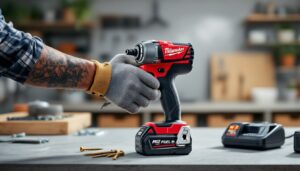
Battery life also favors impact drivers on these jobs. Because the motor isn’t fighting constant rotational resistance, an impact driver uses battery power more efficiently than a drill trying to force a 3-inch screw. Many DIYers find a compact impact driver runs longer and provides enough power for most residential work. The Milwaukee Fuel impact driver line is popular because the brushless motor and impact mechanism work together efficiently, delivering serious torque without draining batteries as fast as older models.
Should You Buy Both Or Just One?
The honest answer depends on your project frequency and storage space. If you’re a casual DIYer tackling a few projects yearly, one good-quality drill covers most needs. A drill with adjustable torque settings and variable speed (0–1,500 RPM) handles fastening, drilling, and mixing. You’ll occasionally wish for an impact driver when wrestling with tough screws, but it’s not essential.
If you’re doing regular projects, building decks, installing cabinetry, assembling furniture regularly, both tools earn their space. They complement each other: use the drill for precision and the impact driver for heavy driving. Many serious DIYers keep both in their kit.
A practical middle ground: buy a drill first. Use it for six months or a year. If you find yourself repeatedly struggling with large fasteners or spending too much effort on driving tasks, add an impact driver then. This approach costs less upfront and ensures you understand your actual needs. When you do add an impact driver, look for one with similar voltage (18V or 20V systems are standard) so you can share batteries across tools. Understanding impact driver sizes and how they fit your projects helps you choose right the first time. Brands matter here: quality mechanisms in brushless drills and impact drivers last longer and justify their cost over time. Research specific models and read reviews from users with similar project types, not just the “best of” lists.
Conclusion
A drill and an impact driver solve different problems. The drill is precision and versatility: the impact driver is power and speed. Neither is inherently “better”, they’re tools for different jobs. Start with a quality drill, add an impact driver when your projects demand it, and you’ll have a foundation that handles most residential work. The mechanics and applications differ significantly, so understanding which tool fits your current task keeps you working efficiently and safely.