Table of Contents
ToggleAn impact driver sits somewhere between a drill and a demolition tool, but don’t let that intimidate you. Whether you’re hanging drywall anchors, assembling deck frames, or driving lag bolts into hardwood, a DeWalt impact driver delivers the rotational force and downward concussive blows that make fastening feel effortless. Unlike a standard drill that relies on steady rotational power, an impact driver uses rapid bursts of torque to power through tough materials without bogging down or twisting your wrist. If you’ve watched any DIY tutorial in the last five years, you’ve probably seen someone reach for one. This guide walks you through the main DeWalt impact driver models, what makes them different, and how to pick the one that actually fits your project list, not the fanciest option at the store.
Key Takeaways
- A DeWalt impact driver delivers rapid-fire torque bursts (up to 3,000 impacts per minute) that make fastening through tough materials effortless, unlike standard drills that can bog down or twist your wrist.
- Choose your DeWalt impact driver based on project type: 20V models (1,500+ inch-pounds) for framing and deck work, 18V for mixed projects, and 12V for trim and cabinet assembly.
- Torque output in inch-pounds is the key specification to match your fastener size, while battery capacity (measured in Ah) determines runtime—a 4.0Ah pack delivers roughly 45 minutes of continuous work.
- Sticking with DeWalt’s battery ecosystem saves money and reduces clutter, since 20V batteries work across impact drivers, saws, lights, and other tools in the lineup.
- The 12V DCF801C2 and 20V DCF887D2 represent the best budget and mid-range options for homeowners, balancing power, weight, and cost without unnecessary oversizing.
What Is a DeWalt Impact Driver and Why You Need One
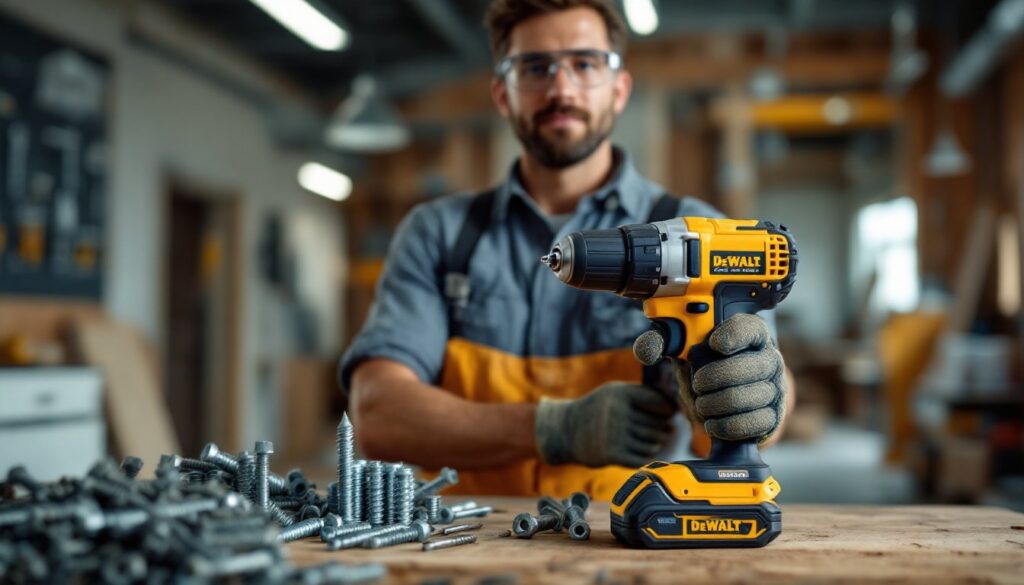
An impact driver is a cordless fastening tool that combines rotational force with rapid downward tapping strikes, think of it as a miniature jackhammer for your bits. That dual action means you can drive a 3-inch structural screw through pressure-treated lumber without the tool twisting out of your hand or stalling mid-way. DeWalt’s impact drivers come in various battery voltages (typically 12V, 18V, and 20V) and motor configurations, each suited to different tasks.
The key difference from a regular drill: instead of steady, constant rotation, an impact driver fires up to 3,000 impacts per minute. That’s why fastening feels almost effortless. You’re not muscling the tool: the tool is doing the work. For deck building, cabinet assembly, and structural fastening, the everyday jobs homeowners tackle, an impact driver cuts your effort and time in half.
DeWalt models also tend to hold their battery charge well and accept quick-connect bit holders, which means you can swap between a Phillips head, a square drive, and a hex socket bit without fumbling through your toolbox. If you’ve wondered why your standard drill struggles with large fasteners in dense wood, an impact driver handles those jobs where a regular drill stops cold.
Top DeWalt Impact Driver Models by Use Case
Best Overall and High-Torque Options
The DeWalt 20V DCF887D2 and its larger sibling, the DCF889M2, represent the middle ground for most homeowners. The 20V platform delivers 1,500 inch-pounds of torque, enough to handle framing work, deck assembly, and structural fastening without hesitation. These aren’t overkill for home projects, and they’re not undersized either. If you’re building a pergola or installing exterior trim with heavy fasteners, this is where you start.
For truly demanding work, installing through-bolts on a barn door, driving 4-inch lags, or fastening automotive components, the DeWalt DCF899M1 or comparable higher-torque models push into 2,000+ inch-pounds. Frankly, most homeowners don’t need this much power, but if you’re gravitating toward serious structural work or plan to use your impact driver commercially down the road, it’s worth the investment. The downside: higher torque means more weight and a bigger battery drain.
These top-tier DeWalt models pair well with impact driver bits designed for heavy-duty work. You’ll want hex-shank bits rated for impact duty, not standard twist-drill bits, or you’ll strip out the bit holder and snap fasteners.
Best Budget-Friendly and Compact Models
Not every project requires top-shelf power. The DeWalt 12V DCF801C2 is the workhouse of budget-conscious DIYers. At roughly 80 inch-pounds, it won’t drive massive fasteners, but it excels at trim work, cabinet hardware, and deck fastening with standard screws. The 12V form factor is also lighter and more maneuverable, critical if you’re working overhead or in tight spaces like under eaves.
For compact work and lower-torque tasks, the 12V models from DeWalt are genuinely sufficient. You save money on the tool, and, here’s the real win, 12V battery packs charge faster and weigh less than 20V packs. If you’re mostly handling fasteners under ¼-inch diameter, the 12V saves you cash and frustration. Compare this to a Milwaukee impact driver if you’re shopping around: both brands make solid 12V and 18V options, but DeWalt’s battery ecosystem is particularly well-stocked and reasonably priced.
Key Performance Factors to Compare
When you’re standing in front of three or four DeWalt impact drivers, here’s what actually matters:
Torque Output is the headline number, measured in inch-pounds. More isn’t always better, a 12V at 80 inch-pounds is perfect for cabinet hardware, while a 20V at 1,500 inch-pounds powers through framing. Match the tool to your fastener size. Oversized tools waste battery and add unnecessary weight.
Impact Rate (usually 2,500 to 3,000 impacts per minute) matters less than torque for most homeowners. Both numbers affect perceived power, but torque is the limiter on what fastener you can drive.
Battery Voltage and Capacity determine runtime and power delivery. A 4.0Ah battery gives you roughly 45 minutes of continuous work: a 2.0Ah gets you 20 to 30 minutes. If you’re working solo on a four-hour deck frame, two batteries (one charging while you use the other) is the bare minimum. Look for batteries with fuel gauges, DeWalt’s 20V packs with LED fuel indicators let you see what you have left before you run dry mid-screw.
Chuck Type is often overlooked. DeWalt impact drivers use a hex quick-connect chuck that grabs 1/4-inch hex-shank bits. This is standard across the brand, so bits are interchangeable. Some higher-end models add a keyless chuck for drilling (with bits), but for impact driving, hex chuck is all you need.
Weight and Balance matter if you’re working overhead or one-handed. A 3.5-pound 20V impact driver gets tiring fast above your head. A 2.2-pound 12V is easier to control. DeWalt publishes specs, so check before you buy if overhead work is in your plans.
How to Choose the Right DeWalt Impact Driver for Your Needs
Start by asking yourself what you’re actually fastening:
For deck building, framing, and structural work: Go 20V with at least 1,200 inch-pounds of torque. You’ll drive 3-inch structural screws and lag bolts without hesitation. Battery runtime matters here, so grab a 4.0Ah pack and a second battery so you never stop mid-project.
For cabinet assembly, trim, and furniture work: A 12V or 18V compact model is all you need. Smaller fasteners (under ¼-inch), lighter workload, and quicker charging make this the smarter choice. Save the cash and buy a solid set of impact driver bits instead.
If you’re mixing projects: An 18V mid-range model (like the DCF887D2) gives you the flexibility to handle both light and moderate fastening without overkill. It’s the Goldilocks option for most homeowners.
Also consider the ecosystem. DeWalt’s 20V batteries work across dozens of tools, sanders, circular saws, work lights, and chargers. If you’re building a tool collection (which most DIYers do), sticking with one voltage platform means fewer batteries to manage. Milwaukee offers a similar ecosystem if you prefer their ergonomics or features, but consistency within your own collection saves money and headache.
Safety reminder: always wear safety glasses when driving fasteners. Bit breakage is rare but possible, and you don’t want flying debris near your eyes. Wear work gloves too, impact drivers can spin bits at high speed, and slips happen.
Conclusion
A DeWalt impact driver isn’t a luxury tool, it’s a smart investment that turns slow, exhausting fastening into quick, confident work. Whether you land on a 12V compact, an 18V mid-range, or a full-power 20V, the key is matching the tool to your actual projects, not buying the biggest number on the shelf. Factor in your battery ecosystem, the fastener sizes you’ll typically drive, and how much overhead work you’ll do. Then buy the right fit, grab a solid bit set, and focus on the project itself. Your projects, and your wrists, will thank you.