Table of Contents
ToggleDeWalt impacts have earned a near-permanent spot in DIY garages, and for good reason. They drive long deck screws without stripping heads, sink lag bolts that would stall a standard drill, and weigh less than the corded tools their owners grew up with. But the lineup has grown crowded, 12V subcompacts, 20V MAX brushless workhorses, FlexVolt hybrids, and a separate family of impact wrenches. For homeowners trying to pick one tool that handles 90% of weekend projects, here’s a straightforward look at what’s worth buying in 2026 and why.
Key Takeaways
- DeWalt impact drivers excel at driving fasteners without stripping or stalling, making them essential for deck building, fence repair, and cabinet installation projects.
- Brushless 20V MAX models offer the best balance of torque, runtime, and durability for homeowners, with torque ratings of 1,800-2,000 in-lbs handling nearly all residential applications.
- The shared battery ecosystem across DeWalt’s tool lineup means owning multiple 20V MAX batteries makes switching brands expensive, creating long-term value for DIYers invested in the platform.
- Critical features to prioritize include 3-speed selectors to prevent stripping, triple-LED work lights for visibility, and impact-rated bits designed to withstand rotational hammer forces.
- Monthly chuck maintenance, proper battery storage at room temperature, and avoiding full drain cycles significantly extend the lifespan of DeWalt impact tools.
- For most homeowners, a single 20V MAX brushless DeWalt impact driver paired with quality batteries and compatible bits eliminates the need for multiple tools on 90% of weekend projects.
What Makes DeWalt Impact Drivers Stand Out for Home Projects
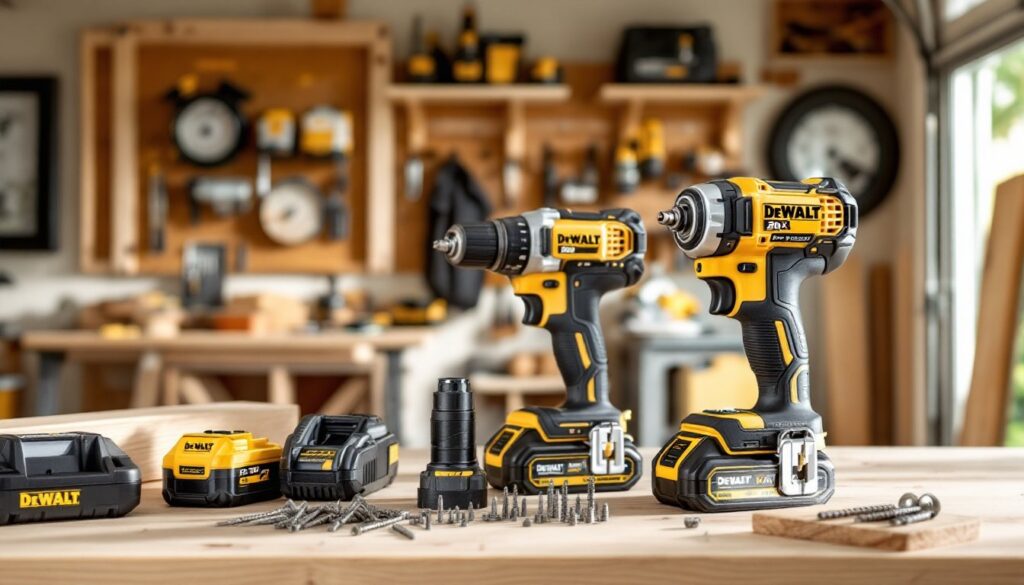
DeWalt’s reputation rests on a few practical strengths: durable gear cases, a wide battery ecosystem, and consistent torque delivery across the 20V MAX line. For a DIYer, that translates to fewer cam-outs when driving 3-inch deck screws and less wrist fatigue on long sessions.
The yellow-and-black tools also share batteries across drills, circular saws, sanders, and shop vacs. That matters more than spec sheets suggest, once a homeowner owns two or three 20V MAX batteries, switching brands becomes expensive.
Compared to a standard drill, an impact driver works differently by using rotational hammering to drive fasteners without stalling. That’s why DeWalt impacts shine on framing, deck builds, and cabinet installs where a drill would bog down.
Comparing the Top DeWalt Impact Driver Models
DeWalt currently sells more than a dozen impact drivers, but only a handful matter for typical home use. The DCF887 (20V MAX brushless, 3-speed) remains the workhorse pick. The DCF850 is the newer compact brushless model, shorter nose, lighter, and easier in cabinet boxes. The DCF840 offers similar performance at a friendlier price.
For heavy-duty work like removing lug nuts or driving 1/2-inch lag bolts, shoppers often cross-shop the dewalt impact wrench 1/2-inch drive models like the DCF899 or DCF900. Those are wrenches, not drivers, different chuck, different job.
Brushless vs. Brushed Motors: Which to Pick
Brushless motors run cooler, last longer, and squeeze more runtime from the same battery. They’re now standard on nearly every serious DeWalt impact. Brushed models still exist in budget kits and can save $40-60, but the tradeoff is shorter motor life and noticeably less torque under load. For anyone planning more than occasional furniture assembly, brushless is the better long-term buy.
12V, 20V MAX, and FlexVolt Options Explained
The 12V MAX subcompacts (like the DCF801) are featherweight, great for electricians, cabinet installers, and anyone working overhead. They lack the punch for lag screws.
20V MAX is the sweet spot for homeowners. Enough torque for decks, fences, and subfloors without the bulk.
FlexVolt batteries (60V) work in 20V tools but mostly benefit miter saws and grinders. An impact driver doesn’t need that much juice.
Key Features to Look for Before You Buy
Specs matter, but only a few actually change daily use. Buyers should focus on these:
- Torque rating: 1,800-2,000 in-lbs handles almost any home project. Anything beyond is overkill unless tackling automotive work.
- Speed settings: A 3-speed selector (low for small screws, high for lags) prevents stripped trim screws and overdriven cabinet hardware.
- Chuck type: Standard 1/4-inch hex quick-release. Make sure it accepts impact-rated hex drill bits for impact drivers, not just driver bits.
- LED work light: Sounds minor until working under a sink. Triple-LED rings beat single bulbs because they kill shadows.
- Weight and length: Anything under 3.5 lbs and 5 inches nose-to-tail is comfortable for extended use.
- Belt hook: Trivial-seeming, genuinely useful on a ladder.
It’s also worth checking tested impact driver rankings before pulling the trigger on a kit. Bare tools save money if the buyer already owns batteries: kits make sense for first-time owners.
Best DIY and Home Renovation Uses for a DeWalt Impact
A DeWalt impact earns its keep on jobs where a standard drill struggles. Common DIY applications include:
- Deck building: Driving 3-inch structural screws into pressure-treated lumber without pilot holes.
- Fence repair: Sinking 4-inch lag screws into 4×4 posts.
- Subfloor installation: Driving construction screws through 3/4-inch plywood into joists (nominal 2x10s, actual 1.5″ x 9.25″).
- Cabinet hanging: With the speed dialed down, an impact handles cabinet screws into studs cleanly.
- Furniture assembly: Faster than a screwdriver, less risk of stripping than a full-size drill.
For drilling holes, not driving fasteners, homeowners still need a drill or specialty bits. Some people use the term dewalt impact drill loosely, but technically impacts drive: drills bore. Using the right impact driver bits set matters more than most people realize, standard chrome-vanadium bits shatter under impact forces.
Safety note: Always wear ANSI-rated safety glasses. Impacts can snap cheap bits, and shards travel fast. Hearing protection helps on long sessions, these tools hit around 95 dB.
Maintenance Tips to Extend the Life of Your Tool
DeWalt impacts are durable, but a few habits stretch their lifespan considerably:
- Clean the chuck: Dust and grit build up in the quick-release collar. A shot of compressed air monthly keeps bits seating fully.
- Store batteries at room temperature: Lithium-ion packs lose capacity faster in hot garages (above 100°F) and freezing sheds. A comparison of impact driver sizes and battery options can help with rotation planning.
- Don’t drain batteries fully: Recharge at 20-30% rather than dead-empty.
- Use impact-rated bits only: Regular bits crack and lodge in fasteners.
- Wipe down after wet work: Pressure-treated lumber leaves chemical residue that corrodes anvils over time.
For those weighing alternatives, a buyer’s comparison of top impact drivers is useful before committing to an ecosystem. Brand loyalty matters less than battery compatibility with tools already owned.
The Bottom Line
For most homeowners, a 20V MAX brushless DeWalt impact driver, paired with two batteries and an impact-rated bit set, handles nearly every project the average house throws at its owner. Heavier wrench models exist for automotive and structural work, but they’re specialty tools. Pick the driver that matches actual project needs, not the highest torque number on the shelf, and it’ll outlast several remodels.