Table of Contents
ToggleYou’re standing in the tool aisle, and two similar-looking power tools are staring you down: a drill and an impact driver. They look almost identical, they’re both cordless, and both come in every brand from DeWalt to Milwaukee. So why would you need both? The short answer: they solve different problems. A traditional drill spins continuously with consistent torque, making it the go-to for accurate hole drilling and lighter fastener work. An impact driver, by contrast, delivers rapid bursts of rotational force, thousands per minute, that drive large screws, strip fasteners from corroded joints, and power through dense materials without bogging down. For homeowners juggling everything from hanging shelves to building deck frames, understanding when to reach for each one is the difference between a finished project and a frustrating afternoon wrestling with the wrong tool.
Key Takeaways
- An impact driver uses a hammer-and-anvil mechanism delivering rapid bursts of rotational force to power through dense materials, large fasteners, and corroded bolts without bogging down.
- A traditional drill provides continuous, controllable rotation with variable speed and adjustable clutch, making it ideal for precise work like drilling clean holes and hanging lightweight fixtures.
- Use an impact driver for heavy construction tasks like decking, framing, and removing stuck fasteners; reach for a drill when accuracy matters, such as drilling tile, glass, or pilot holes.
- If budget allows only one tool, buy a drill first—its versatility handles 80% of household projects and accepts standard bits, while impact drivers are specialized for heavy fastening work.
- A combo kit with both tools offers the best value if you plan to tackle outdoor structures or heavy fastening projects, but start with a drill and add an impact driver as your project needs evolve.
What’s The Real Difference Between Impact Drivers and Drills?
At first glance, both tools look nearly identical: same battery, similar grip, same cordless convenience. But inside, they’re engineered for completely different jobs. Understanding the mechanical difference between them helps you pick the right one for each task.
How Impact Drivers Work
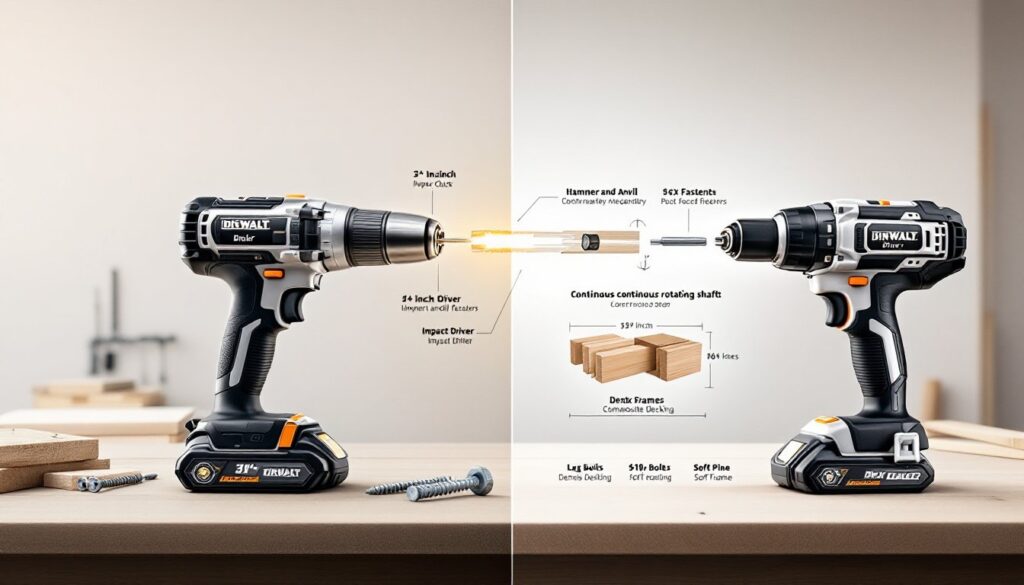
An impact driver uses a hammer-and-anvil mechanism hidden in its head. An electric motor spins an anvil connected to a rotating hammer. When the bit meets resistance, like a screw being driven into hardwood, the hammer periodically disengages, winds up, and then strikes the anvil, creating short, rapid rotational impacts. These bursts can deliver torque of 1,500 to 2,000 foot-pounds or more, depending on the model.
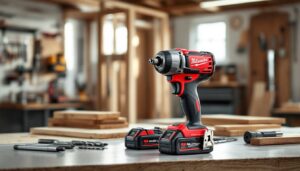
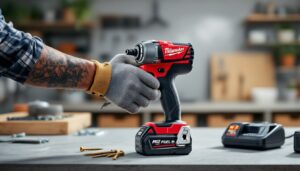
This pulsing action is the secret to its power. Instead of relying on a spinning chuck to force a fastener into material, the impact driver delivers thousands of tiny hammer blows per minute in the direction of rotation. The result? Less cam-out (that frustrating spinning-out on screw heads), reduced wrist strain, and the ability to drive large fasteners that would make a traditional drill labor or stall. A Milwaukee impact driver or M12 impact driver from that same brand both use this mechanism, scaled to their battery size and intended workload.
How Traditional Drills Work
A traditional drill-driver is mechanically simpler: an electric motor spins a shaft connected to a keyed or keyless chuck, which clamps the bit and delivers continuous rotational force. The gearbox (often with 2 speed settings) and an adjustable clutch let you dial in precise torque and control depth. The chuck can grip round bits, square-shank bits, and specialty attachments that an impact driver’s 1/4″ hex collet cannot.
This continuous, controllable rotation is perfect for delicate work. The variable-speed trigger lets you start drilling a hole slowly, critical when you’re centering a bit on tile or glass, then speed up once the bit is engaged. The adjustable clutch prevents over-tightening fasteners into soft materials like plastic or drywall. In short: a drill gives you finesse: an impact driver gives you brute force.
When to Use an Impact Driver vs. a Drill
The best way to decide is to think about what resistance the fastener or material will present.
Reach for an impact driver when:
- Driving long fasteners (3+ inches) or large-diameter screws into dense wood, engineered lumber, or composite materials
- Removing stuck, rusted, or seized screws and bolts (the hammer action breaks rust bonds)
- Working with structural fasteners like lag screws, structural screws, or GRK fasteners rated for heavy loads
- Assembling outdoor structures where speed and power matter more than precision
- You’re doing framing, decking, or fence work that demands high throughput
Reach for a drill when:
- Drilling clean, accurate holes (pilot holes, clearance holes, countersinks)
- Driving small fasteners or fasteners into soft materials (drywall, plastic, soft pine)
- Working with glass, tile, or sheet metal, materials that require controlled speed and no impact action
- Hanging lightweight fixtures like shelves, mirrors, or artwork
- You need the chuck to accept standard round bits or specialty tools (spade bits, hole saws, countersinks)
- Doing fine finishing work where precision and repeatability matter
The golden rule: if you’re unsure whether material can handle impact, start with the drill. Escalate to the impact driver if the drill begins to stall or struggle.
Best Projects for Impact Drivers
Impact drivers shine in construction and assembly work where power and speed trump finesse.
Deck and fence work tops the list. Driving 3.5-inch composite decking screws, lag bolts, or structural fasteners into pressure-treated lumber or composite boards gets tedious and slow with a drill. An impact driver powers through without stalling, and the hammer action reduces the risk of splitting fastener heads.
Building sheds, pergolas, or outdoor storage structures is another ideal use case. You’re often driving screws into dimensional lumber (2x4s, 2x6s) that are tough enough to bog down a standard drill. The impact driver keeps pace, and you can move faster through the job.
Cabinet and door frame installation benefits from an impact driver’s torque control too. Cabinet makers often use pocket-hole screws or structural fasteners that need reliable, high-torque driving. An impact driver delivers that without over-tightening.
Removing corroded or stuck fasteners is where an impact driver truly earns its place. The hammer action breaks the rust bond, letting you extract old bolts, screws, or fasteners that would otherwise round off or snap in a drill’s chuck.
For these heavier tasks, an impact driver isn’t a luxury, it’s a sanity check and a time-saver. Compact impact driver options exist for homeowners who want power without a bulky tool.
Best Projects for Drills
Drills handle the majority of household projects because most home improvement work demands accuracy and versatility more than raw power.
Hanging shelves, artwork, mirrors, and lightweight fixtures is the bread-and-butter work of the household drill. You’re drilling pilot holes into studs (or using anchors in drywall), then driving #8 or #10 screws. A drill’s variable speed and adjustable clutch prevent over-driving fasteners into wood or stripping drywall threads.
Installing door hardware, knobs, handles, deadbolts, hinges, requires controlled, precise drilling and driving. The drill’s chuck accepts both the drill bit to create the hole and the bits needed to set fasteners. Speed control keeps you from blowing through delicate hinges or soft-wood door frames.
General household drilling (creating holes in wood, drywall, and plastic for anchors or conduit) is where the drill excels. Its continuous rotation, variable speed, and ability to start slowly make it safer and more accurate for centering bits.
Tile, glass, or sheet-metal drilling demands slow, steady speed and zero impact action. A drill set to low speed can handle these materials with the right bits, spade bits for tile (with a steady hand), diamond-core bits for glass. An impact driver’s hammering action would shatter or crack these materials.
Countersinking and pilot-hole work for fine joinery or trim carpentry benefits from the drill’s precision. Adjustable clutch prevents over-driving fasteners into hardwood edges.
For these lighter, accuracy-focused tasks, a good drill handles 80% of homeowner projects.
Which Tool Should You Buy First?
If your budget allows only one tool, buy a power drill-driver. Here’s why:
Versatility is the top reason. A drill can handle both drilling and fastening work. Yes, it won’t have the torque of an impact driver for heavy structural fasteners, but it covers household projects, light remodeling, furniture assembly, and light construction. You can drill clean holes, drive screws of various sizes, and adapt to different bits and chucks. An impact driver can drive fasteners powerfully, but it can’t drill the same variety of holes, and it’s overkill for hanging a picture frame.
Bit compatibility matters too. Drills accept standard round bits, hole saws, spade bits, countersinks, and augers. Impact drivers use only 1/4″ hex-shank bits. If you’re just starting out, the drill’s flexibility saves you from buying adapter kits or specialized impact-driver-only bits.
Most first-time buyers find a combo kit attractive. Many brands (DeWalt, Makita, Milwaukee) sell two-tool kits with a drill and an impact driver for less than buying them separately. If you think you’ll tackle deck work, shed building, or regular heavy fastening, grab a combo. For purely household use, save the money and buy the drill first.
When to add an impact driver: Once you’ve finished a few projects and realize you’re wrestling with long fasteners, building outdoor structures, or removing stuck bolts, add an impact driver. Impact driver sizes and capabilities vary, so match the model to the work, a compact, lightweight impact driver suits light-to-moderate use, while heavier-duty models suit framing or construction.
The beauty of modular cordless systems is you’re not locked into one brand. Pick the drill that feels good in your hand and fits your budget, then expand as your project list grows.
The Takeaway
An impact driver and a drill are both valuable tools, but they’re not interchangeable. A drill is your first purchase, versatile, intuitive, and capable of handling most household projects with precision and control. An impact driver is the upgrade you add once you’re driving heavy fasteners, building structures, or tackling projects that make a drill labor. Know the difference, match the tool to the task, and you’ll finish faster, safer, and with fewer stripped screw heads and sore wrists.