Table of Contents
ToggleWhether you’re hanging cabinets, fastening deck boards, or assembling shelving units, a DeWalt impact driver makes quick work of jobs that would exhaust a regular drill. Unlike traditional drills, an impact driver delivers rotational force plus rapid downward pulses, think of it as a jackhammer for screws. DeWalt’s lineup has grown over the past few years, and choosing between models can feel overwhelming. This guide breaks down the best DeWalt impact driver options, what separates them, and which one fits your project needs without overspending.
Key Takeaways
- A DeWalt impact driver delivers rotational force plus rapid pulses to drive fasteners faster than traditional drills, making it essential for deck work, cabinetry, and structural fastening projects.
- The 20V Max XR High Torque model offers 1,500 in-lbs of torque for heavy-duty applications, while the compact Atomic 20V Max at 1,100 in-lbs excels in tight spaces like cabinets and crawl spaces.
- Choose battery capacity based on project scope: 1.3 Ah for light tasks (50 fasteners), 2.0 Ah for balanced work, or 4.0 Ah for extended use on larger projects like 200-foot fences.
- All current DeWalt impact driver models include LED work lights, brushless motors for minimal maintenance, and hex quick-change chucks for fast bit swapping.
- Pre-drill before fastening to prevent splitting, especially in hardwood, and invest in extra batteries and bits that will outlast your initial tool purchase by years.
Top DeWalt Impact Driver Models Compared
20V Max XR High Torque: Best Overall Performance
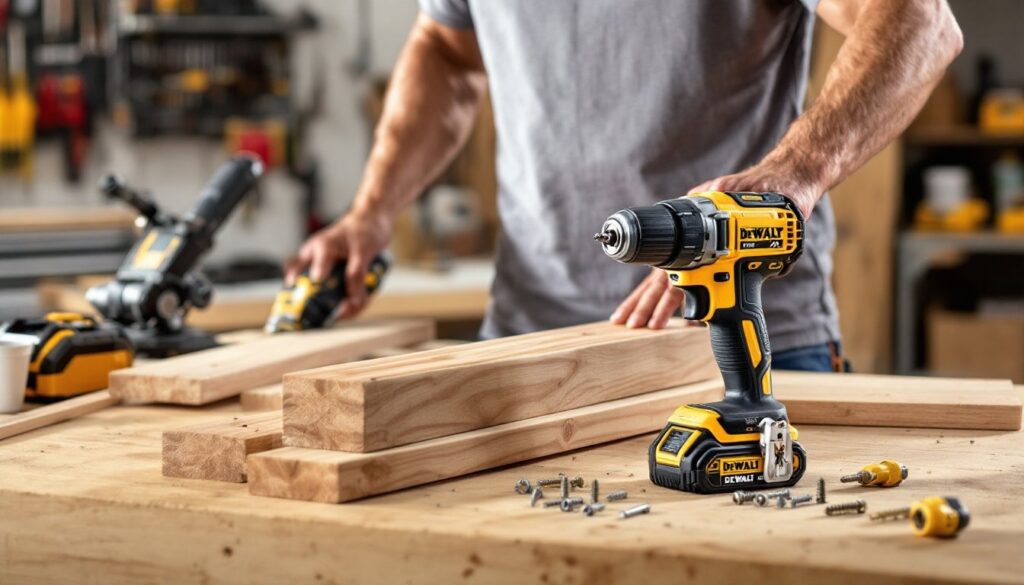
The 20V Max XR High Torque stands out for serious DIYers tackling deck building, framing, and fastening structural components. It delivers 1,500 in-lbs of torque, which handles 3-inch structural screws and ½-inch fasteners without bogging down. The compact design keeps your wrist from twisting, and the LED work light points exactly where you’re driving. Runtime varies with the battery: a 1.3 Ah pack gives you about 60 minutes of mixed work, while 2.0 Ah or higher extends that significantly. This model works on the standard DeWalt 20V ecosystem, so if you already own a DeWalt drill or charger, you’ll use the same batteries.
The XR designation means extended runtime capabilities, it’s the sweet spot between power and practicality for most homeowners.
Atomic 20V Max: Compact Power for Tight Spaces
If you’re working inside cabinets, under sinks, or in other confined areas, the Atomic 20V Max shines. It’s noticeably smaller and lighter than the XR model, which matters when you’re holding it overhead or reaching into tight spaces for 20 minutes straight. Torque sits at 1,100 in-lbs, plenty for most fastening tasks, including deck work and cabinetry, just not quite as forceful for extremely heavy-duty applications. Electricians and plumbers gravitate toward Atomic models because they fit into cramped walls and crawl spaces. The trade-off is battery compatibility: make sure your existing 20V batteries fit before buying, as some older Atomic tools use a slightly different connection.
Key Features to Consider Before Buying
Battery voltage and size matter more than you might think. A 20V system is the sweet spot for most DIY work, enough power without the bulk of 60V models that contractors use daily. Choose between 1.3 Ah (lightweight, shorter runtime), 2.0 Ah (balanced), or 4.0 Ah (extended use, heavier). If you’re only driving fifty fasteners, go smaller. If you’re building a 200-foot fence, get the larger pack.
Torque specifications tell you how much twisting force the tool generates. DeWalt impact drivers range from 1,000 to 1,500 in-lbs. Lower torque handles drywall screws and cabinet hardware: higher torque tackles lag bolts and structural fasteners. Check the job’s fastener size and material before assuming you need peak torque.
Built-in work lights are underrated. When you’re fastening underneath a deck or inside a cabinet, that LED spotlight saves you from using your phone’s flashlight. All current DeWalt models include this.
Warranty typically runs 3 years on the tool and 3 years on the battery with DeWalt. Registration sometimes extends this. Keep your receipt.
Chuck type also varies, most DeWalt impact drivers use a hex quick-change chuck, meaning you swap bits in seconds. Verify this matches your existing bit collection. A tested roundup of top impact drivers shows that hex chucks dominate the market for good reason.
Power and Torque Specifications
DeWalt’s 20V Max XR High Torque model reaches 1,500 in-lbs of torque at peak, which translates to moving ⅜-inch fasteners in hardwood and ½-inch screws in pine without stalling. Speed sits around 3,000 RPM, fast enough for driving speed without over-spinning soft fasteners. The motor is brushless, meaning less maintenance and longer tool life, no carbon brushes to wear out.
The Atomic 20V hits 1,100 in-lbs, which handles 90 percent of residential projects. It won’t choke on deck fasteners or cabinetry hardware, and the smaller motor runs slightly cooler if you’re working all day.
Both models deliver impacts per minute (typically 2,800 to 3,000), which is that “machine gun” feel you hear. More impacts per minute speeds up driving, though the difference between models is negligible in real work. What separates them is sustained power, the XR maintains torque longer under heavy load.
When comparing to competitors like Milwaukee impact drivers or DeWalt’s older 18V models, the 20V platform offers better power-to-weight ratio. An older 18V model might weigh 3.5 pounds: the 20V models run 2.8 to 3.2 pounds, making fatigue less of an issue on ceiling work or overhead fastening.
What DeWalt Impact Drivers Are Best For
Deck and exterior fastening is where impact drivers earn their place. Driving 3-inch structural screws into pressure-treated lumber takes seconds with an impact driver: with a regular drill, you’ll overheat the motor. The pulse action also reduces the risk of stripping screw heads, which happens with steady rotational force alone.
Cabinet and furniture assembly benefits from the compact Atomic model. You’re driving mostly #8 or #10 screws into plywood or hardwood, and the reduced bulk lets you reach deep into cabinet spaces. Pre-drilling prevents splitting, especially in hardwood, this is non-negotiable, not optional.
Fastening deck hardware, hinges, and locks is where homeowners notice impact drivers shine most. A 16-fastener project that takes 10 minutes with an impact driver might take 30 with a drill. The difference is dramatic and justifies the tool purchase for anyone doing regular home projects.
Heavy structural work, like fastening joists or beams, demands the 20V Max XR High Torque. If you’re building a shed or reinforcing a roof connection, this model won’t leave you guessing whether the fastener is truly seated. Using an impact driver correctly means starting screws by hand or using a starter bit to prevent stripping.
Light electrical and plumbing work often calls for an Atomic model because space is tight. Running fasteners to secure wire clamps or pipe brackets in cramped spaces is easier with a smaller tool. A drill versus an impact driver comparison shows that while drills excel at precision hole-making, impact drivers dominate pure fastening speed. Many serious DIYers own both.
Conclusion
A DeWalt impact driver fits any DIYer’s toolkit who drives more than a few dozen fasteners per month. The 20V Max XR High Torque handles the heaviest jobs, while the Atomic suits those who prioritize compact size and lighter loads. Invest in extra batteries and bits, they outlast the initial purchase by years. Start with the right model for your most common projects, not your imagined future ones, and upgrade later if needed.