Table of Contents
ToggleA cordless impact wrench might look intimidating at first glance, all that noise and vibration, but it’s genuinely one of the smartest purchases a DIYer can make. Whether you’re removing stubborn lug nuts from a tire change, assembling a deck, or tackling automotive suspension work, a cordless wrench impact tool cuts through the frustration of hand tools and takes the physical strain off your back. Unlike pneumatic models that need a compressor and hose tethering you down, cordless wrenches give you freedom of movement and the kind of raw power that makes previously impossible fastener jobs feel almost easy. This guide walks you through everything you need to know to pick the right model for your workshop.
Key Takeaways
- A cordless impact wrench eliminates hand tool strain and cuts task time dramatically—removing lug nuts in under two minutes instead of ten—making it an essential DIY investment for automotive and home maintenance work.
- Torque ratings between 150–400 ft-lb handle most home and automotive applications, including lug nuts, suspension bolts, deck fasteners, and outdoor equipment without needing heavy-duty industrial power.
- Cordless models outperform pneumatic and corded tools for DIYers due to superior portability, no compressor requirement, and freedom of movement anywhere in your home or workshop.
- Battery platform loyalty matters: stick with your existing brand (DeWalt, Makita, Milwaukee, Ryobi, or Bosch) to share batteries across tools and avoid duplicate chargers.
- Pair your cordless wrench with two high-capacity batteries (4.0–5.0Ah) and a fast charger to maintain continuous runtime and extend overall battery lifespan through proper charge management.
What Is a Cordless Impact Wrench and Why DIYers Need One
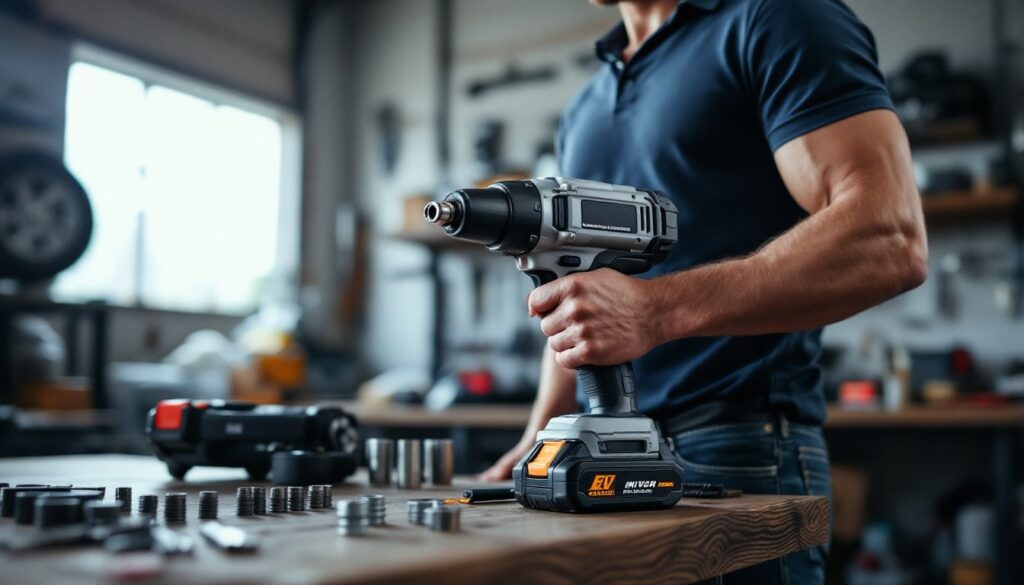
A cordless impact wrench is a battery-powered tool that hammers fasteners with rapid rotational bursts rather than just spinning like a regular drill. Inside, a spring and weight mechanism fires thousands of times per minute, delivering torque spikes that crack loose rusted bolts and drive fasteners home without the twisting effort that burns out your forearms.
The appeal for DIYers is straightforward: speed and ease. Removing a set of lug nuts by hand or with a breaker bar might take 10 minutes and leave your hands sore. An impact wrench does it in under two. You’re also less likely to slip and skin your knuckles when the tool is doing the heavy lifting. For anyone who’s fought with seized engine bolts or rusted exhaust hardware, that impact hammer action feels almost magical.
Beyond brute force removal, cordless models shine because they’re portable, no compressor to lug around, no hose getting tangled in the driveway. Battery-powered wrenches work anywhere: under a car in a parking lot, out on a deck frame, deep in a tight engine bay where cord length would strangle you. For occasional to moderate home and automotive work, a cordless wrench is often the smarter choice than a corded pneumatic setup.
Key Features to Consider When Choosing an Impact Wrench
Before you buy, nail down what matters:
Drive Size: The socket opening, typically 1/4″, 3/8″, 1/2″, or larger. For home and automotive work, 3/8″ and 1/2″ are the workhorses. Go bigger only if you’re regularly handling industrial fasteners.
Torque Rating (ft-lb or Nm): This is the muscle of the tool. Light-duty models hover around 85–150 ft-lb: general DIY wrenches run 100–500 ft-lb. That 100–500 range covers almost every home and automotive fastening task you’ll encounter.
Speed & Control: Adjustable speed settings let you dial in power. You don’t want full throttle every time, finer control saves you from snapping fasteners or stripping threads.
Weight & Balance: A lighter, compact tool is easier to maneuver in tight spaces and reduces fatigue during extended use.
Battery Voltage & Capacity: Higher voltage (18V/20V vs. 12V) generally means more power. Look for amp-hour (Ah) ratings too, a 5.0Ah battery lasts longer than a 2.0Ah, but it weighs more.
Extras: A bright work light is genuinely useful. A quick-change anvil saves time swapping sockets. IP dust and water rating tells you whether it’ll survive your garage environment.
Power, Speed, and Torque Ratings Explained
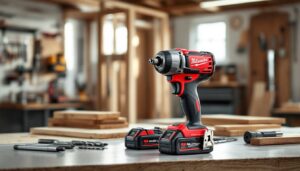
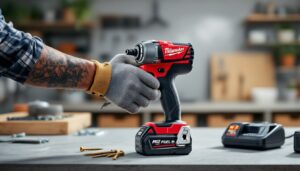
Voltage sets the ceiling for power, but torque is the real story. A Milwaukee impact driver (often in the 18V range) might deliver 200–400 ft-lb of fastening torque, plenty for automotive work. A M12 impact driver, Milwaukee’s compact 12V platform, tops out around 150–200 ft-lb: still solid for lighter fasteners and when space is tight.
Speed matters too: revolutions per minute (RPM) and impacts per minute (IPM) determine how fast you can drive or remove fasteners. More impacts mean faster work, but multiple speed settings keep you from overtightening.
In real terms, 200–400 ft-lb handles lug nuts, suspension components, and deck screws without breaking a sweat. Go over 500 ft-lb only if you’re regularly working on heavy diesel trucks or industrial equipment.
Common Home and DIY Applications
This is where cordless wrenches earn their place in your garage:
Automotive: Lug nuts for tire changes, removal and installation of suspension bolts, brake caliper fasteners, engine bay components. Most of the time, a mid-range 150–300 ft-lb wrench handles everything.
Deck & Structural: Large structural screws and bolts in pressure-treated framing, joist hangers, and lag bolts can spin on fast with the right socket adapter. Use a speed-limiting setting to avoid over-driving and splitting pressure-treated wood.
Outdoor Equipment: Disassembling mowers, string trimmers, snowblowers, and other rusted-up hardware. Impact action breaks corrosion loose without exhausting you.
Home Maintenance: Exhaust clamps, fence hardware, gate hinges, and any seized bolt around the house. A compact impact driver works in spaces where full-size wrenches don’t fit.
Most DIY tasks live in that 100–400 ft-lb sweet spot, which is why you see so many mid-range 18V and 20V models dominating workshop reviews.
Cordless Vs. Corded: Which Model Suits Your Projects
The choice usually comes down to how you work and where you work.
Cordless wrenches win for mobility and convenience. You grab them, work anywhere in or around your home, and stash them away. No cord to trip over, no power outlet hunting, no compressor noise. Battery-powered tools have come a long way, most hold charge well between uses. They’re perfect for homeowners tackling occasional to moderate projects.
Corded or pneumatic models make sense if you have a dedicated workshop with constant electricity or a compressor setup, and if you’re doing heavy, continuous work where battery runtime becomes a bottleneck. A pneumatic impact wrench can deliver extreme torque and never quits as long as air flows. But for most DIYers, that overhead isn’t worth it.
Stay cordless unless you’re a contractor or regularly push past 4–5 hours of continuous impact wrenching per day. The trade-off between portability and power usually favors cordless for home projects. A Milwaukee impact driver sits in more home garages than pneumatic tools for good reason.
Battery and Runtime Considerations for Extended Use
Battery capacity directly affects how long you work between charges. A 2.0Ah battery powers through light fastening tasks but might tap out halfway through a big project. Step up to 4.0Ah or 5.0Ah if you’re doing extended automotive work or deck assembly, you get real runtime without swapping batteries every 20 minutes.
Platform loyalty pays off. If you already own DeWalt, Makita, Milwaukee, Ryobi, or Bosch tools, stick with the same brand. Batteries swap across their ecosystems, which means one large-capacity battery can fuel your impact wrench, drill, and string trimmer. You’re also not buying duplicate chargers. Check voltage compatibility, an 18V battery won’t work on a 20V tool (though many modern systems standardize around 20V).
Dual battery strategy: Keep two batteries on rotation. While one charges, you work with the other. Impact driver bits sets are useless if your wrench dies midway. Invest in a fast charger, most modern ones top off a battery in 30–60 minutes rather than 2–3 hours.
Temperature matters too. Lithium-ion batteries lose capacity in cold weather and charge slower. If you work in winter, keep spare batteries indoors where they stay warmer. Running your wrench flat every time you use it degrades battery lifespan faster than topping off at 80% and letting it rest. Treat batteries like phone batteries: charge regularly, avoid total discharge, and they’ll last 3–5 years of heavy use.
Conclusion
For most DIYers, a mid-range 18V or 20V cordless impact wrench delivering 150–400 ft-lb of torque, paired with your existing battery platform, gives you the flexibility to tackle automotive work, deck fastening, and equipment maintenance without the baggage of pneumatic setups or corded cables. Choose a reputable brand with good warranty support, size it to your hands and workspace, and keep at least two charged batteries on hand. You’ll wonder how you ever lived without one. Visit Family Handyman or Today’s Homeowner for more detailed project walkthroughs that put your new impact wrench to work.