Table of Contents
ToggleA battery impact wrench delivers the kind of power that makes stubborn fasteners surrender without burning out your wrists, and that’s exactly why serious DIYers reach for one. Whether you’re tackling automotive work in the driveway, assembling heavy deck hardware, or removing rusted bolts from machinery, a cordless impact wrench transforms what would be a frustrating manual job into minutes of effortless work. Unlike standard drills that rely on steady pressure and finesse, impact wrenches use rapid rotational bursts to deliver concentrated torque. This guide breaks down what separates a decent battery impact wrench from the right one for your projects, so you can make an informed choice and avoid wasting money on overkill, or worse, underpowered equipment.
Key Takeaways
- A battery impact wrench delivers rapid bursts of rotational force to remove stubborn fasteners with minimal effort, making it essential for automotive work, deck assembly, and machinery repair.
- Torque output (measured in ft-lbs) is the critical metric when comparing impact wrenches—light DIY projects need 300–500 ft-lbs, while automotive and industrial work requires 500–800+ ft-lbs.
- Lithium-ion batteries are the standard for cordless impact wrenches, with a 5.0 Ah battery providing 2–4 hours of continuous work, and battery ecosystem compatibility can significantly reduce long-term equipment costs.
- Always use impact-rated sockets and bits designed to handle shock loads, as standard chrome-plated sockets will crack or shatter under impact wrench stress and create safety hazards.
- Proper maintenance—including cool, dry battery storage, regular motor vent cleaning, and periodic tool use—can extend a battery impact wrench’s lifespan to two decades of reliable performance.
What Is A Battery Impact Wrench and Why You Need One
A battery impact wrench is a cordless power tool that delivers high rotational force in short, rapid bursts rather than continuous pressure. This pulsing action, called impact, lets you drive or remove large fasteners with minimal effort and without stalling the motor. The difference from a standard drill is night and day: a corded or cordless drill relies on you applying downward pressure and controlling speed, while an impact wrench does the heavy lifting.
The mechanics are simple but effective. Inside the tool, a motor spins a rotating anvil that engages and disengages with a hammer mechanism hundreds of times per second. Each engagement delivers a shock of torque, which is what actually turns the fastener. That’s why impact wrenches are brutal on stuck bolts and lug nuts, they use impact, not just raw rotational force.
For homeowners and DIYers, a battery impact wrench shines when you’re working with large fasteners, think automotive projects, deck hardware, machinery assembly, or anything involving ½-inch or larger bolts. If you’ve ever wrestled with a manual wrench or watched a standard drill choke trying to drive a 1-inch bolt, you’ll understand the appeal. They’re also quieter and cleaner than their air-powered cousins, since they don’t need a compressor.
A compact impact driver is useful for lighter fastening work, but a full-size impact wrench handles bigger jobs with less user fatigue and more speed. The M12 impact driver, for instance, covers smaller fasteners well, while a dedicated wrench tackles industrial-grade bolts. And unlike a standard tool that might stall when things get tough, a battery impact wrench just keeps hammering away.
Key Features and Specifications to Compare
Torque Output and Power Requirements
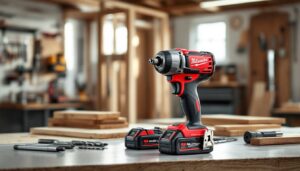
Torque is measured in foot-pounds (ft-lbs) or Newton-meters (Nm), and it’s the metric that actually matters when comparing impact wrenches. A Milwaukee impact driver rated at 1,500 ft-lbs might be perfect for automotive work, but a heavy-duty wrench pulling 600+ ft-lbs of torque handles farm equipment and industrial fasteners.
Power requirements depend on battery voltage and amp-hour capacity. Most cordless impact wrenches range from 18V to 24V, with some heavy-duty models reaching 48V. Higher voltage doesn’t always mean more torque, it depends on the motor design and battery capacity. A 20V battery with higher amp-hours often outperforms a weaker 24V setup. The M12 hex impact driver is compact but punches above its weight for smaller fasteners, while larger Milwaukee impact driver models deliver sustained power for tougher jobs.
Look at both impact rating and rotational speed (measured in RPM). Most modern battery impact wrenches deliver 1,200 to 2,800 RPM, with impact rates between 1,500 and 3,600 impacts per minute. Higher impact rates mean faster fastener removal and less user exertion.
Battery Type and Runtime Considerations
Lithium-ion batteries dominate the market because they hold a charge longer, weigh less, and resist memory effect compared to older nickel-cadmium packs. Runtime depends on three factors: battery capacity (measured in Ah, or amp-hours), tool efficiency, and the fastener resistance you’re working against.
A 5.0 Ah battery gives you roughly 2 to 4 hours of continuous impact wrench work, depending on the tool’s power draw. If you’re doing occasional fastener removal, a 2.0 or 3.0 Ah battery might be enough. If you’re spending a weekend on a major project, having two batteries, one charging while you work with the other, saves downtime.
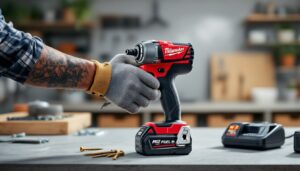
Battery compatibility matters, too. Many manufacturers (like Milwaukee) use the same battery platform across multiple tools, so investing in a battery-powered ecosystem makes sense over time. You’ll find that a Milwaukee impact driver shares batteries with their drills and saws, reducing your overall equipment investment. Check whether your battery charger is fast (30 minutes) or standard (60+ minutes), since that affects how efficiently you work.
Choosing the Right Tool for Your DIY Projects
The “right” impact wrench depends on what fasteners you regularly encounter. A homeowner assembling deck railings with ½-inch lag bolts needs different power than someone rotating truck lug nuts or disassembling engine components. Start by asking: What’s the largest fastener I’ll drive or remove regularly?
For light to medium DIY, hanging heavy shelves, deck assembly, furniture repair, a compact or mid-range cordless impact wrench (300–500 ft-lbs) handles the load with ease and costs $100–$250. A Milwaukee impact driver in the compact range fits this category well and won’t fatigue your wrists if you’re working overhead.
For automotive work and heavier fasteners, step up to 500–700 ft-lbs of torque. This is where most homeowner impact wrenches land. You’re spending $200–$400, and you get faster work with less fighting. The M12 impact driver is lighter for detail work, while a dedicated wrench handles bigger bolts without strain.
For industrial or farm work, stubborn rusted bolts, large machinery, heavy equipment repair, you’re looking at 800+ ft-lbs and 48V systems. These run $400–$800+, but they’re overkill for typical home projects.
One practical consideration: battery ecosystem. If you already own Milwaukee tools, stick with Milwaukee batteries and chargers: the same goes for DeWalt, Makita, or Ryobi. Buying a discount brand with proprietary batteries often costs more in the long run because you can’t share batteries across tools. Compare the kit price (tool plus two batteries and charger) rather than the bare tool, since that’s your real investment.
Maintenance Tips to Maximize Tool Longevity
A battery impact wrench is tough, but neglect shortens its life. Here’s what keeps yours running strong:
Battery care is number one. Store batteries in a cool, dry place (50°F–80°F is ideal) and avoid leaving them fully charged for months at a time. If you’re storing the tool for winter, discharge the battery to about 50% and store it separately from the tool. Cold weather drains batteries faster, so bring them indoors before a cold-weather job. Never expose batteries to water or extreme heat, and inspect them for cracks or corrosion before charging.
Keep the chuck and bit socket clean. Dust and metal shavings accumulate in the socket where bits or sockets seat. A quick blast of compressed air or a wipe with a dry cloth prevents binding and ensures solid engagement. Loose bit seating causes slipping and damages fasteners.
Check fastener compatibility. Impact wrenches are hard on standard sockets and bits because of the shock load. Use impact-rated sockets and bits marked “impact-grade” or “impact-tested.” Chrome-plated standard sockets will crack or shatter under impact loads. This isn’t optional, a shattered socket can fly free and cause injury. Spend the extra $10–$20 on a proper impact socket set.
Inspect the motor housing and vents. If you’re using the wrench in dusty or sandy environments, clean the cooling vents monthly. Blocked vents cause the motor to overheat and derate (reduce power). A vacuum with a brush attachment or compressed air does the job.
Don’t let it sit idle for months. A battery impact wrench sealed in a garage for eight months without use can develop corrosion or battery degradation. Every few months, run the tool for 30 seconds under no load to keep internals moving and lubricated. Step-by-step DIY project tutorials and maker guides on platforms like Instructables often include maintenance steps for power tools, worth reviewing if you’re new to tool ownership.
Replace worn motor brushes if applicable. Brushless impact wrenches (common now) don’t have this issue, but if you own an older brushed model and notice reduced power, brushes may be worn. Most manufacturers sell replacement brush kits for $20–$30 and take 10 minutes to install. Check your manual or contact customer service.
Conclusion
A battery impact wrench isn’t a tool you use every day unless you’re a mechanic, but it’s absolutely worth owning if large fasteners are part of your DIY repertoire. The difference between wrestling a stuck lug nut with a manual wrench and dispatching it in five seconds with a cordless impact wrench feels like having a superpower. Focus on torque rating and battery compatibility rather than brand prestige, and don’t cheap out on impact-rated sockets and bits, they’re your insurance against tool failure and injury. With proper maintenance, a good battery impact wrench gives you two decades of reliable service.