Table of Contents
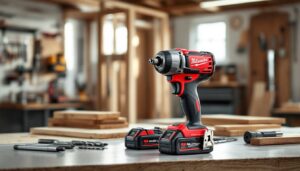
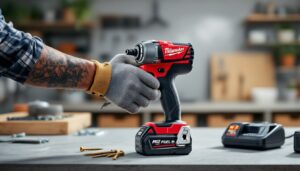
ToggleWhen a stubborn lug nut won’t budge or you’re assembling a deck frame, a regular wrench becomes frustrating fast. Milwaukee impact wrenches deliver the rotational force and speed that hand tools simply can’t match, making them invaluable for homeowners tackling fastening jobs around the house. Whether you’re working on automotive projects, outdoor furniture assembly, or heavy-duty fastening tasks, understanding the differences between Milwaukee impact wrench models helps you pick the tool that actually fits your work instead of overpaying for overkill or underpowering your project. This guide walks you through what sets Milwaukee apart, compares their most practical models for DIYers, and shows you how to maintain your tool to make it last.
Key Takeaways
- Milwaukee impact wrenches combine cordless convenience with enough torque (150–700 ft-lbs depending on model) to handle automotive, deck, and fastening projects without renting equipment.
- The M12 suits compact spaces and lighter DIY work, while the M18 and M18 FUEL models deliver the power needed for lug nuts and heavy fasteners with extended runtime and brushless efficiency.
- Battery ecosystem compatibility across Milwaukee tools saves money and simplifies charging—choose between M12 or M18 platforms based on your existing tool collection and project demands.
- For most household fastening jobs, you’ll need 250–400 ft-lbs of torque; matching this realistic range to your projects prevents overpaying for overkill or underpowering the tool.
- Simple maintenance—cleaning air vents, proper storage at 50°F–70°F, and chuck lubrication every few months—extends your Milwaukee impact wrench’s lifespan and maintains reliable performance for years.
Why Milwaukee Impact Wrenches Stand Out for Home Projects
Milwaukee has built a reputation in the cordless tool space, and their impact wrenches reflect that commitment to durability and performance. For homeowners, the appeal is straightforward: Milwaukee impact wrenches combine compact design with enough power for deck work, automotive fastening, and equipment assembly without requiring a trip to the rental yard.
The brand’s focus on battery interchangeability across their ecosystem matters more than you’d think. If you already own Milwaukee drills, circular saws, or other tools, their M12 or M18 impact wrenches share the same battery platform, cutting your costs and simplifying your charging setup. Milwaukee also invests in impact-resistant casings and variable-speed triggers that give DIYers more control than entry-level competitors.
Compared to corded models, cordless impact wrenches eliminate extension cord hassles in tight spaces or outdoors. Milwaukee‘s brushless motor technology reduces maintenance and heat generation, meaning longer runtimes and less downtime between charges. For a homeowner who doesn’t need a tool every single day, this translates to reliability when you actually need it.
Key Features to Compare Across Milwaukee Models
Power, Speed, and Torque Ratings
Torque is the measure of rotational force, and for impact wrenches, higher ratings generally mean faster fastening on stubborn bolts. Milwaukee’s models range from 150 ft-lbs to over 700 ft-lbs depending on the size and series. For DIY fastening, tire changes, fence assembly, light automotive work, you’ll typically need 250–400 ft-lbs. Industrial or heavy lug nuts demand the upper range.
Speed, measured in revolutions per minute (RPM), affects how quickly the tool spins up. Most Milwaukee impact wrenches operate between 2,400 and 3,000 RPM at full throttle, though variable-speed triggers let you dial that back for delicate work or when you’re learning the tool’s behavior.
Socket size matters too. Milwaukee offers 1/4″, 3/8″, and 1/2″ drive wrenches. The 1/2″ drive delivers maximum power for large fasteners and automotive work: 3/8″ is versatile for most home projects: 1/4″ works for smaller fasteners and tight spaces where bulk would get in the way.
Battery Technology and Runtime
Milwaukee’s M12 and M18 batteries aren’t interchangeable, so your choice here influences everything downstream. M12 packs lighter punch but runs cooler and suits lighter-duty work. M18 delivers more raw power and extended runtime, making it the better choice for longer project days or frequent use.
Ah ratings (ampere-hours) indicate battery capacity. A 3.0 Ah battery charges faster but depletes sooner: a 5.0 or 6.0 Ah battery runs longer but adds weight and takes longer to charge. For occasional DIY work, a 3.0 Ah paired with a second battery lets you swap while one charges. The FUEL designation in Milwaukee’s lineup indicates brushless motors, which squeeze more work from each charge.
Runtime estimates on the packaging assume consistent load at moderate speed. Real-world work at variable speeds will differ. If you’re fastening 50 bolts on a weekend project, plan conservatively and have a second battery charged.
Popular Milwaukee Impact Wrench Models for DIYers
The Milwaukee M12 impact wrench appeals to homeowners with smaller hands or anyone who works in tight spaces. At roughly 150–200 ft-lbs of torque, it handles most household fastening without excessive overkill. Battery runtime typically runs 30–60 minutes of actual fastening work, depending on how hard you’re pushing the tool. The trade-off is less muscle on stubborn industrial-grade bolts.
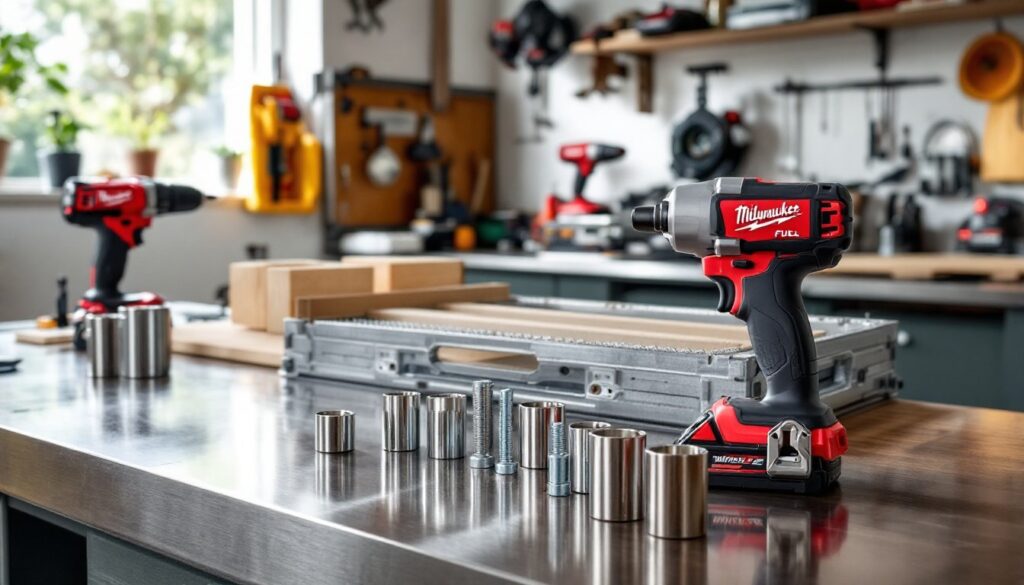
The Milwaukee M18 impact driver (sometimes called the M18 impact wrench in compact form) steps up to 250–350 ft-lbs and pairs with larger batteries for extended runtime. It’s the middle-ground choice, enough punch for automotive lug nuts, deck framing fasteners, and equipment assembly without the bulk of professional-grade models. The M18 FUEL variant uses brushless technology for better efficiency and cooler operation.
For serious fastening jobs, the M18 FUEL 1/2″ compact impact wrench delivers 700 ft-lbs of fastening torque with a compact head that still fits between wheel spokes or into tight spaces. This model bridges the gap between DIY and professional use: it’s overkill for hanging shelves but indispensable if you’re swapping truck tires, assembling heavy equipment, or working with large structural fasteners.
Each model comes in various kit configurations. A basic kit includes the tool and one battery: combo kits bundle multiple tools and batteries. For a homeowner starting out, a combo kit saves money compared to buying tools individually, though you’ll pay a premium if you only need one of the three included tools.
How to Choose the Right Milwaukee Impact Wrench for Your Projects
Start by listing the fasteners you actually need to remove or install. Lug nuts, structural bolts, and heavy equipment fasteners demand 400+ ft-lbs: deck fasteners, light furniture assembly, and equipment adjustment might need only 150–250 ft-lbs. If you’re unsure whether a bolt is “heavy duty,” err toward the M18 range, it handles lighter work fine but won’t feel underpowered on harder jobs.
Next, consider ergonomics and workspace. A compact M12 impact driver fits in cabinets, crawl spaces, and tight engine bays where a larger M18 would be a liability. If you’re working overhead or in confined spaces for extended periods, weight matters. The M12 typically weighs 2.5–3 lbs: M18 models range 3–4 lbs depending on the specific model.
Battery ecosystem integration is practical reasoning, not marketing fluff. If you own Milwaukee M18 reciprocating saws, circular saws, or drills, adding an M18 impact wrench lets you rotate batteries across tools without maintaining multiple charging systems. This especially matters if you’re expanding your tool collection over time.
Budget-wise, a basic M12 impact wrench kit runs $100–$180: M18 models cost $150–$300 depending on battery included: high-torque M18 FUEL or 1/2″ models exceed $300 but offer professional durability if you’re using them monthly. Remember that impact wrenches are tools, a $250 M18 that lasts 10 years and saves rental fees pays for itself.
Maintenance Tips to Extend Your Tool’s Life
Clean the air vents after each use, especially on dusty job sites. Sawdust and debris block cooling fins, causing the motor to overheat and reducing runtime. A soft brush or compressed air takes 30 seconds and prevents expensive repairs.
Store your impact wrench in a cool, dry place. Never leave batteries in direct sunlight or inside a hot garage during summer: extreme temperatures degrade battery chemistry faster than normal use. A 50°F–70°F storage spot extends battery life significantly.
Inspect the chuck (the part that grips the socket) for damage or looseness every few months. A worn chuck reduces torque transmission and can strip sockets. Tighten any loose components with the appropriate wrench before damage spreads.
Occasionally lubricate the chuck threads with a light machine oil. Impact work generates friction and heat: a tiny drop of oil every few months keeps the chuck from seizing. Wipe excess oil to avoid attracting dust.
If runtime drops noticeably or the tool feels weaker, the battery may be aging. Milwaukee batteries typically hold 80% capacity after 1,000 charge cycles. A fresh battery often costs less than a new tool, making it the smarter repair path.
For storage longer than a month, remove the battery and store it separately at about 40% charge. This preserves battery chemistry better than a fully charged or fully depleted battery sitting idle. Following these simple habits keeps your Milwaukee impact wrench ready when you need it, without surprises.
<h2 id="” data-id=””>The Right Impact Wrench for Your Next Project
A Milwaukee impact wrench removes the frustration from fastening work and makes projects that seemed like all-day slogs feel manageable. Whether you choose the compact M12 for tight spaces, the versatile M18 for general-purpose work, or the heavy-duty 1/2″ drive for serious fastening, the tool pays dividends in time saved and joints fastened correctly. Take time to match the tool to your actual needs, not your worst-case fantasy project, and you’ll own a tool that earns its place in your garage for years. When you’re ready to tackle automotive maintenance, deck construction, or equipment assembly without renting and returning, Milwaukee’s impact wrench lineup delivers the power and reliability homeowners need.
If you’re new to Milwaukee impact drivers, understanding the broader impact driver category helps you appreciate what wrenches bring to the table. Browsing This Old House and Family Handyman tutorials often features impact tools in action, showing real-world applications that guide your own tool choices.