Table of Contents
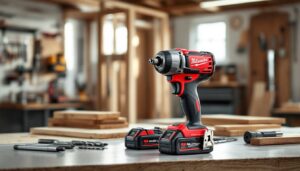
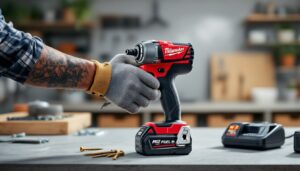
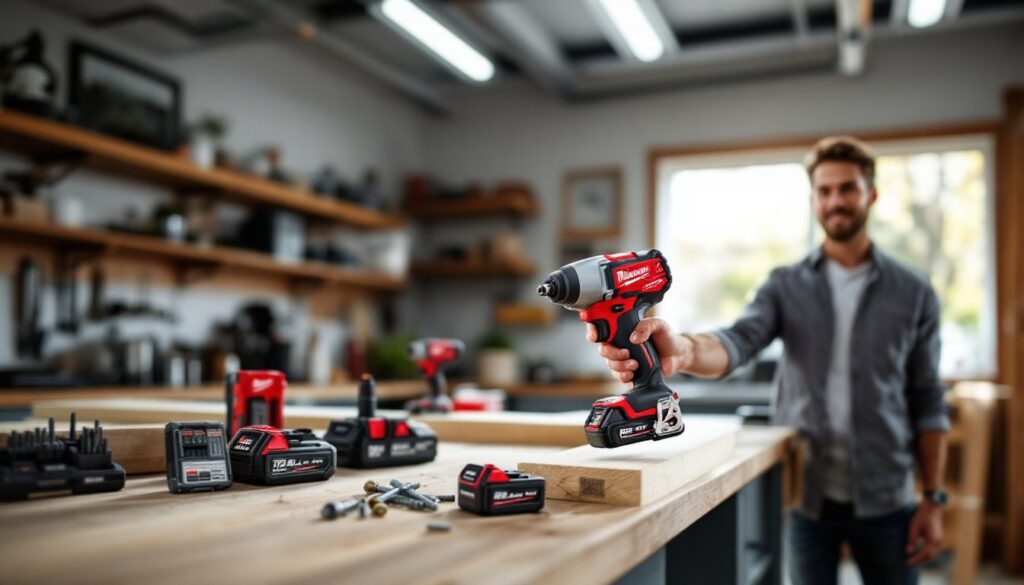
ToggleIf you’re spending half your DIY projects wrestling with a basic cordless drill, it’s time to consider upgrading to a Milwaukee Fuel impact driver. These cordless power tools have become the standard on job sites and in home garages for one simple reason: they deliver the torque and speed homeowners need without the bulk of older generations. The Milwaukee driver impact technology uses brushless motors and optimized battery systems to drive fasteners faster, with less fatigue, and with precision that makes cabinet installation, deck framing, and equipment assembly straightforward. Whether you’re hanging heavy shelving, assembling furniture, or fastening subfloor to joists, understanding what sets the Milwaukee Fuel line apart helps you choose the right tool for your projects.
Key Takeaways
- Milwaukee Fuel impact drivers use brushless motor technology and rapid-fire impact mechanisms to deliver 1,500-2,000 inch-pounds of torque, making them 4-5 times more powerful than standard cordless drills for fastening tasks.
- The Milwaukee impact driver’s one-handed operation with trigger modulation reduces user fatigue and prevents wrist torque, making it ideal for repetitive fastening projects like deck assembly and cabinet installation.
- Impact-rated bits and proper safety precautions (glasses, ear protection) are essential when using a Milwaukee Fuel impact driver to prevent injury from ejected fasteners and bit fracture.
- Battery runtime varies by fastener size and material density—a 5.0 Ah M18 battery drives 200+ drywall screws but only 60-80 treated deck screws, so plan to rotate multiple batteries for full-day projects.
- While Milwaukee Fuel models excel at fastening and disassembly work, they should not replace a traditional cordless drill for precision hole-drilling and spade-bit work where controlled speed is critical.
- Investing in the Milwaukee Fuel platform makes sense if you already own M18 batteries, as it shares chargers and battery compatibility with other Milwaukee tools in your garage.
What Makes Milwaukee Fuel Impact Drivers Stand Out
Milwaukee‘s Fuel line uses brushless motor technology and optimized power delivery to outpace conventional cordless drills. The brushless design eliminates friction from carbon brushes, meaning less heat, longer motor life, and more consistent torque throughout the battery charge cycle. Most competitors rely on smaller motors with less efficient transmission systems: the Milwaukee impact driver concentrates raw rotational force into a compact head that can drive 3-inch deck screws or ½-inch lag bolts without bogging down.
The one-handed operation separates an impact driver from a traditional drill. Instead of relying purely on motor speed (measured in RPM), the impact mechanism delivers rapid-fire rotational blows, measured in impacts per minute (IPM), that reduce user fatigue and prevent wrist torque. This matters when you’re driving 50 fasteners into a deck frame or assembling multiple cabinet runs. The trigger modulation on Milwaukee Fuel models gives you precise speed control from idle to full power, so you’re not hammering away on delicate materials.
Build quality and ergonomics matter too. Milwaukee engineers their driver impact tools with reinforced gear housings and balanced weight distribution. The rubberized grip stays comfortable even during humid summer afternoons, and the compact size fits into tight framing spaces where a full-size drill won’t reach.
Key Performance Features and Specifications
Milwaukee Fuel impact drivers typically deliver 1,500 to 2,000 inch-pounds (in-lbs) of torque, depending on the specific model and battery voltage. For context, that’s roughly four to five times the torque of a standard 18-volt cordless drill. The rotational speed ranges from 0 to 3,000 RPM, and the impact rate climbs to 2,500 to 3,500 IPM at full throttle. These specs translate to real-world advantage: driving a ½-inch lag bolt into a timber joist becomes a 10-second job instead of wrestling for a minute with a drill.
Battery options usually range from 3.0 amp-hours (Ah) on compact M12 models to 8.0 Ah on the larger M18 Fuel variants. Higher amp-hour ratings mean longer runtime before you need to swap batteries. A 5.0 Ah battery typically powers 50 to 80 fastening tasks before noticeable power drop, enough for a full day of interior door installation or deck assembly.
The chuck design varies by model. Most Fuel impact drivers use a ¼-inch hex chuck that accepts standard impact-rated bits. This universal compatibility means you’re not locked into proprietary accessories. Look for models with one-handed bit-swap mechanisms: they save time when switching between Phillips, square-drive, and hex bits.
Best Use Cases for Homeowners and DIY Projects
An impact driver excels at fastening tasks where a drill struggles. Driving 2½-inch deck screws into pressure-treated lumber? The impact driver handles it one-handed without binding. Installing cabinet hinges, assembling pre-made furniture, or fastening subfloor to floor joists, all jobs where repetitive fastening without wrist fatigue matters, are perfect for this tool.
Demolition and disassembly work also benefit from impact driver technology. If you’re removing lag bolts from a fence post or backing out corroded fasteners from old cabinetry, the rapid-fire impact action breaks corrosion bonds that a standard drill can’t touch. Set the tool to reverse, and stubborn fasteners surrender.
Where a Milwaukee impact driver doesn’t replace a drill: precision hole-drilling, spade-bit work, or situations requiring slow, controlled speed. Spade bits and hole saws can bind and twist violently in an impact driver’s hands. For drilling pilot holes or boring larger holes, you still want a traditional cordless drill. Many homeowners keep both in their garage, the impact driver lives in the hip pouch for fastening, while a mid-range cordless drill handles the drilling and mixing chores. An M12 hex impact driver works well for this balanced approach on smaller jobs.
Comparing Milwaukee Fuel to Other Cordless Options
When you compare a Milwaukee Fuel impact driver to DeWalt or Makita equivalents, the differences narrow more each year. All three brands deliver solid brushless motors, comparable torque specs, and proven reliability. Milwaukee’s edge often comes down to ecosystem compatibility, if you already own M18 batteries and a Milwaukee drill, adding a Fuel impact driver means sharing batteries and chargers.
DeWalt’s compact impact drivers are lighter and slightly more agile: Makita’s models sometimes offer longer runtime on the same battery voltage. The honest truth: any of these three brands will handle your deck, your cabinet installation, and your fence repair without complaint. The decision often hinges on which battery platform you’ve already invested in or which ergonomic feel you prefer when holding the tool. If you’re comparing across the Milwaukee lineup, the Milwaukee M18 FUEL impact driver sits between the compact M12 and heavier professional-duty models.
Resources like Bob Vila’s guide to Milwaukee impact drivers provide direct feature comparisons across multiple models and competitors. Such guides help you weigh trade-offs between cost, size, and power before committing.
Battery Life and Runtime Expectations
Real-world battery life depends on the fastener size, material density, and how aggressively you’re pulling the trigger. A 5.0 Ah M18 battery driving 1¼-inch drywall screws into studs might last 200+ fasteners: the same battery driving 3-inch treated deck screws into hardwood drops to 60 to 80 before noticeable power loss. The compact M12 batteries typically deliver 40 to 60 fastening cycles before swap time.
Milwaukee’s RedLithium battery chemistry extends runtime compared to older lithium designs and manages heat better during heavy use. If you’re planning a full day of fastening work, like framing a fence run or assembling multiple cabinet units, you’ll want two batteries in rotation so one charges while you work.
Battery wear isn’t instant. Even after 500 charge cycles, a Milwaukee battery retains 80% of original capacity. For homeowners tackling seasonal projects, a pair of batteries purchased together should carry you through years of occasional weekend work. The M18 Fuel 1/4 hex impact driver pairs well with dual-battery charging stations that keep spares ready without hogging wall outlet space.
Getting Started: Tips for New Users
First purchase: invest in impact-rated bits, not standard drill bits. Standard bits flex under impact shock and fracture: impact-rated bits are hardened steel with reinforced torsion zones. A set like the Milwaukee Shockwave impact driver bit set covers Phillips, square-drive, and hex fasteners without breaking your budget.
Second tip: wear safety glasses. Impact drivers throw bits and fasteners: a wrench bounce or ejected fastener travels fast. Ear protection matters too, the impact rate generates steady noise around 80 to 85 decibels.
Third: start with the trigger halfway depressed to dial in speed before committing full power. The modulated trigger gives you control that prevents over-driving fasteners into soft wood or stripping cabinet screw heads. Practice on scrap material first, especially if you’re moving from a traditional drill.
Finally, store batteries in a cool, dry place and avoid leaving them on charge for weeks, Milwaukee battery management systems prevent overcharge damage, but consistent deep discharge cycles shorten lifespan. Charge before the battery fully drains, and you’ll maximize usable cycles. Understanding what an impact driver actually does helps you use it safely and effectively from day one.
Conclusion
A Milwaukee Fuel impact driver transforms how you approach fastening projects. The brushless motor, optimized impact mechanism, and proven battery reliability make it the practical choice for homeowners who want results without frustration. Whether you’re tackling your first deck or your hundredth cabinet run, this tool earns its place in your garage. Check current home improvement reviews and tool guides to compare current-year models, then commit to the platform that fits your existing battery ecosystem. You’ll wonder how you ever finished projects without one.