Table of Contents
ToggleThe Milwaukee M12 impact driver has become a fixture in home garages and job sites for good reason. If you’re tackling fastening jobs around the house, from hanging cabinets to assembling furniture or driving deck screws, this compact tool delivers serious rotational force in a small package. Unlike a standard cordless drill, an impact driver uses rapid bursts of rotational power to drive fasteners faster and with less wrist strain. The M12 line from Milwaukee sits in that sweet spot for DIYers: powerful enough for real work, compact enough to fit tight spaces, and backed by a mature ecosystem of batteries and accessories.
Key Takeaways
- The Milwaukee M12 impact driver delivers 1,050 inch-pounds of torque and 2,500 RPM in a compact 4.5-pound package, making it ideal for homeowner fastening tasks like hanging cabinets, assembling furniture, and driving deck screws.
- Battery interchangeability across the M12 tool ecosystem is a major advantage, allowing you to swap batteries between the impact driver and other Milwaukee cordless tools with a single charger.
- A one-battery kit with charger starts around $150, while a two-battery kit ranges from $180–$220, making the Milwaukee M12 a low-risk entry point into cordless power tools for DIYers.
- At 80–85 dB, the M12 impact driver requires hearing protection for continuous use beyond 30 minutes, though its compact size reduces operator fatigue on overhead and tight-space projects.
- The Milwaukee M12 is best suited for occasional to moderate fastening work; skip it if you’re doing heavy commercial projects or small finish screws where a standard drill suffices.
Overview and Key Specs
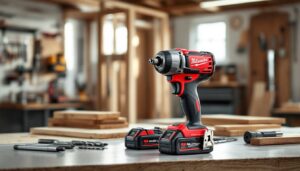
The Milwaukee M12 impact driver is part of the company’s compact 12-volt cordless platform, designed around a smaller form factor than its larger M18 siblings. At roughly 4.5 pounds and 7 inches long, it fits comfortably in tight spaces, between floor joists, inside cabinet frames, or overhead under eaves. The chuck accepts standard 1/4-inch hex driver bits, the industry norm for impact tools.
Core specifications include up to 1,500 watts of input power, a maximum speed of 2,500 RPM, and a peak torque of around 1,050 inch-pounds. That torque figure matters: it’s the rotational force that actually drives the fastener. For most homeowner tasks, driving 3-inch deck screws, assembling furniture, hanging drywall anchors, the M12 generates more than enough punch. The M12 impact driver delivers consistent performance across a range of screw gauges and materials.
What’s In The Box and Tool Options
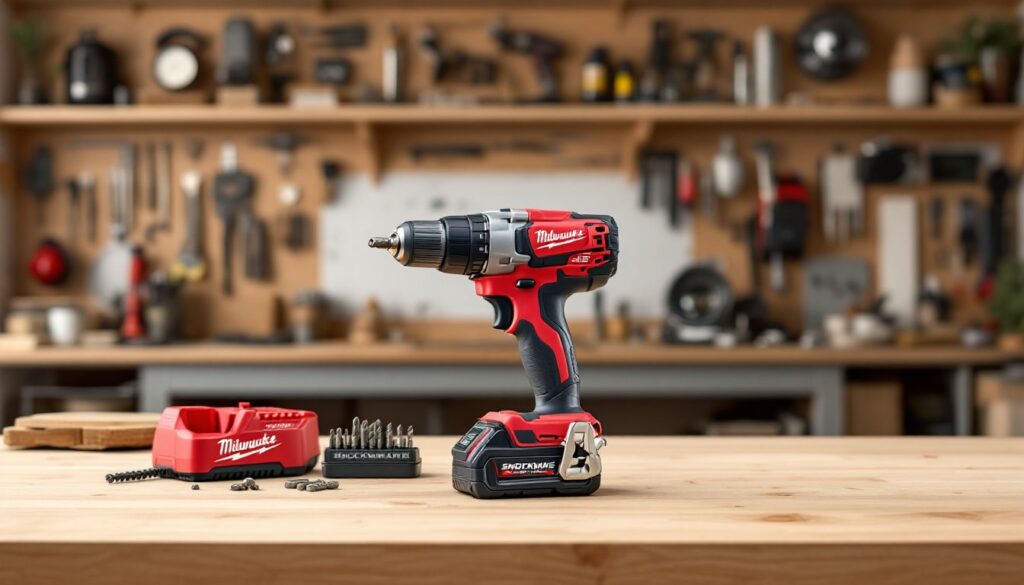
Milwaukee sells the M12 impact driver in several kit configurations. The bare tool (no battery or charger) runs around $99–$130, while a one-battery kit with a single 1.5Ah battery and charger starts near $150. A two-battery kit, typically with 2.0Ah batteries, ranges from $180 to $220 depending on sales and your location.
Battery choice matters for runtime. A 1.5Ah battery provides roughly 30–45 minutes of mixed driving: a 2.0Ah stretches that closer to an hour. For weekend projects, one battery is often fine if you rotate it while the second charges. Serious DIYers often step up to a 4.0Ah battery for uninterrupted longer sessions.
Milwaukee offers the M12 hex impact driver as the standard 1/4-inch hex model, plus some specialty variants like a right-angle impact driver for tight corners. For bit selection, Milwaukee’s Shockwave impact-rated bits are engineered to resist fracturing under impact stress, worth the small premium over basic bits.
Performance: Speed, Torque, and Power
Impact drivers work differently than regular drills. Instead of steady rotational force, they deliver thousands of impacts per minute. That rapid hammering action, you’ll feel and hear it, allows the tool to overcome resistance without bogging down or twisting your wrist.
The Milwaukee M12 delivers 2,500 RPM and up to 1,050 inch-pounds of torque. In practical terms, that’s enough to drive 3.5-inch construction screws into treated lumber, fasten cabinet hardware, and assemble heavy steel brackets. A standard 18-volt cordless drill, by contrast, typically offers 300–500 inch-pounds and can’t sustain that force without overheating on sustained fastening tasks.
Power output also depends on the battery voltage under load. When you first hit the trigger with a fresh battery, the M12 delivers peak torque. As the battery drains, voltage sags slightly, reducing output. This is why two smaller batteries often outperform one larger battery in back-to-back sessions. The M12 impact driver Gen 4 refines power delivery with enhanced motor efficiency compared to earlier generations.
User Experience: Convenience, Battery, and Noise
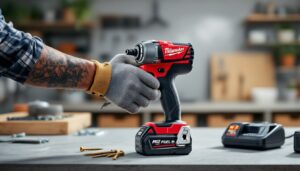
Size is the M12’s biggest advantage for home projects. Hanging a shelf? The compact body fits snugly between studs. Working in a cabinet? No problem. You’re not exhausted after 20 minutes of overhead driving because the tool weighs less than 5 pounds.
Battery interchangeability is another draw. If you already own Milwaukee M12 tools, say, a circular saw or a compact drill, your batteries swap seamlessly across the lineup. This ecosystem advantage shouldn’t be underestimated when building a cordless kit. One battery charger powers dozens of possible tools.
Noise levels run around 80–85 dB, loud enough to warrant hearing protection during extended use (30+ minutes continuously). For a quick cabinet job or a few fasteners, it’s tolerable: for a full afternoon framing or deck building, wear earmuffs. The impact mechanism is what creates the noise, not a quiet hum. This is normal and expected. The 1/4 hex impact driver is compact enough to reduce operator fatigue on repetitive driving tasks, a real benefit on longer projects.
Is the Milwaukee M12 Right for You?
The M12 impact driver excels for homeowners doing occasional to moderate fastening work. If your projects include assembling flat-pack furniture, hanging drywall anchors, driving deck screws, or fastening cabinet hardware, it’s a perfect fit. The compact size and reasonable price make it a low-risk entry point into cordless power tools.
Skip the M12 if you’re doing heavy commercial fastening (hundreds of 3-inch screws daily) or running a construction crew. You’d be better served by a larger tool like the Milwaukee M18 FUEL impact driver, which offers higher torque and faster battery recharge. Also pass if you drive small finish screws constantly: the M12’s power is overkill for lightweight tasks where a regular drill handles the job fine.
Battery-wise, budget $40–$60 per extra battery depending on capacity. It’s an investment, but a second battery ensures you’re never waiting for a charge during project momentum. Protective gear matters: safety glasses are non-negotiable when fastening, especially overhead, and hearing protection kicks in around 30 minutes of continuous use.
Alternative Impact Drivers Worth Considering
DeWalt’s 12-volt impact driver and Makita’s 12-volt model are solid alternatives in the same compact class. DeWalt’s CordlessImpact offers similar torque and an established battery ecosystem if you’re already invested in DeWalt. Makita’s compact model runs quieter than most and carries a reputation for durability over long tool life.
For more power without the bulk, the Milwaukee M18 FUEL jumps up to 18 volts and delivers 1,500+ inch-pounds, roughly 50% more torque. It’s heavier but worth it if you’re driving fasteners daily or tackling tougher materials.
Budget-conscious shoppers might consider brands like Ryobi, which sell 18-volt impact drivers for $80–$120. Ryobi tools are lighter-duty and better suited to light assembly tasks. The tradeoff: less durability, longer runtime on the same battery, and a smaller accessory ecosystem. A tested roundup comparing best impact driver options can help narrow the decision if you’re weighing multiple brands.
Conclusion
The Milwaukee M12 impact driver is a practical, reliable choice for homeowners and DIY enthusiasts handling moderate fastening work. Its compact size, solid torque, and battery interoperability make it a smart centerpiece for a cordless toolkit. Factor in the $150–$220 entry-level kit cost and you’re looking at excellent value. If your projects include furniture assembly, deck building, cabinet hanging, and general fastening, it’ll earn its place in your garage. Choose it for convenience and ergonomics: save the M18 upgrade for when you’re ready to tackle bigger jobs.