
Table of Contents
ToggleAn impact driver is one of those tools that transforms how you approach fastening work around the house. If you’ve been relying on a standard cordless drill, you’re likely leaving fastening jobs slower and more tiring than they need to be. The Mawaki impact driver delivers the compact design and consistent torque that serious DIYers crave. Whether you’re hanging shelves, building raised beds, or tackling a full deck project, understanding what sets this tool apart helps you make a confident purchase. This guide walks you through everything you need to know about the Mawaki impact driver and how it compares to other leading brands in 2026.
Key Takeaways
- A Mawaki impact driver uses a dual-action hammer mechanism to drive fasteners 3-4 times faster than a standard cordless drill, delivering 1,300-1,500 RPM with minimal arm fatigue.
- The Mawaki impact driver’s compact, lightweight design (under 4 pounds) and hexagonal quick-change chuck make it ideal for overhead work, cabinet installation, and interior fastening projects.
- Lithium-ion batteries with 18V-20V capacity provide consistent power output throughout the charge cycle, with 2.0 Ah packs driving 50-75 fasteners and 4.0 Ah packs delivering 150-200 fasteners per charge.
- Avoid using impact drivers for delicate trim work, large-diameter drilling, or paint mixing, as the impact mechanism can split softwood and isn’t designed for sustained rotational demands.
- Investing in spare batteries, a dual-bank charger, and regular maintenance—including chuck cleaning and battery contact inspection—maximizes tool longevity and project efficiency.
- Test-drive before purchasing by borrowing a friend’s impact driver or renting one to ensure the handle design, weight, and grip fit your specific DIY projects and comfort needs.
What Is the Mawaki Impact Driver?
An impact driver differs fundamentally from a standard cordless drill. While a drill applies steady rotational force, an impact driver uses a fast-spinning hammer mechanism to deliver bursts of downward and rotational force simultaneously. This dual-action approach drives fasteners faster and with less arm fatigue than traditional drills.
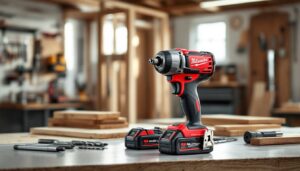
The Mawaki impact driver is designed for homeowners and DIYers who want a tool that bridges the gap between lightweight convenience and heavy-duty performance. It delivers power in a package you can comfortably hold overhead or reach into tight corners. The compact form factor makes it ideal for interior work, shelf installation, and furniture assembly, tasks where bulk becomes a genuine liability.
Most Mawaki models feature a hexagonal chuck that accepts standard 1/4-inch hex bits. This quick-change system beats traditional chuck systems because you can swap bits in seconds without tools. If you’re fastening composite deck screws or driving cabinet hardware into hardwood, the Mawaki’s impact mechanism prevents bit cam-out and keeps you from stripping fasteners.
Key Features and Specifications
Mawaki impact drivers typically deliver between 1,300 and 1,500 RPM (revolutions per minute) depending on the model. That rotational speed, combined with the impact pulses, translates to driving a 3-inch deck screw into pressure-treated lumber in roughly three seconds. Compare that to a standard drill, which might take ten to fifteen seconds, and the time savings add up fast on bigger projects.
Battery voltage usually ranges from 18V to 20V, which handles most residential fastening tasks without struggling. A DeWalt impact driver or Milwaukee impact driver at similar voltage delivers comparable performance, so you’re generally looking at the same capability tier. The Mawaki design emphasizes lighter weight, typically under 4 pounds, making overhead work less punishing on your wrists and shoulders.
Torque output often peaks around 1,300 to 1,500 inch-pounds, sufficient for lag bolts into studs, structural fastening into joists, and heavy-duty cabinet assembly. If you’re driving 1/2-inch bolts into framing lumber, this torque rating tells you it’s up to the job. The ergonomic handle includes a side grip that lets you stabilize the tool when working at odd angles, reducing the risk of twisting your wrist if a screw catches.
Battery and Charging Technology
Most modern Mawaki models use lithium-ion batteries, which have largely replaced older nickel-cadmium and nickel-metal-hydride cells. Lithium-ion batteries maintain voltage throughout the charge cycle, meaning your tool delivers nearly the same power on the first fastener as it does on the last. They also hold a charge far longer when the tool sits idle, so you’re not starting a weekend project with a dead battery.
Charge times typically range from 30 to 60 minutes, depending on battery capacity and charger type. A fast charger can turn a depleted 2.0 Ah battery around in under an hour, while standard chargers take longer but generate less heat. If you own multiple batteries, rotating them through charging means you always have a fresh pack ready while the other charges.
Battery capacity is measured in amp-hours (Ah). A 2.0 Ah battery powers roughly 50 to 75 fasteners per charge on a typical fastening job, while a 4.0 Ah pack might deliver 150 to 200 fasteners. For a half-day of deck building or cabinet work, a single 4.0 Ah battery often suffices, but serious DIYers keep a backup charged and ready.
Best Uses for Your DIY Toolbox
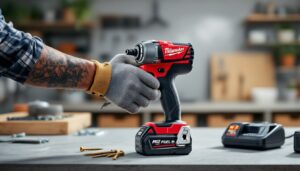
Impact drivers excel at fastening tasks, but they’re not universal tools. Use one for driving deck screws, cabinet hardware, or structural fasteners into framing lumber. The impact mechanism keeps bits from slipping out of screw slots, eliminating the frustration of stripped fasteners and wasted time.
They’re also invaluable for removing stubborn bolts or corroded fasteners. The rapid hammer action breaks corrosion bonds faster than steady rotational force alone. If you’re replacing hinges on a weathered deck gate, an impact driver cuts that job time in half compared to a manual screwdriver or standard drill.
Built-in LED work lights let you see fastener placement even in dim corners or inside cabinets. Most Mawaki models include this feature, which saves you from holding a flashlight with one hand while driving with the other.
Where impact drivers fall short: avoid them for delicate work like driving small trim screws into softwoods, where the impact pulses can overdrive and split the wood. They’re also not suitable for drilling large-diameter holes, that’s what a standard cordless drill does better. For mixing paint or running a drywall mud pan mixer, a drill is your tool: an impact driver’s design isn’t suited to those rotational demands. You’ll also want a hammer drill vs. impact driver comparison if you’re considering concrete fastening, since hammer drills handle masonry better than impact drivers.
How to Choose the Right Impact Driver for Your Needs
Start by considering what projects dominate your DIY calendar. If you’re hanging shelves, installing kitchen cabinets, and building outdoor furniture, a mid-range compact model like the Mawaki handles everything comfortably. If you’re driving massive lag screws into timber framing or doing structural fastening, you might consider stepping up to heavier-duty models.
Battery compatibility matters more than you’d think. If you already own a Milwaukee impact driver or DeWalt tools, buying another brand means maintaining separate battery chargers and spare packs. Staying within one ecosystem, whether that’s Milwaukee’s M18 system, DeWalt’s 20V platform, or Mawaki’s compatible line, keeps your charging station simpler and inventory cheaper.
Weight becomes critical if you spend extended periods working overhead. A one-pound difference over a full day of cabinet installation makes a real difference in wrist and shoulder fatigue. Many DIYers overlook this until they’ve spent four hours hanging cabinets: then, every ounce counts.
Handle design affects control, especially in tight spaces. A slimmer handle lets you fit the tool into wall cavities or cabinet interiors. Test-drive models at a tool rental shop or borrow a friend’s M12 hex impact driver or Milwaukee M12 impact driver to feel the balance and grip before committing your money. Reading detailed reviews on tested buying guides helps you understand real-world performance across different models.
Budget for batteries and chargers separately. A basic Mawaki tool might cost $60 to $150, but adding spare batteries and a dual-bank charger easily doubles that. If you’re serious about DIY, that investment pays for itself in convenience and project speed.
Maintenance and Care Tips
Clean the chuck regularly to prevent bit slip. Sawdust and debris accumulate inside, reducing grip on hex shanks. A quick blast of compressed air every few hours of use keeps things tight. If you notice bits spinning inside the chuck without driving, it’s time for a thorough cleaning.
Protect the battery contacts from moisture and corrosion. Wipe them dry after working in damp conditions, and store the battery in a cool, dry place. Never leave a lithium-ion battery exposed to freezing temperatures or intense heat: both degrade performance and lifespan. A climate-controlled garage beats an outdoor shed for storage.
Inspect the impact mechanism housing for cracks or damage. If you drop the tool or it takes a hard knock, the internal hammer assembly can become misaligned, reducing striking force or creating intermittent stalling. Small external cracks can admit moisture that eventually corrodes internal components. If you spot damage, a professional service center can often repair it for less than replacing the entire tool.
Store bits in a dry container away from humidity. Corroded or rusty bits slip inside chucks and can damage the chuck teeth. Consider a small plastic organizer with a snap-close lid, they’re inexpensive and extend bit life significantly. Check the Klein impact driver guide or Kobalt 24V impact driver review for brand-specific maintenance details if you’re running multiple tool brands.
Rotate batteries into use. If you own two or more battery packs, use them in sequence rather than running one completely dead and letting the others sit. Regular cycling keeps lithium-ion chemistry healthier than long storage periods. Replace the battery if it no longer holds a charge after a full refresh cycle, internal cells degrade over time, and a worn-out battery becomes a safety liability.
Conclusion
The Mawaki impact driver represents solid value for DIYers tackling fastening work around the house. Its compact size, responsive trigger, and reliable impact mechanism handle the majority of residential fastening tasks without very costly. Whether you’re building your first tool collection or adding to an existing kit, this tool earns its place in your garage. Spend time testing models in-store or borrowing a friend’s tool before purchasing, and don’t skimp on spare batteries, they’ll repay that investment through convenience and project efficiency.