Table of Contents
ToggleA Milwaukee Fuel impact wrench sits in the toolbox of serious DIYers for one reason: it delivers fastening power that keeps pace with ambition. Whether you’re reinstalling bolts on deck framing, working with lag screws on fence posts, or tackling automotive projects around the property, the Milwaukee Fuel impact wrench bridges the gap between a standard cordless drill and a heavy-duty contractor’s rig. Unlike standard drills that force the user to muscle stubborn fasteners, an impact wrench uses concussive rotational force to do the heavy lifting, reducing fatigue and cutting work time in half. This guide walks you through what makes Milwaukee’s Fuel line stand out, which models fit your projects, and how to keep your tool running strong for years.
Key Takeaways
- A Milwaukee Fuel impact wrench delivers 150–330+ foot-pounds of torque with brushless motor technology, eliminating the need to muscle stubborn fasteners and cutting work time in half compared to standard drills.
- Choose between the compact M12 model for lightweight deck and furniture projects or the more powerful M18 Fuel for heavy-duty structural work and automotive applications requiring sustained fastening sessions.
- Invest in extended-capacity 5Ah or 6Ah batteries and Milwaukee’s Shockwave impact driver bit sets to maximize runtime and reduce downtime on longer projects.
- Proper maintenance—keeping the chuck clean, storing batteries at 20–80% charge in cool conditions, and checking motor vents for debris—ensures your Milwaukee Fuel impact wrench lasts for years of reliable service.
- Real-world applications like deck fastening, fence installation, and automotive work prove that impact wrenches prevent cam-out (screw head stripping) and handle heavy lag bolts and suspension fasteners faster than traditional cordless drills.
What Makes Milwaukee Fuel Impact Wrenches Stand Out
Key Performance Features for DIY Homeowners
Milwaukee’s Fuel technology uses a brushless motor that delivers consistent torque while running cooler and lasting longer than brushed alternatives. The M12 impact driver and its larger siblings in the lineup pack more punch per charge, which matters when you’re fastening ½-inch bolts or driving 3-inch deck screws without stopping to swap batteries.
Torque output separates an impact wrench from a standard drill. Milwaukee Fuel models deliver 150–330+ foot-pounds of torque, depending on the model, enough to tighten or loosen fasteners that a regular drill would simply spin against. The three-speed transmission lets you dial in the right power level: low speed for precise fastening, mid-range for general work, and high speed for rapid-fire fastening on smaller bolts.
Weight and balance matter on a job site or around the house. Most Milwaukee Fuel impact wrenches weigh under 4 pounds, making them one-handed operable for overhead work like fastening joist hangers or cabinet mounting. The rubber overmold grip reduces hand fatigue during extended sessions.
Battery compatibility is a major selling point. Milwaukee’s M18 Fuel impact driver and smaller M12 models use interchangeable batteries from the company’s ecosystem, so if you own other Milwaukee tools, you’re already set. The integrated LED work light, found on most Fuel models, cuts the need for a separate headlamp when working in dim garage corners or under decking.
Runtime depends on the battery amp-hour rating and the fastener load. A 5Ah battery on an M18 Fuel model typically powers 150–200 medium-weight fastening operations before needing a charge, but driving heavy bolts drains it faster.
Best Milwaukee Fuel Impact Wrench Models for Home Projects
The M12 impact driver is Milwaukee’s entry point for DIYers who need compact, lightweight performance. It’s ideal for deck fastening, furniture assembly, and light automotive work where one-handed maneuverability matters. The M12 delivers enough torque for most residential projects while fitting into tight spaces, under cabinets, between studs, or in the bed of a truck.
The Milwaukee M18 Fuel impact driver steps up for homeowners tackling bigger jobs: long bolts on structural framing, full-size automotive work, or sustained fastening sessions. The M18 delivers 230–330 foot-pounds of torque depending on the exact variant, making it suitable for ½-inch lag screws or metric bolts on gate hinges and posts. Its longer runtime and higher power reserve mean fewer battery swaps mid-project.
For users who already own Milwaukee’s M12 or M18 cordless ecosystem (saws, drills, impact drivers), a dedicated impact wrench is a logical addition. Some models accept ¼-inch or ½-inch square drives, letting you use standard sockets, useful for automotive bolts, machinery bolts, or plumbing work involving union nuts.
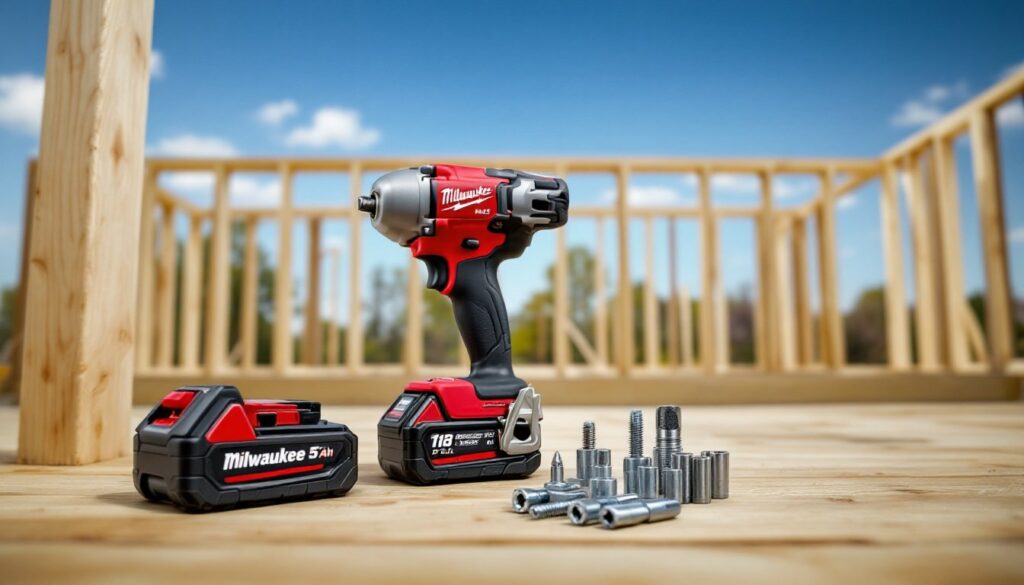
The battery included with starter kits often underwhelms experienced DIYers. Most professionals and serious homeowners invest in a separate 5Ah or 6Ah extended-capacity battery: these cost $80–120 but cut your project time and downtime significantly. Pairing a Fuel impact wrench with Milwaukee’s Shockwave impact driver bit set ensures you’ve got the right fastener bit in hand, reducing the need to hunt through loose bits scattered in drawers.
How to Choose the Right Size and Power for Your Needs
Start by cataloging the fasteners you use most. If your projects center on deck fastening (3-inch screws, ¼-inch bolts), an M12 impact driver handles the work. If you’re frequently fastening ½-inch lag bolts into pressure-treated posts or working on automotive suspensions, jump to an M18 Fuel model.
Consider battery life against your typical project duration. A single 5Ah battery drains in 30–45 minutes of continuous fastening with heavy bolts: if your projects run longer, buy a second battery or choose extended-capacity packs. Charging time matters too, Milwaukee’s fast chargers cut 5Ah batteries to full in roughly an hour.
Torque specs can feel abstract until you’ve tested one. Most homes and decks need 150–200 foot-pounds: going higher (300+) is overkill for fastening deck bolts but necessary for automotive work or very large structural fasteners. Read tool reviews on trusted sites like This Old House’s impact wrench buying guide to see head-to-head comparisons with real torque measurements.
One overlooked factor: the chuck or socket drive type. ¼-inch hex chucks are standard for screws and small bolts. If you plan to use sockets (for automotive or plumbing work), confirm your model accepts ½-inch square drives or look for dedicated impact wrench models that prioritize socket compatibility. The M12 1/4 hex impact driver is perfect if you want lightweight fastening without socket work: branch to heavier wrenches if socket bolts are your main load.
Impact Wrench Maintenance and Battery Tips
Impact wrenches are robust, but a few habits extend tool life. Keep the chuck or socket drive clean and dry, sawdust or moisture inside the drive can cause missed engagement or stripped fasteners. Wipe it down after use, especially if you’ve been outside or in damp conditions.
Battery care directly affects runtime and longevity. Store batteries in a cool, dry place, not in a hot garage or freezing shed. Fully discharge and recharge lithium batteries only occasionally: they perform best when kept between 20% and 80% charge during storage. If you’re putting tools away for the off-season, charge batteries to roughly 50% and store them indoors.
Check the motor vents for debris buildup every few months, especially if you work in dusty environments like untreated basements or outdoor decking projects. A compressed-air blast clears dust clogging the vents. Never dunk the tool in water, but a damp rag on the exterior is fine.
Milwaukee Fuel motors run cooler than older brushed models, but extended use on very heavy fasteners can still trigger thermal shutoff. If the tool stops mid-project, let it cool for 10 minutes before resuming. This protection prevents motor damage and isn’t a flaw, it’s a feature.
Chucks and socket drives wear over time with heavy use. If your wrench starts slipping on fasteners or won’t grip bits firmly, the chuck likely needs replacement. Milwaukee sells aftermarket chucks for $15–30, and swapping one takes under two minutes with an allen wrench.
Real-World Applications for Home Improvement Projects
Deck and post fastening is a bread-and-butter application. Whether you’re lag-bolting posts to footings or screwing decking to joists, an impact driver cuts time in half compared to a regular drill. The concussive action prevents cam-out, the frustrating spin-out that strips screw heads, especially with quality fasteners and proper bit engagement.
Fence installation benefits hugely from impact tool speed. Setting bolts through galvanized gate hinges or lag-screwing rails into posts happens fast with a Fuel model. Many fence projects demand 50–100+ fasteners: the time savings easily justify owning a dedicated impact tool.
Cabinet and shelving assembly, while usually lighter-duty than deck work, benefits from impact tools’ speed and precision. Driving pocket-hole screws or fastening brackets into studs for heavy shelves demands reliable, repeatable torque, exactly what a Milwaukee Fuel wrench delivers. The Milwaukee M12 impact driver review details how compact models excel on interior jobs where a bulkier M18 feels unwieldy.
Automotive work, suspension fasteners, brake bolts, lug nuts, requires an impact wrench with serious torque and socket compatibility. Many homeowners who service their own vehicles find a Milwaukee Fuel impact wrench indispensable. Research and testing from Good Housekeeping’s impact wrench review confirm that cordless Fuel models now rival pneumatic wrenches for most residential automotive tasks.
Boiler room and utility work, like fastening water heater straps or lag-bolting HVAC supports into rim joists, also call for reliable impact fastening. A single impact wrench beats wrestling with a corded drill and manually driving 10–15 heavy fasteners.
Conclusion
The Milwaukee Fuel impact wrench earns its place in a serious DIYer’s toolbox through raw performance, battery compatibility, and durability that outlasts a weekend hobby. Whether you’re upgrading from a standard cordless drill or building a complete Milwaukee battery ecosystem, selecting the right model, M12 for compact work or M18 for sustained power, ensures every fastening task completes faster and with less fatigue. Pair your tool with quality batteries and basic maintenance habits, and it’ll return value on your investment for years of home improvement projects.