Table of Contents
ToggleAn impact driver is one of those tools that seems unnecessary until you own one, then you wonder how you ever lived without it. If you’re driving fasteners into wood, metal, or composite materials, a standard drill-driver works, but an impact driver makes the job faster, easier, and far less taxing on your wrists. The M18 Fuel impact driver from Milwaukee has become the go-to choice for homeowners and pros alike, offering serious power in a package that fits in a toolbelt. Whether you’re assembling deck furniture, hanging heavy cabinets, or tackling structural fastening work, understanding what this tool does and how it fits your workshop will help you decide if it’s the right investment for your next project.
Key Takeaways
- The M18 Fuel impact driver delivers 1,500 in-lbs of torque and 3,000 RPM, making it ideal for driving deck screws, lag bolts, and cabinet hardware faster than standard drills without causing wrist strain.
- Milwaukee’s brushless Fuel motor technology provides up to 2.5 times longer runtime per charge compared to brushed motors, with a battery fuel gauge that prevents unexpected downtime on projects.
- The M18 Fuel is a fastening specialist designed for decking, cabinet hanging, furniture assembly, and structural work—not suitable for delicate drilling in glass, tile, or drywall.
- At $99–179 for the tool alone or $200–280 for a complete kit with battery and charger, the M18 Fuel impact driver offers strong value for DIY homeowners compared to professional-grade alternatives.
- Proper maintenance including regular chuck cleaning, correct battery storage, and using quality impact bits ensures 5+ years of reliable performance from your M18 Fuel.
What Is an M18 Fuel Impact Driver?
An impact driver is a powered fastening tool that delivers rotational force in short bursts, called “impacts”, rather than continuous spin like a standard drill. Think of it as a pneumatic hammer for screws and bolts. When you push down on the trigger, an internal mechanism rapidly strikes a rotating chuck, generating concentrated torque that powers fasteners through tough materials without bogging down or twisting your hand.
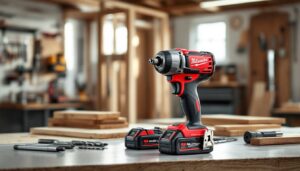
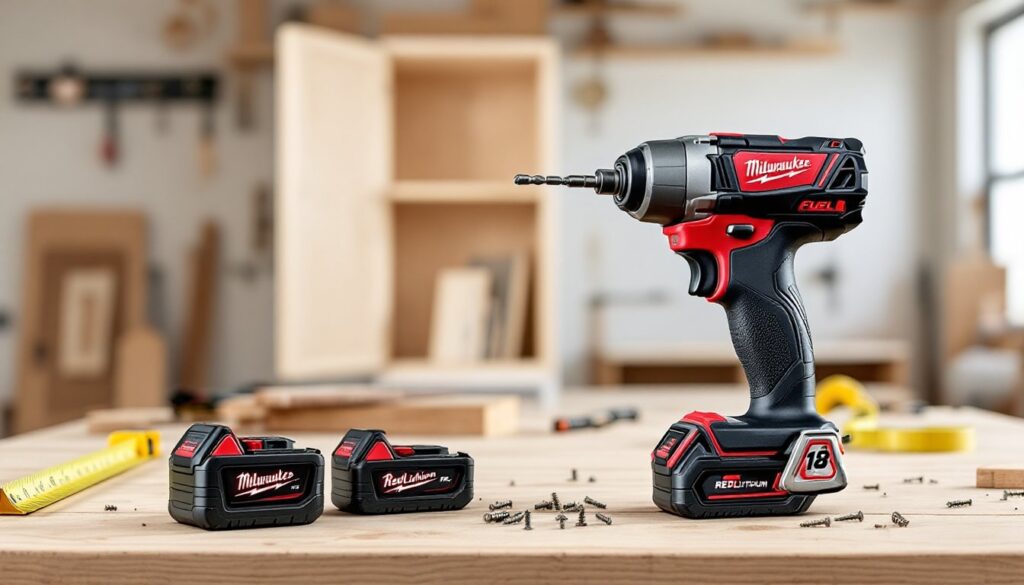
The M18 Fuel impact driver uses Milwaukee’s brushless Fuel motor technology, which means it delivers consistent power with minimal maintenance and longer runtime compared to older brushed motors. The M18 designation refers to the battery voltage (18 volts), and this tool is part of Milwaukee’s RedLithium battery ecosystem, a platform shared across dozens of cordless tools. If you’re already invested in M18 batteries from another Milwaukee tool, this driver becomes even more practical, since you can swap batteries between devices.
Compared to the Milwaukee impact driver line, the M18 Fuel sits in the mid-to-professional range. It’s heavier and more powerful than the M12 impact driver, Milwaukee’s 12-volt compact model, making the M18 better suited for sustained fastening work and tougher materials. The tool spins at up to 3,000 RPM and delivers around 1,500 in-lbs of torque, meaning it can handle lag bolts, deck screws, and cabinet mounting hardware without hesitation.
Key Features That Set It Apart
Battery Technology and Runtime
The Fuel platform uses brushless motor technology, which runs cooler, lasts longer, and delivers more power per charge than brushed alternatives. Milwaukee claims runtime up to 2.5 times longer on a single M18 battery compared to older brushed models, though real-world results depend on the battery’s amp-hour (Ah) rating. A 5.0Ah battery delivers longer runtime than a 2.0Ah pack: for consistent fastening work, a 4.0Ah or larger battery makes sense.
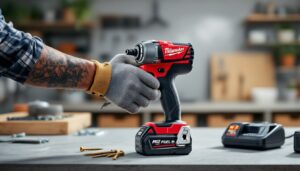
The tool includes a fuel gauge on the battery that shows remaining charge, a feature that’s annoying to lose once you’re used to it. You’ll also appreciate the one-handed operation: the trigger is intuitive, and there’s minimal startup lag between squeeze and output, making the tool feel responsive even on tight fasteners.
Beyond battery smarts, the M18 Fuel includes a ratcheting chuck that accepts standard ¼-inch hex bits, and the bit holder is magnetic. This keeps bits from falling mid-project, a small detail that saves time. The compact profile and lightweight design (around 3.6 pounds) won’t fatigue your arm during extended use, though you’ll still feel it’s a robust tool, not plasticky or underpowered.
When comparing to the m12 impact driver, the M18 Fuel offers substantially more power and longer runtime from a single charge, making it the better choice for projects lasting more than 30 minutes or involving repeated fastening in dense wood or lag bolts.
Best Uses for Your Next Home Project
Impact drivers excel at fastening work. Here’s where the M18 Fuel shines:
Deck and exterior work: Driving 3-inch deck screws into pressure-treated lumber or composite boards. The rapid-fire impacts prevent the bit from slipping and marring screw heads, and you’ll finish a 16-foot deck section in a fraction of the time a standard drill requires.
Cabinet hanging: Mounting kitchen or bathroom cabinets to wall studs. You need consistent torque without the twisting feedback of a drill, which the impact driver provides. Always use a level to check placement before fastening.
Furniture assembly: Driving pocket-hole screws, hanger bolts, or assembly hardware. Impact drivers cut assembly time dramatically compared to a hand screwdriver or power drill.
Structural fastening: Installing joist hangers, lag bolts, or through-bolts where you need serious torque. An impact driver is faster and less risky than a corded drill, which can snatch and twist unexpectedly if a bit catches.
Small demolition and fastener removal: While not its primary role, the reversible M18 Fuel can remove stuck fasteners or lag bolts. The rapid impacts help break corrosion and loosen seized hardware.
What the impact driver doesn’t do well: delicate drilling in glass, tile, or drywall without support (the impacts will cause the bit to skip and damage the material). For hole drilling in drywall, use a standard drill or a corded drill with a mixing paddle bit. The impact driver is a fastening specialist, not a drilling workhorse.
Comparing Models and Budget Considerations
Milwaukee offers several impact driver options within the M18 line, and choosing between them depends on your use case and budget.
M18 Fuel vs. M12 impact driver: The M12 impact driver is lighter, more compact, and draws less power, making it ideal for tight spaces (cabinets, overhead work) or hobbyists who don’t use the tool daily. It’s also cheaper. But, it lacks the sustained power of the M18 Fuel for tougher fastening tasks. If you’re driving fasteners for occasional projects, the M12 works: if you’re a steady DIYer or tackling a whole-house project, the M18 Fuel pays for itself in time saved.
M18 Fuel vs. standard M18: Milwaukee also sells non-Fuel M18 impact drivers at a lower price point. These use brushed motors, which are adequate but generate more heat and lose efficiency over time. The Fuel version costs $30–50 more upfront but lasts longer and performs better, a worthwhile investment if you plan to use the tool for years.
Accordingly, an impact driver from Milwaukee’s mid-range typically costs between $99 and $179 (body only) depending on the model and current retail discounts. Factor in a 5.0Ah battery and charger, and you’re looking at a full kit in the $200–280 range, depending on sales.
Compare this with professional-grade tools or Milwaukee’s larger drill-drivers, and the M18 Fuel is positioned well for DIY homeowners who want durability and performance without pro-level pricing. External reviews on Popular Mechanics and Bob Vila often rate the M18 Fuel among the best value impact drivers for home use.
Maintenance Tips for Long-Term Performance
Impact drivers are simple tools with fewer moving parts than drills, but they still need care.
Keep the chuck clean: Dust and debris accumulate in the chuck, especially on job sites. After each use, wipe the bit holder and chuck with a dry cloth. Once a month, blow compressed air through the chuck to clear fine particles. Don’t use water, moisture invites corrosion.
Store batteries properly: RedLithium batteries hold charge longer than older packs, but avoid leaving them on the charger indefinitely or storing them fully discharged. Keep batteries in a cool, dry place. If you won’t use the tool for a month, discharge the battery to about 50% before storage.
Inspect bits regularly: Worn or damaged bits will slip, shred fastener heads, and damage the chuck. Replace bits if they’re bent, chipped, or stripped. A set of shockwave impact bits from Milwaukee lasts longer than hardware-store bits and resists snapping.
Check for loose parts: Periodically tighten the chuck by hand (don’t over-tighten with pliers). Verify the battery seats fully, a loose battery connection causes dropouts and slow charging.
Use a charger rated for Fuel batteries: Older Milwaukee chargers work with Fuel batteries but charge slowly. A newer 30-minute charger is faster and better for battery health. Don’t run the tool continuously for hours on end: give it a 10-minute break every 30–45 minutes to let the motor cool.
With basic care, an M18 Fuel will run reliably for 5+ years of DIY use.
Conclusion
The M18 Fuel impact driver is a practical, well-engineered tool that eliminates the guesswork and frustration of fastening work. It won’t replace a full cordless drill, you’ll still need one for hole drilling, but for the fastening half of most DIY projects, it’s faster and more effective. Whether you’re hanging cabinets, building a deck, or assembling furniture, investing in one means less wrist strain, quicker work, and better results. If you’re already in Milwaukee’s battery ecosystem, the decision is easy. If you’re starting fresh, the M18 Fuel justifies the initial investment through years of reliable use and saved time on projects.